Day 9 – Regensburg

The pictuesque town of Regensburg is one of Europe’s best-preserved medieval cities, the oldest city along the Danube and a UNESCO World Heritage Site.

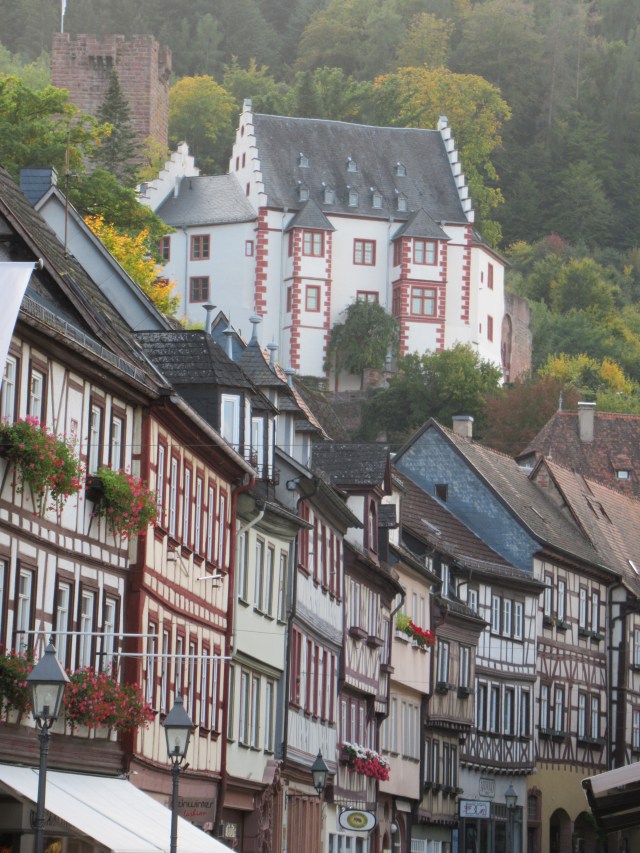
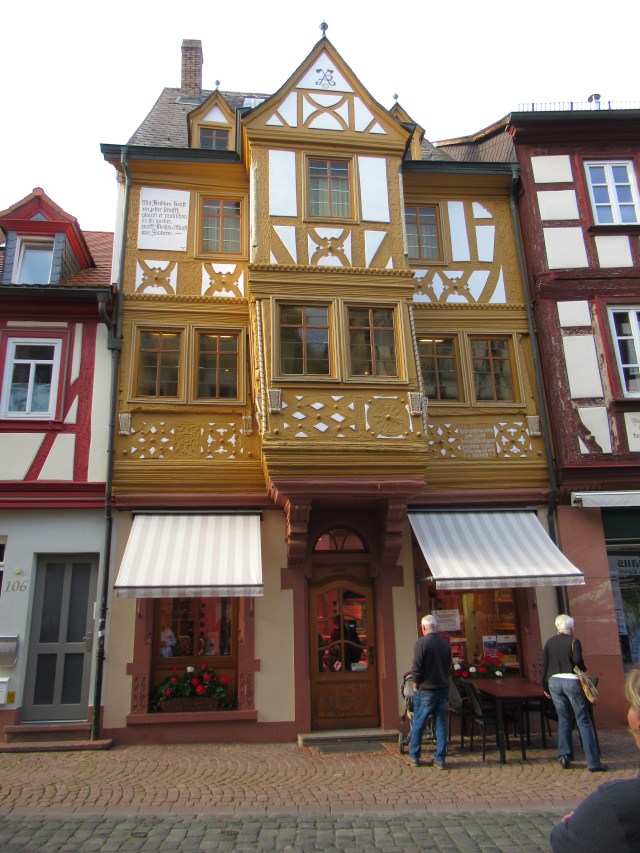
Today our walking tour started right from our boat and it was great. We were parked right on the edge of the Old Town so a short walk took us right into that area.  Here’s a bit of what we saw.
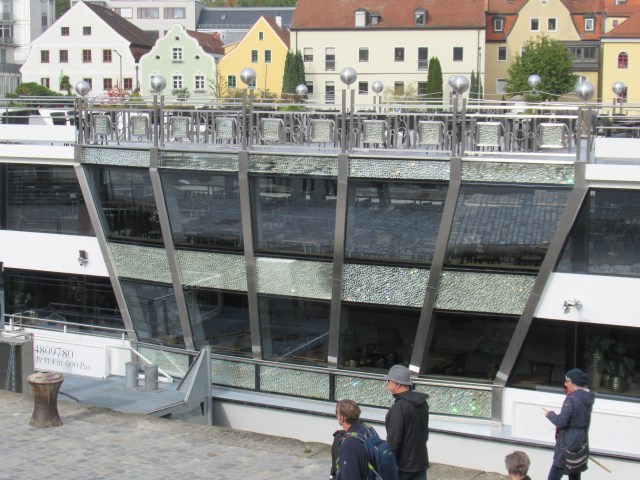
 

A very fancy, expensive dinner cruise boat. I know this photo doesn’t do it justice, but the sides are covered with thousands of glimmering Swarovski crystals.
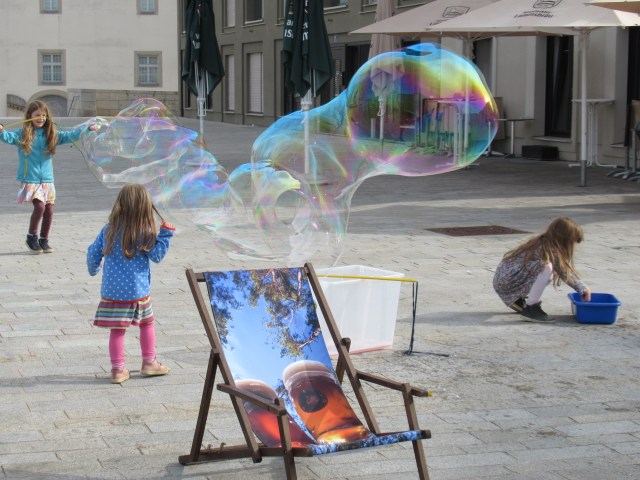
Right down the street from our boat, right on the edge of the river, a small farmers’ market appeared. And a part of the market was a van that unloaded play equipment for children to keep them occupied. These gigantic bubbles were a big hit.
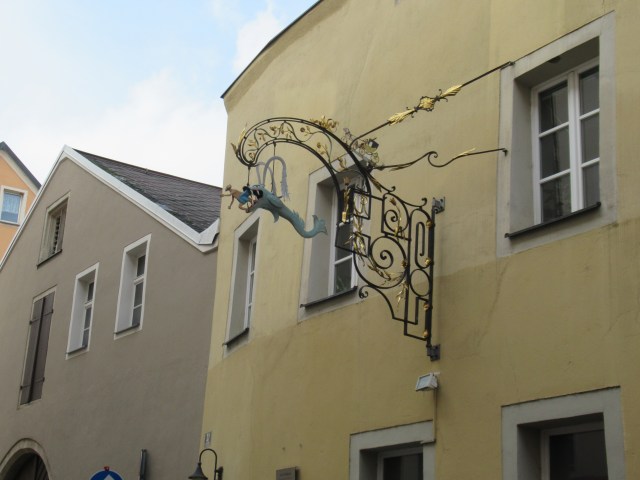
This shop had a cute sign over it with a whale eating a man. Apparently the artist had no idea what either one of those things should look like.
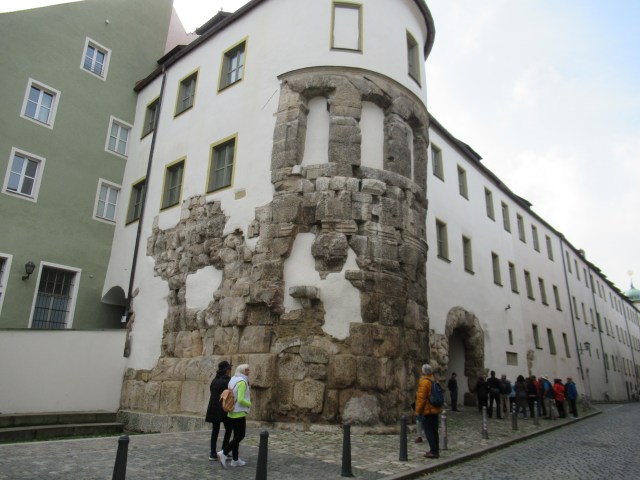
This was a part of the old city wall and we thought the presentation was clever.
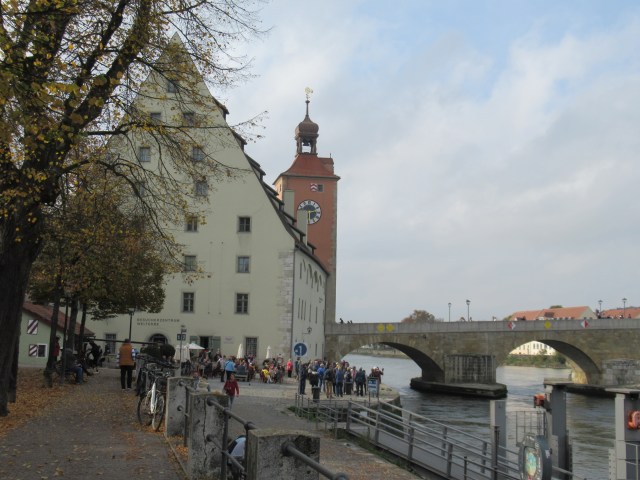
The large salt warehouse on the left served as an important storage center during the war. The stone bridge on the right, constructed in the 12th century, is a masterpiece of medieval engineering with its 16 arches.
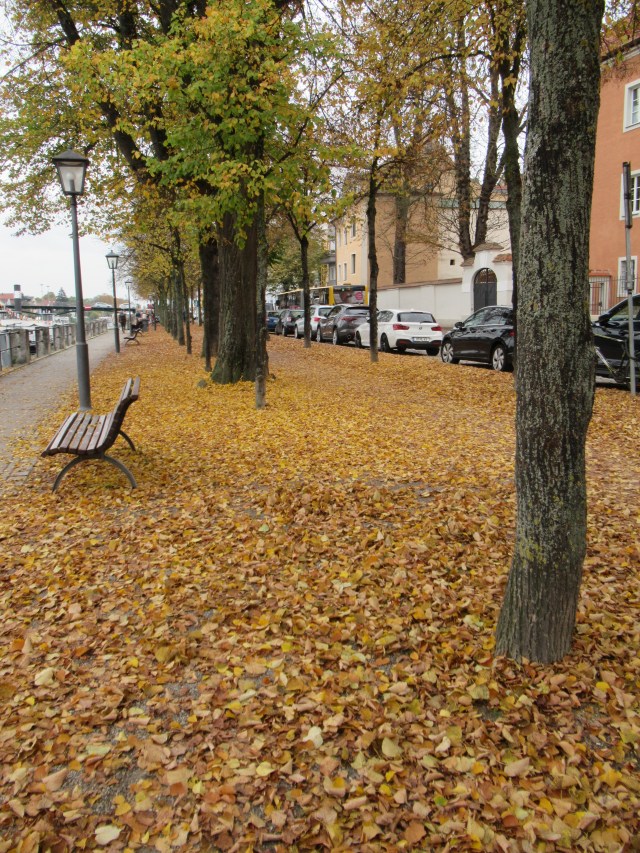
A lovely walk through the leaves along the Danube River. Doesn’t get any better than this.
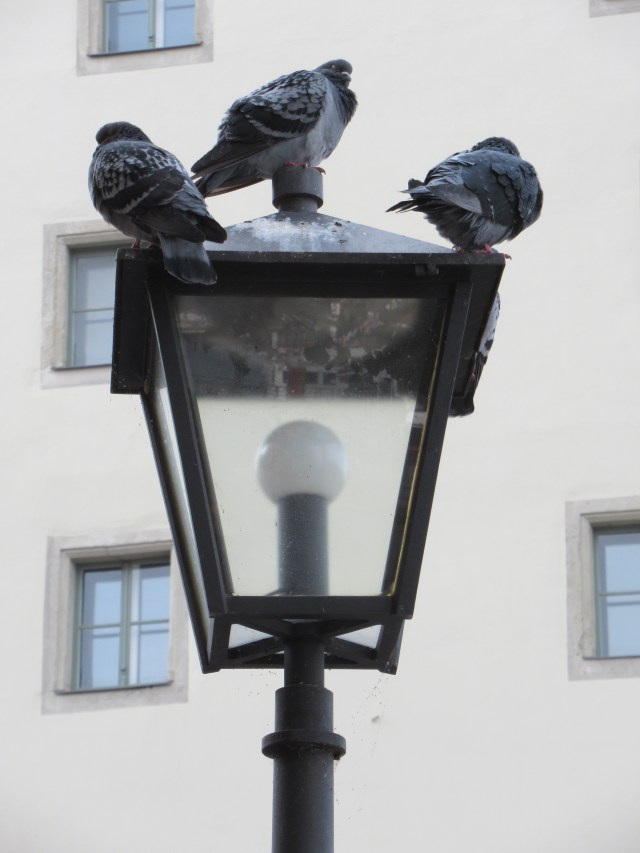
Just hanging out by the river.
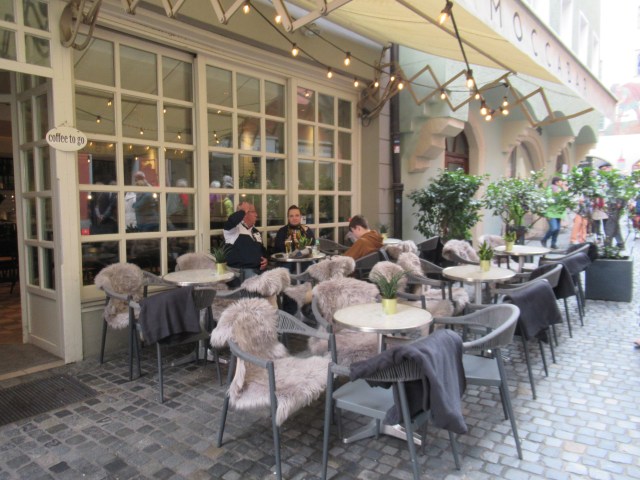
A lovely restaurant complete with blankets and furs for keeping the evening chill at bay.
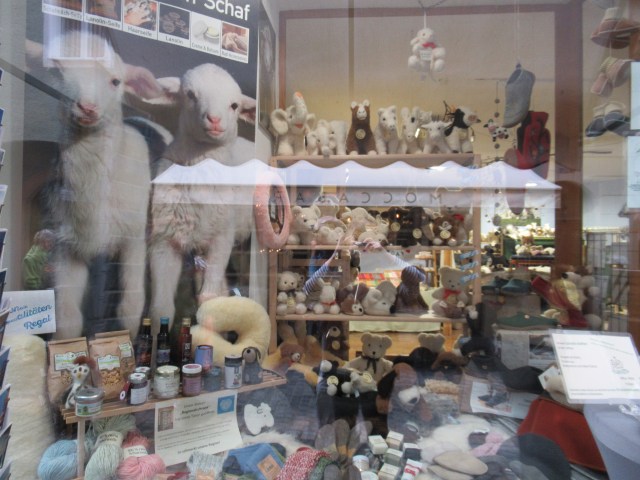
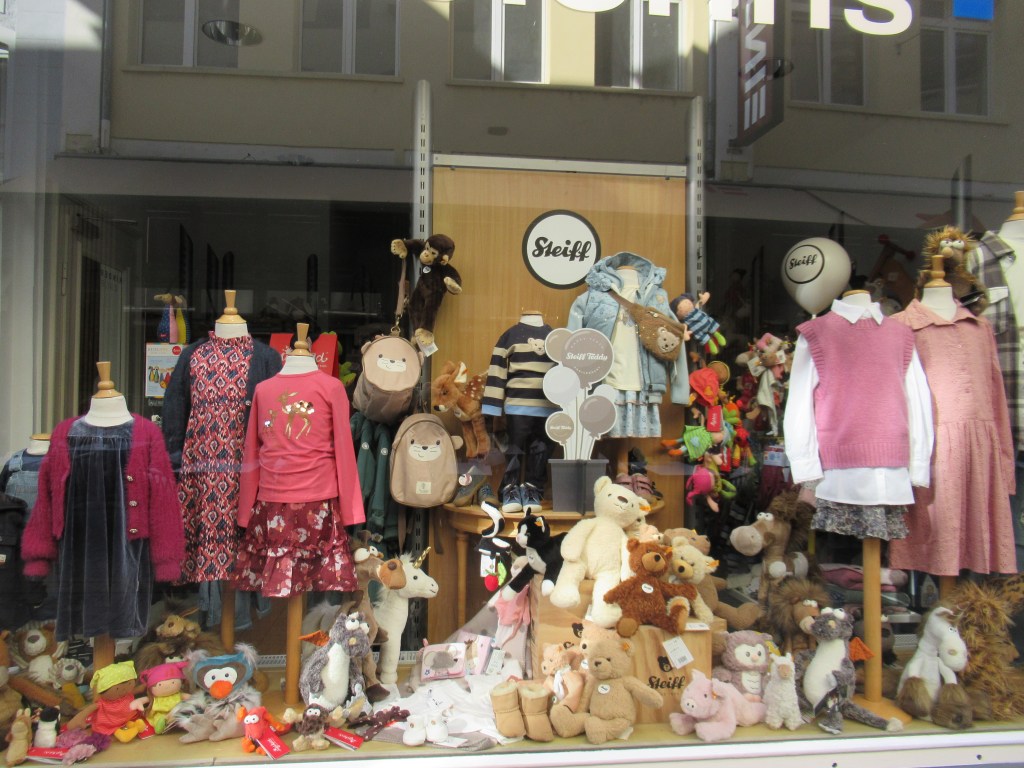
A lamb-themed children’s store.

”David and Goliath” is an expensive hotel and restaurant with Italian architecture and mammoth figures painted on its exterior walls.
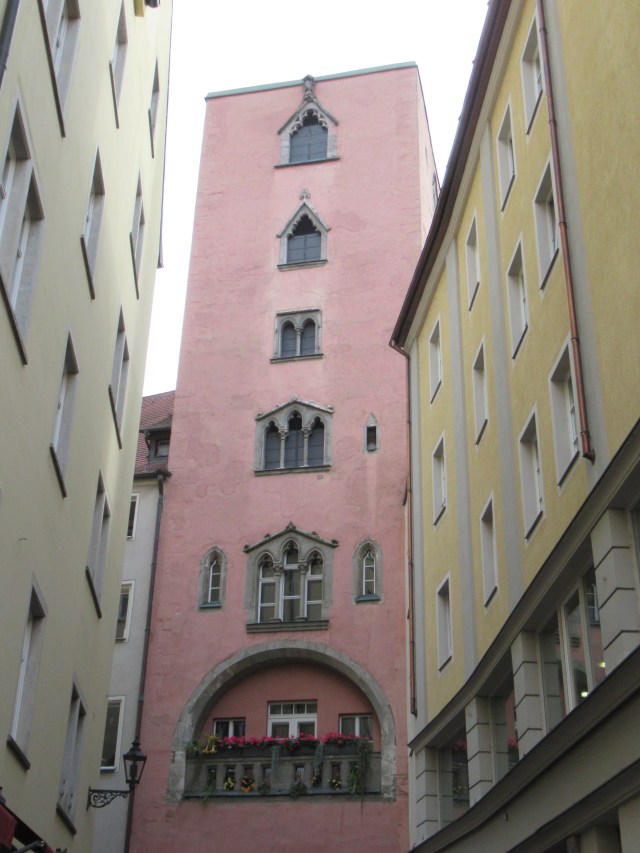
Another pretty Italian building apparently built to impress because the top floors are actually empty.
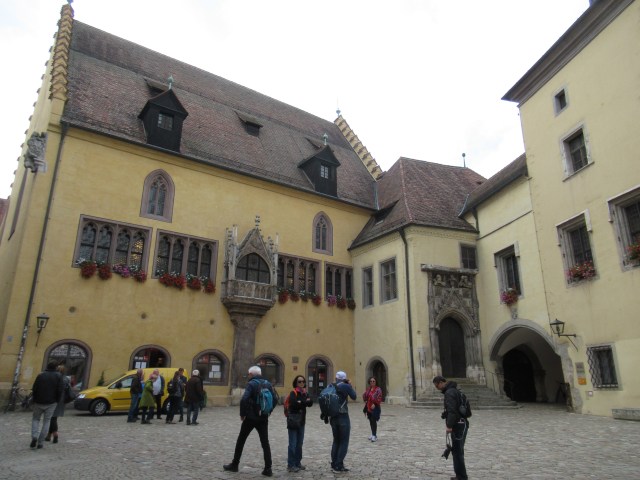
The original City Hall.
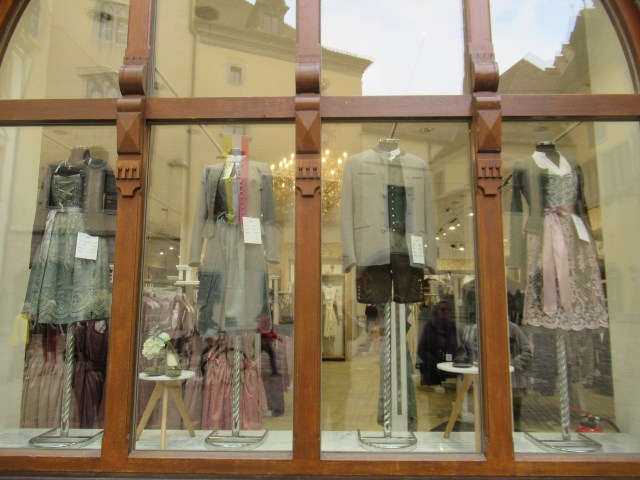
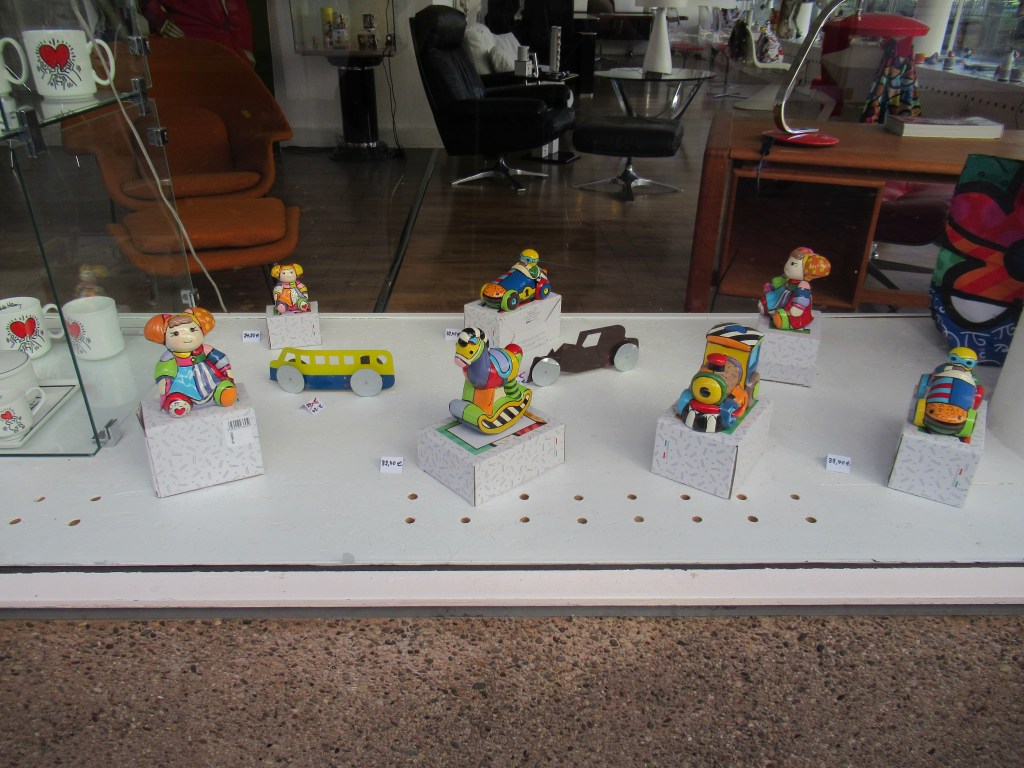
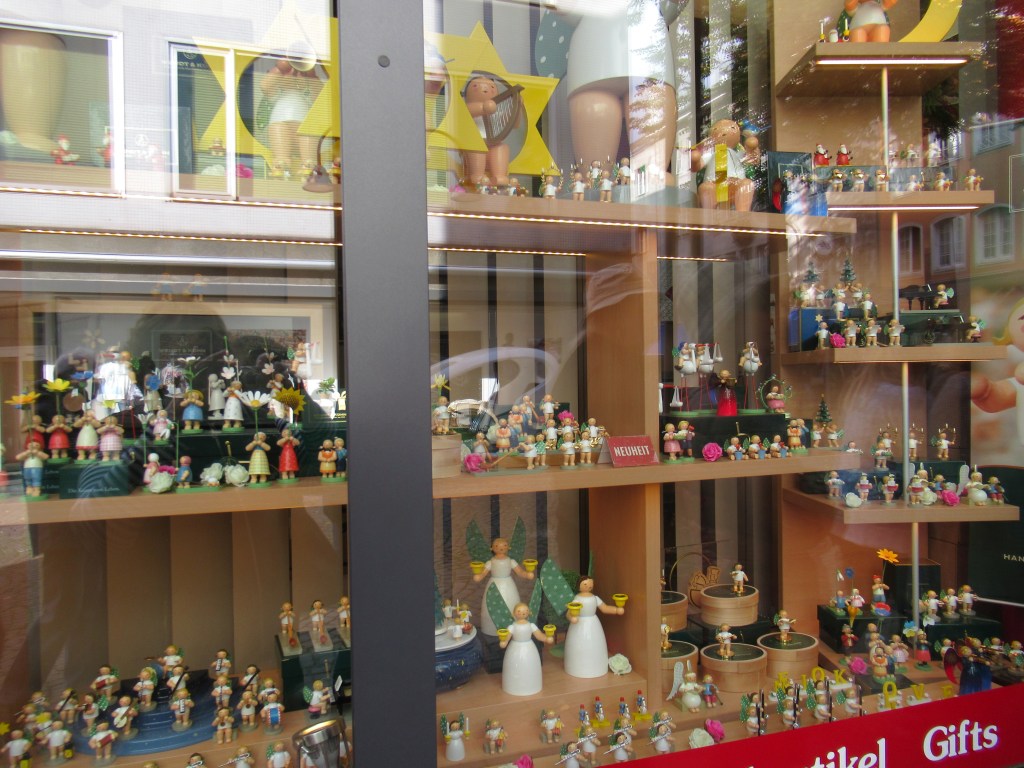
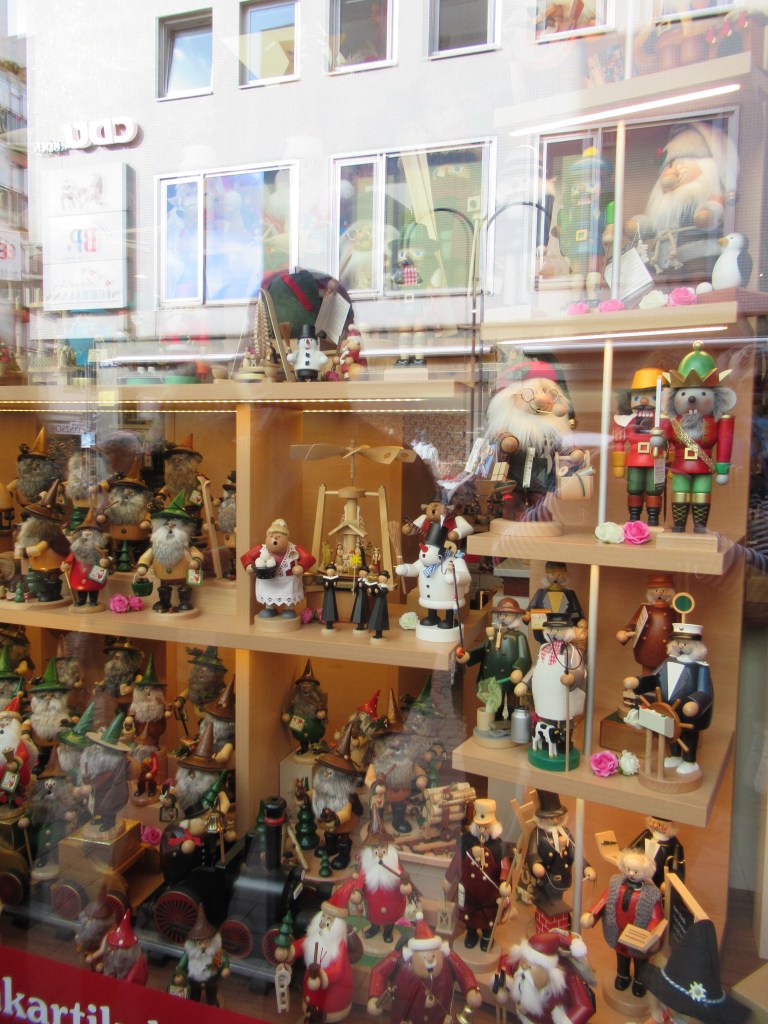
Classy store windows. Apparently for some time now the well-known German costumes have no longer popular but are now being purchased once again for special functions like the Oktoberfests.
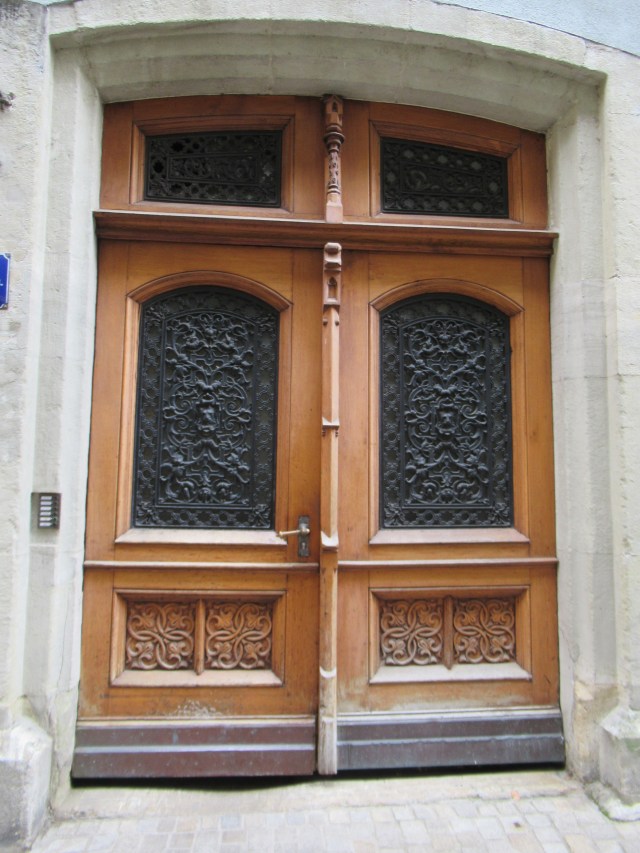
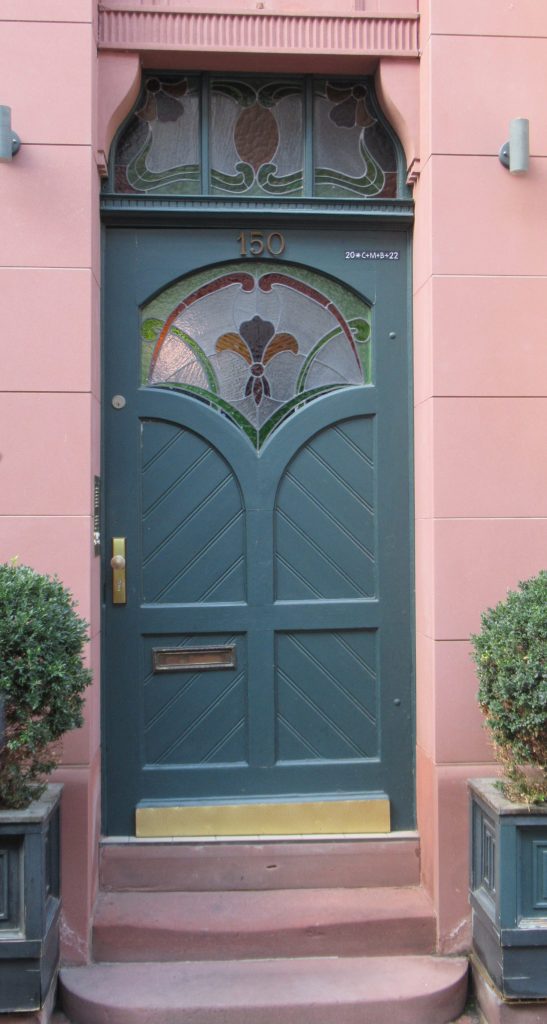
Nice doors. But wouldn’t they be better with stained glass or cut glass windows?
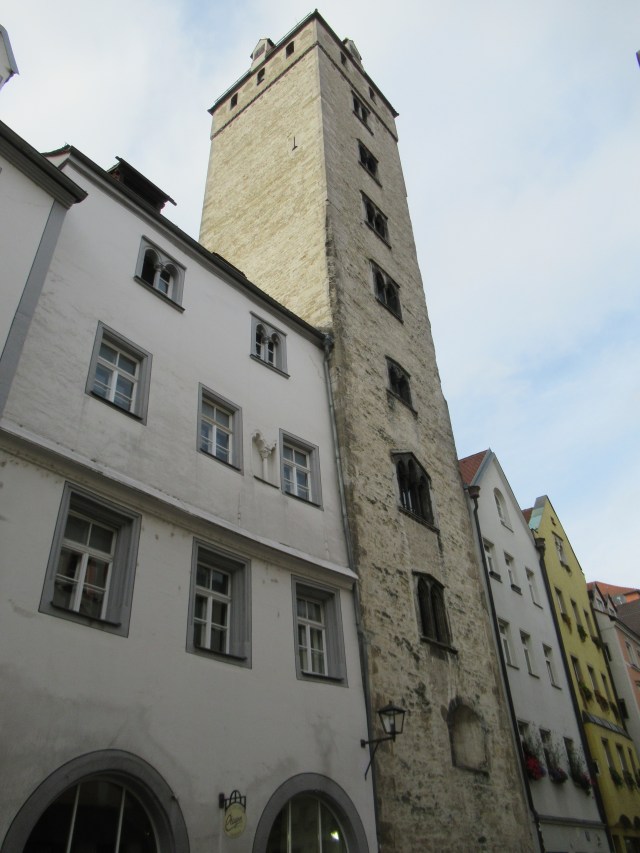
The story is that the taller the building, the richer the owner. This man must be very wealthy.
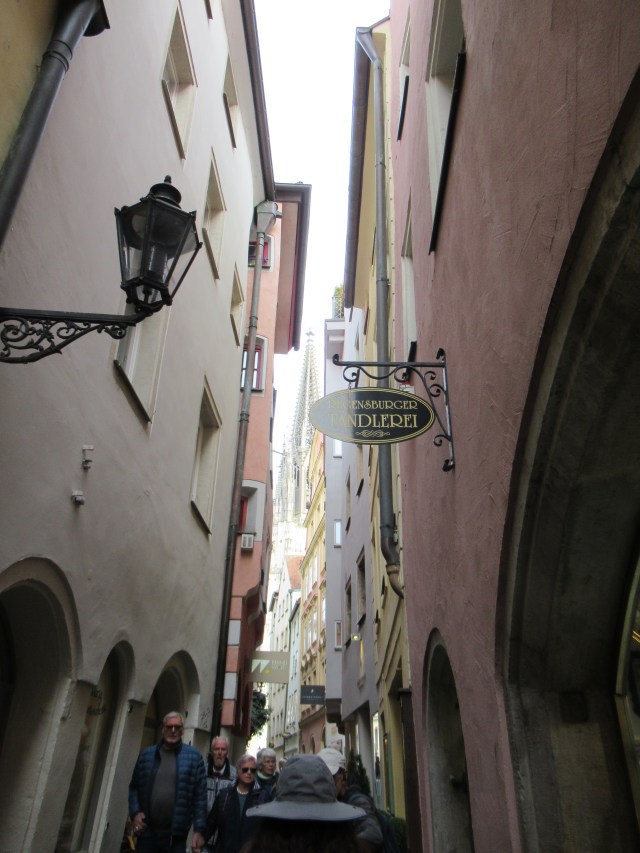
I love these narrow little alleys. If you look closely you can see one of the spires of St. Peter’s Cathedral in the opening.
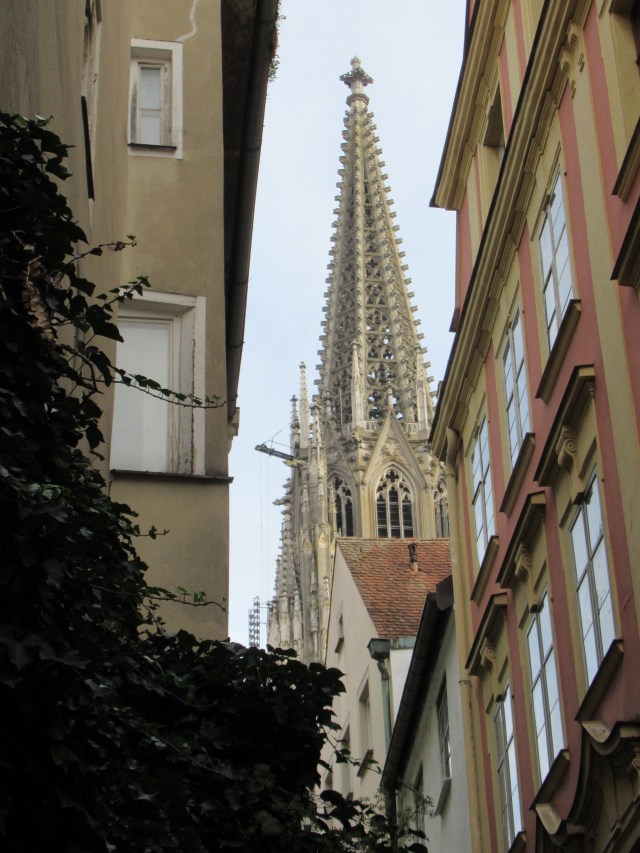
And here’s a closer look at St. Peter’s Cathedral.
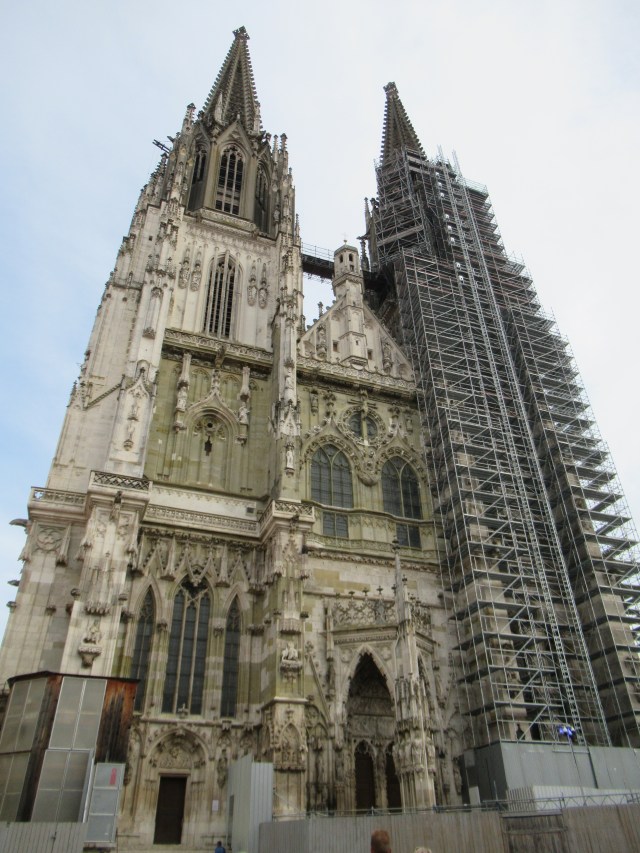
And here’s another view. St. Peter’s is widely considered Bavaria’s best Gothic architectural work.  Built about 700 AD, it was rebuilt in 1320 after a fire destroyed it.  And of course there’s always construction going on.
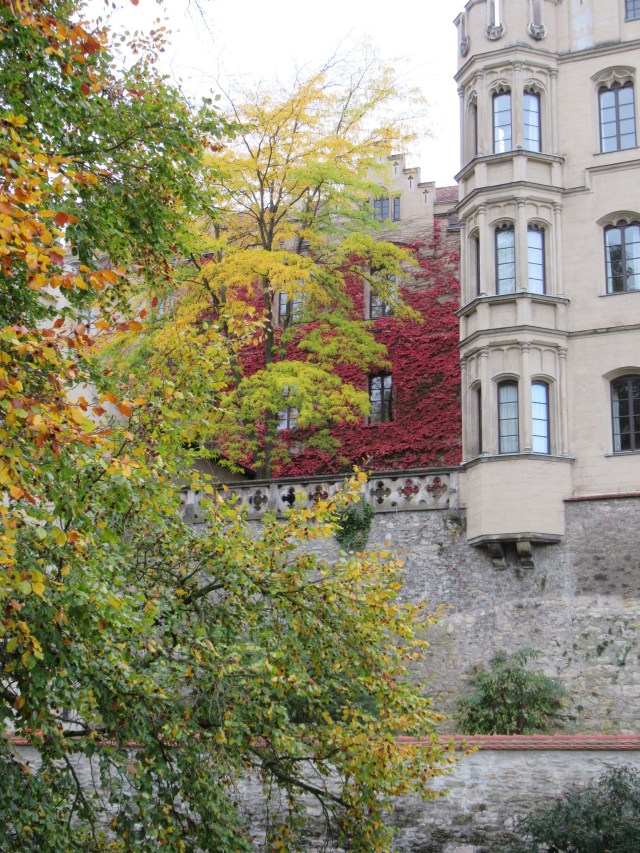
And across the sidewalk where our boat is docked, Maximilian II of Bavaria built this summer neo-Gothic home in the 19th century. It’s just on the edge of the Old City and the castle and park are lovely, especially at this time of the year. These last couple of photos the palace and the Villa Park next to it.

Villa Park next to Maximilian II’s summer palace.

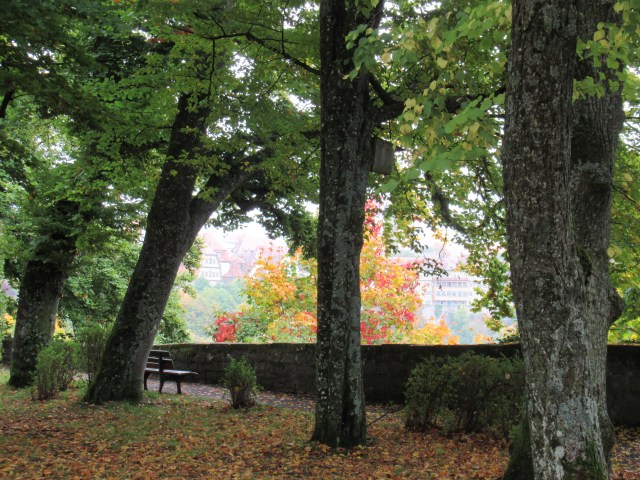
In Villa Park next to Maximilian II’s summer palace. The fall colors are amazing and these photos don’t do them justice.
Posted in Uncategorized | 1 Comment

Day 8 – Nuremberg

A short bus ride took us into Nuremberg this morning.  We stopped at a few key spots around the city before we reached our main destination, the Imperial Castle in Nuremberg, where we were able to walk around a small section of it while our guide shared interesting details.  Nuremberg is the second largest city in the German state of Bavaria.  Although Nuremberg was nearly destroyed during WWII, the remaining medieval city walls stretch some 3 miles and feature original gateways and 80 original watchtowers.  Nuremberg is infamous for its role in WWII, first as the site of Zeppelin Field’s Nazi rallies (which we saw from the bus) and later as the site of the war crimes trials at the Palace of Justice (also visible from the bus).

Our fabulous tour guide, Andy, was from the UK (Scotland) and we commented on how the tour guides never seem to be locals (one of ours last week was originally from New York!).  Andy has lived in Nuremberg for 40 years, just last year getting his German citizenship because of Brexit. In addition to working as a tour guide, he teaches English in a University here since every student must be fluent in English before graduating.  And by the way, education in Germany is totally free.

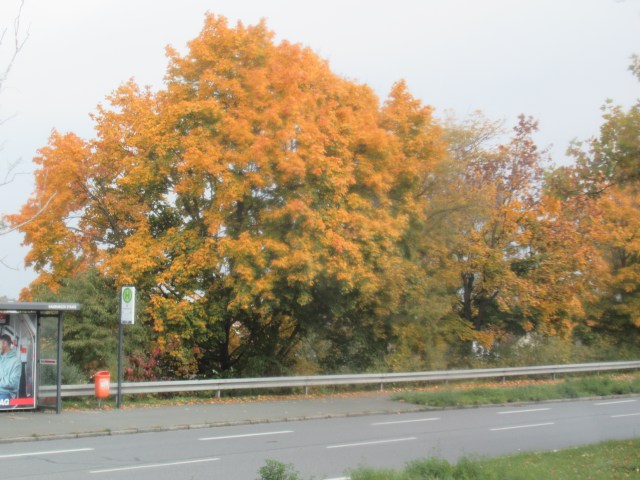
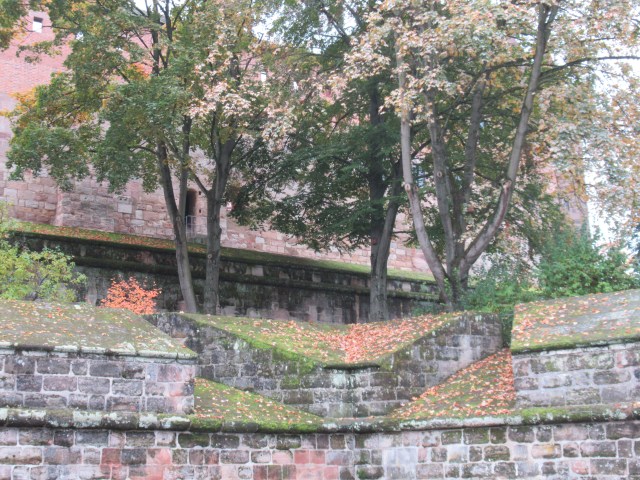
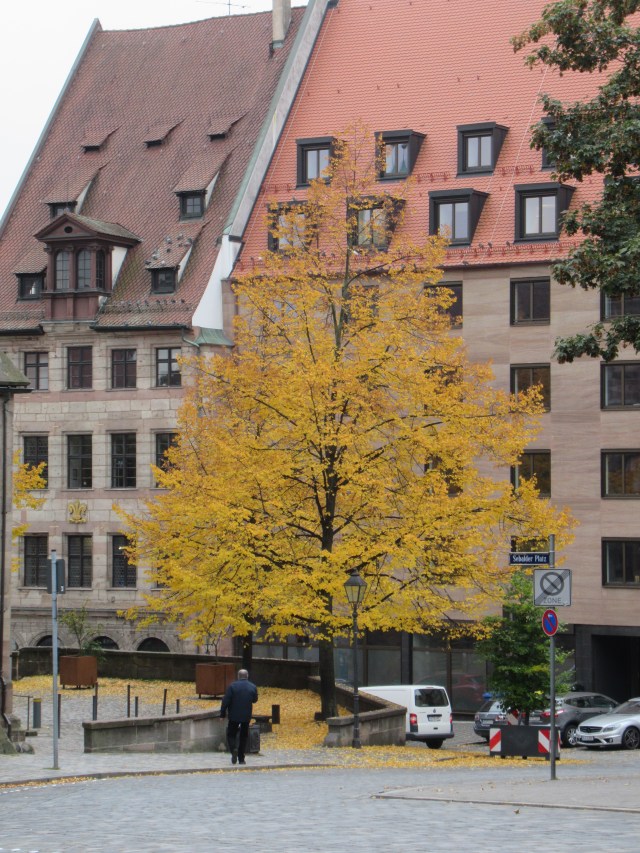
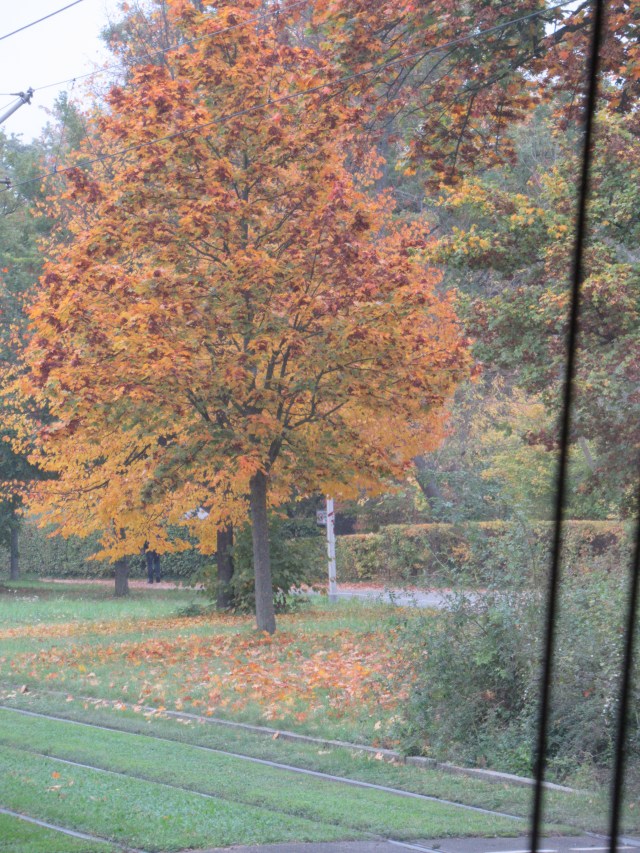
Let’s begin by looking at a couple of trees which are getting prettier and prettier. It’s a cloudy day and these brightly colored trees really popped.

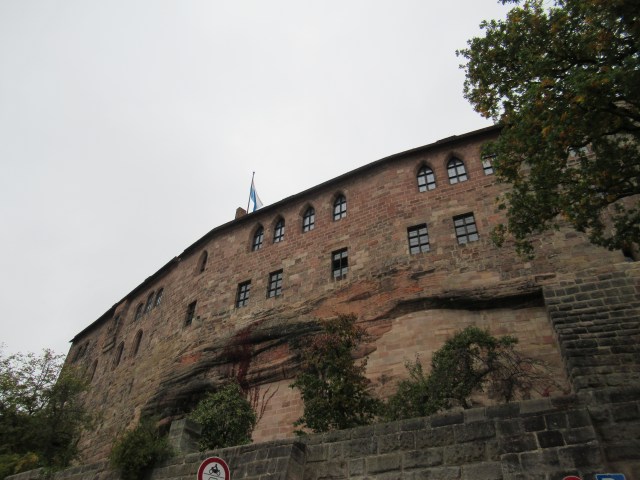
Now onto the old Nuremberg Imperial Castle grounds.

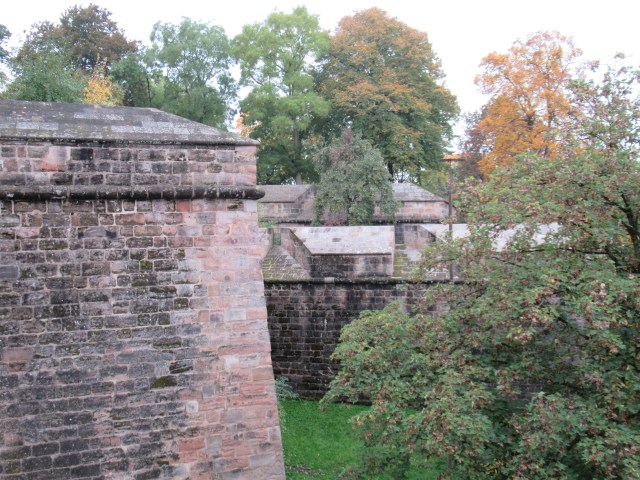
Part of the huge wall.

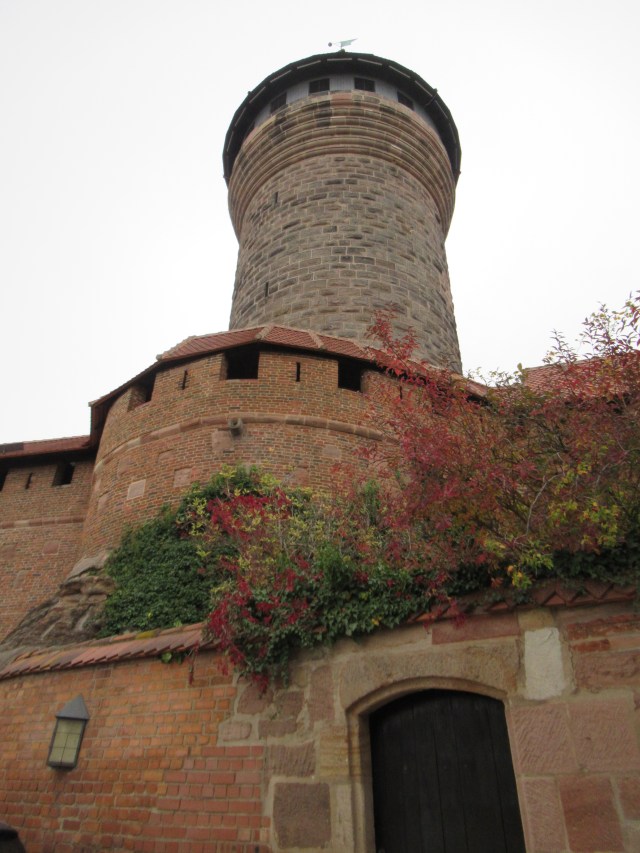
A part of the wall with one of the many watchtowers.

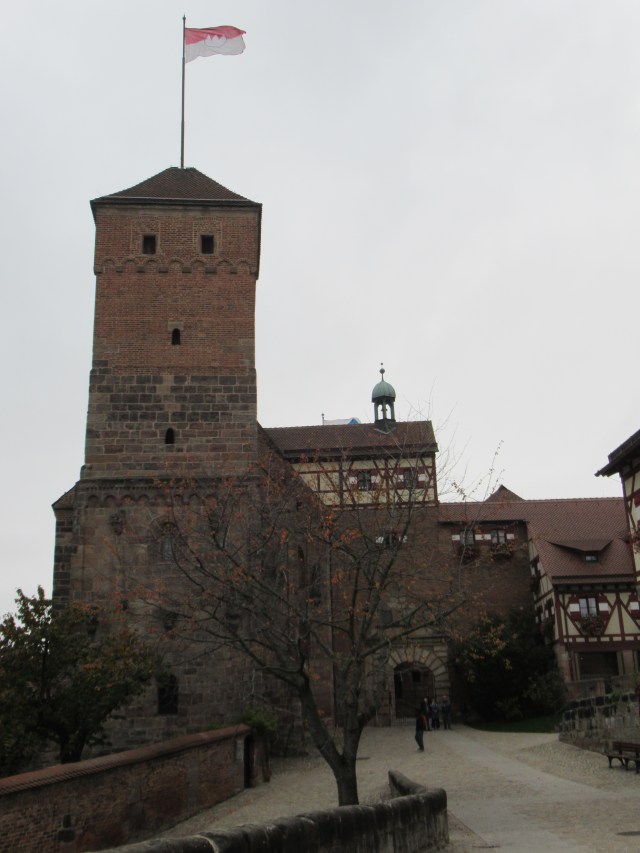
A courtyard behind the wall.

Another view of the wall and some buildings inside.

Here you can see the cuts in the wall where the cannons were positioned.

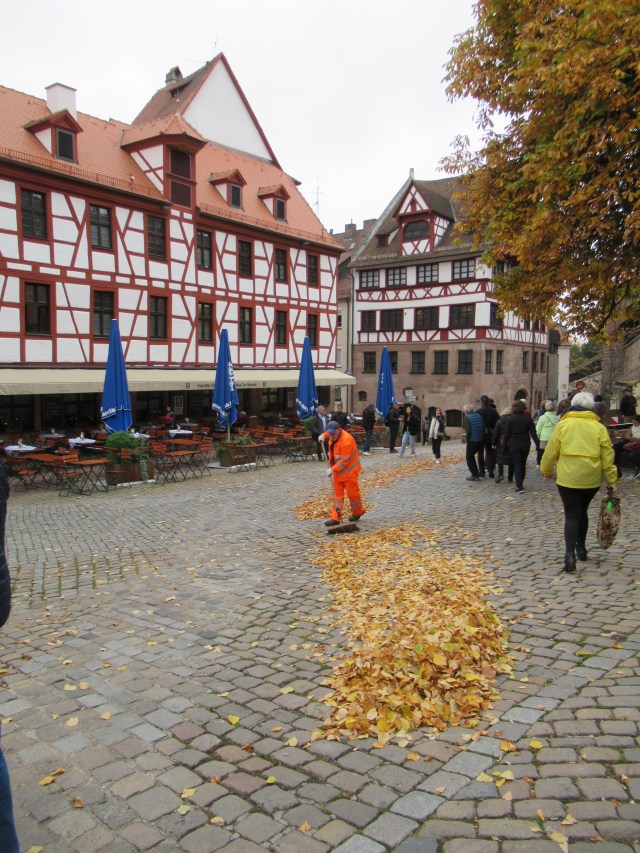
After we finished viewing a small section of the wall, we walked down a steep cobblestoned walkway into this cute square with restaurants and bars. What is that man in the orange suit doing? Make him stop! We love those leaves! Don’t mess with our leaves!

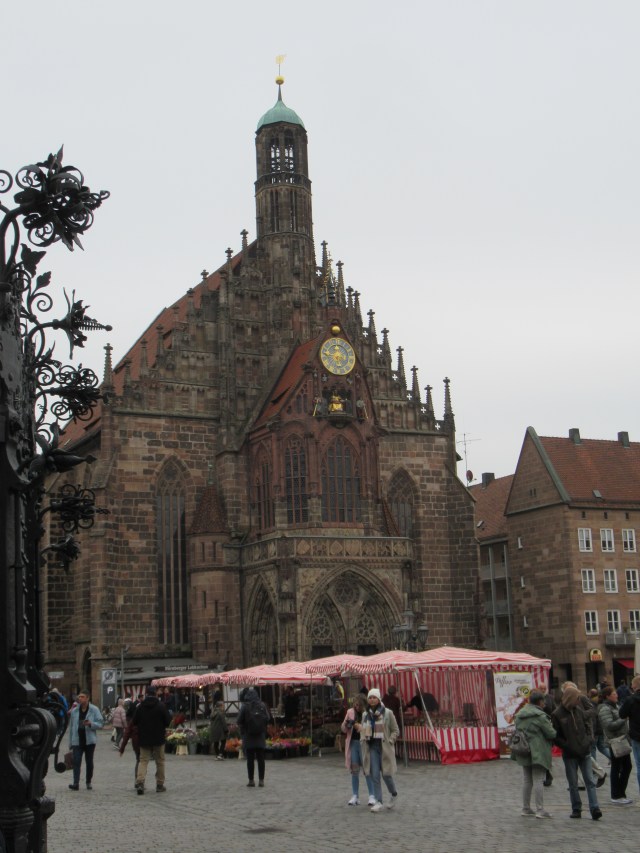
Further down the cobblestoned hill we came across a much bigger square with lots of things going on.  The square held a brightly tented farmers’ market but our guide also pointed out other interesting things around the perimeter for us to see.

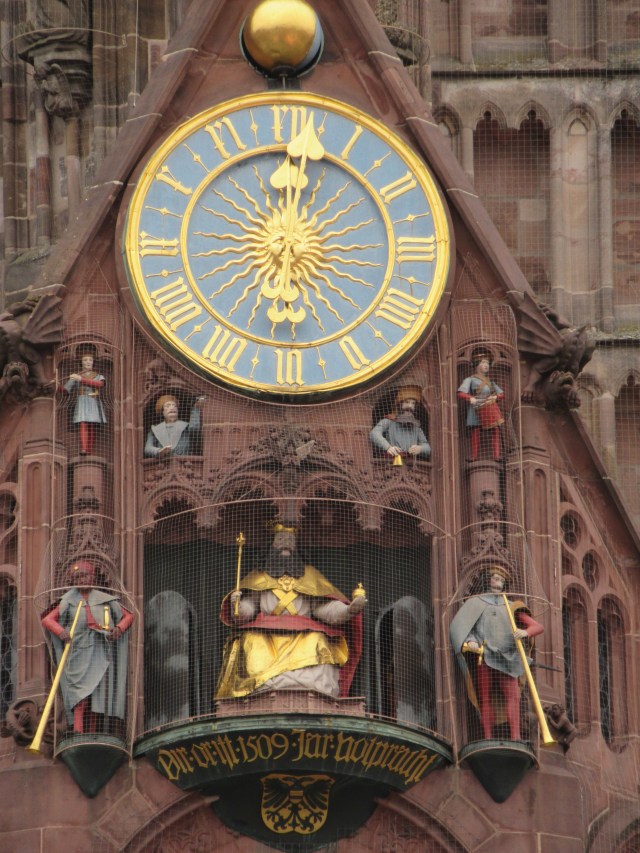
First our guide pointed out this church that was built in 1509. It was just before noon and he alerted us that we were about to see a special show.

This is how the clock looked in the beginning. First, the 4 musicians just under the clock took turns playing their instruments.

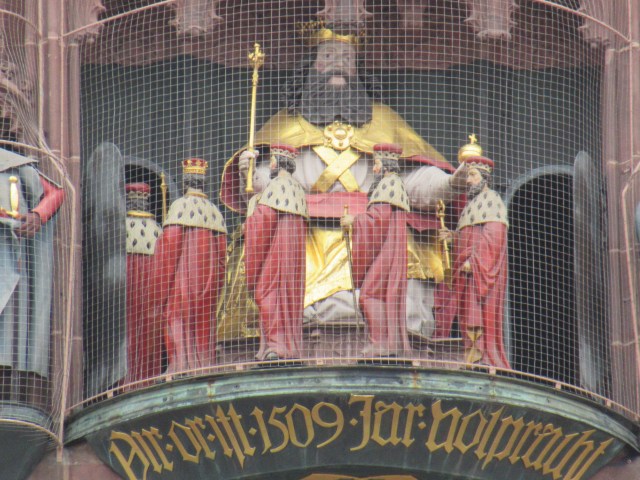
Then this procession of kings came out of the door and marched around the large figure sitting in the middle.  It was really cute.

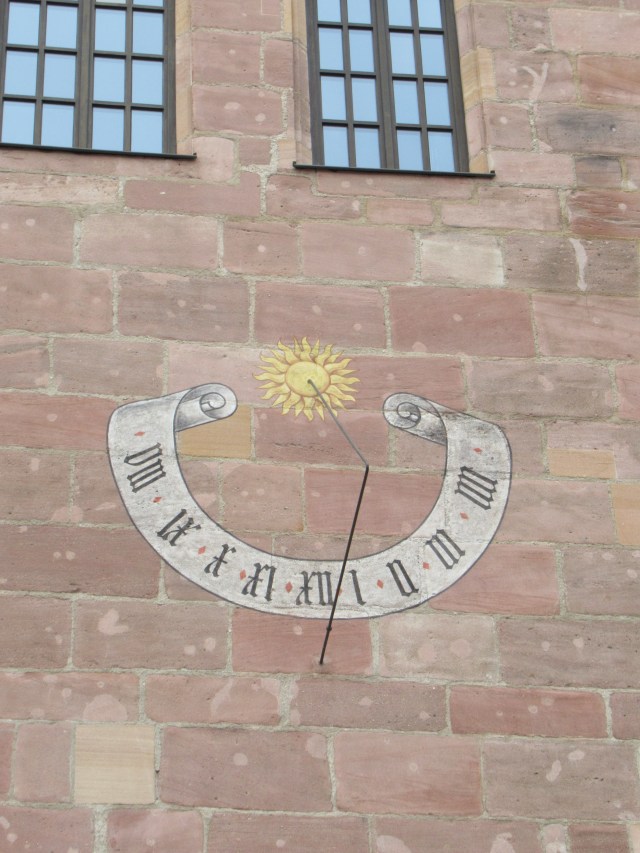
Then we noticed a sun dial on the side of one of the buildings which our guide said was correct 100% of the time except when it is cloudy (like today) or daylight savings is in effect (about half of the year). But other than that, correct 100% of the time!

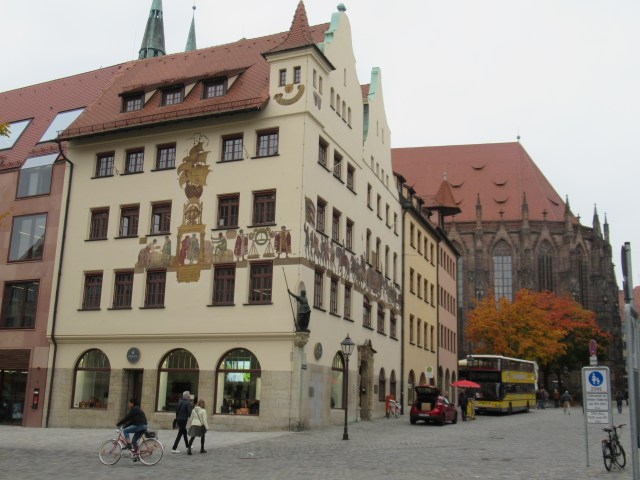
I loved the carvings on the 2 sides of this lovely building.

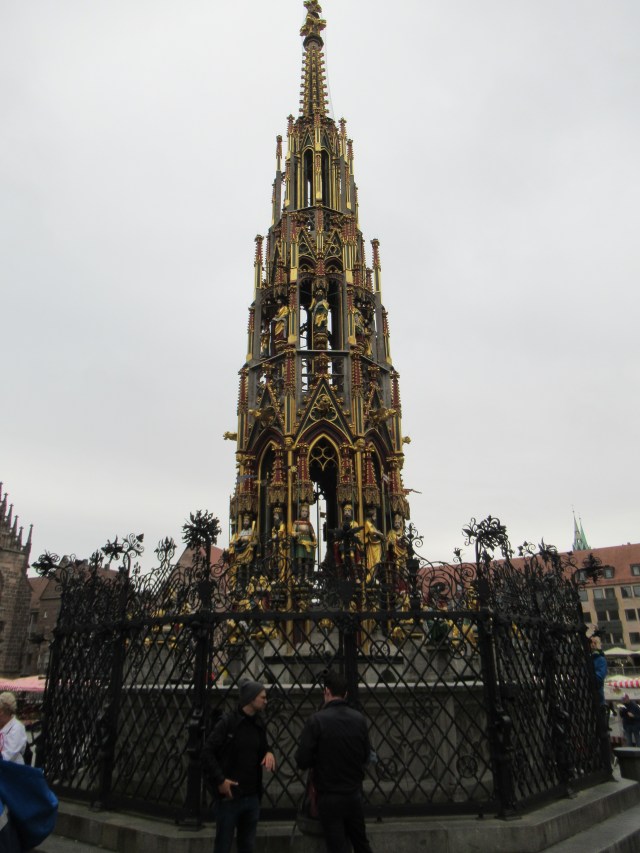
Unfortunately I didn’t get the story behind his monument but it was gorgeous – and so clean and shiny and covered with gold.  And with a very elaborate fence protecting it.

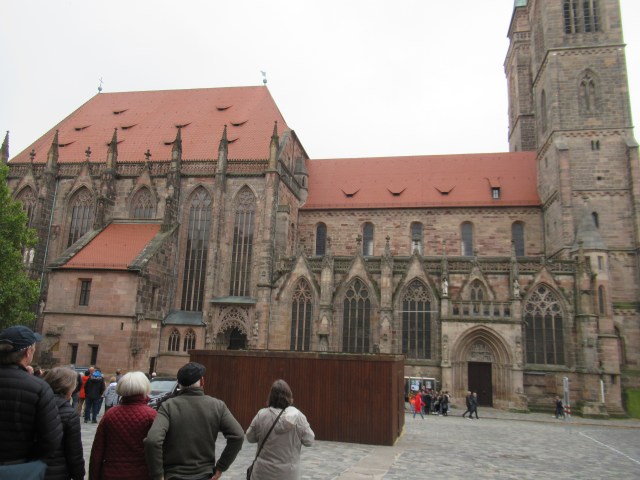
This was a huge, beautiful Lutheran church. The buildings are so large and so close together that it’s often difficult to get back far enough to get a full photo.

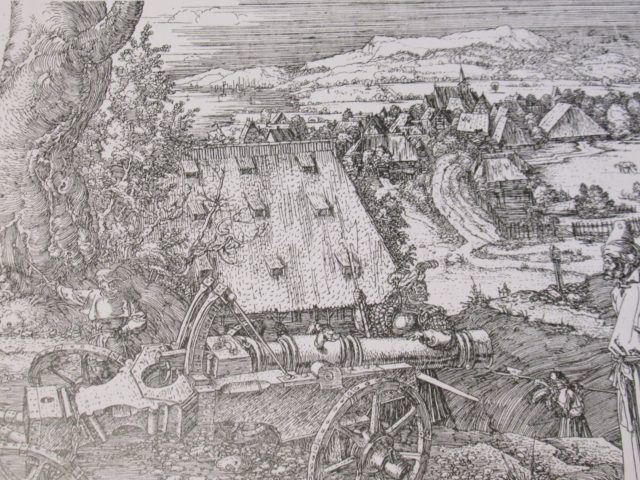
Albrecht Durer was a German Engraver. See an example of his work below.

Albrecht Durer, Landscape with Cannon engraving, 1518.


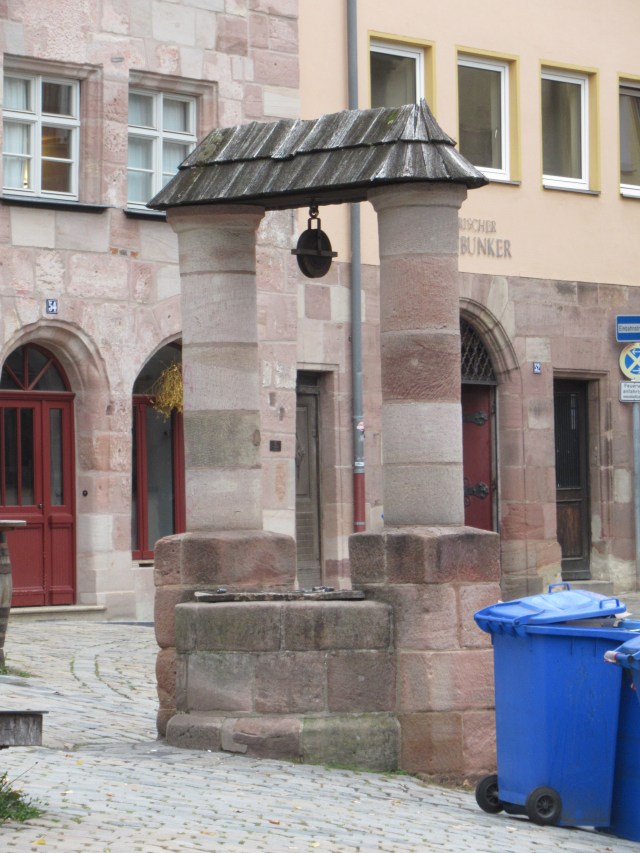
An historic water well in the square.

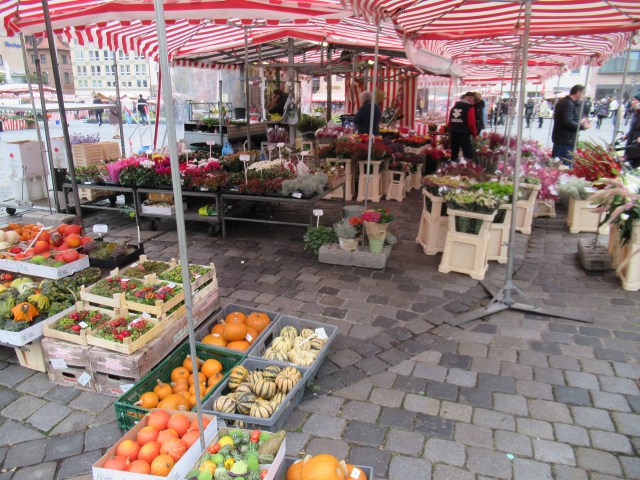
The Farmers’ market was great. Wonderful variety of products and very friendly vendors. Lots of samples. This vendor has pumpkins, gourds, and fall wreaths in the foreground and lots of fresh flowers in the back.

This vendor had amazing-looking fruits – especially check out the size of those Mission Figs in the middle of the second row (between the kiwis and blueberries). The front row had a variety of mushrooms. Everything looked so fresh and perfect.

This vendor had a wonderful variety of cheeses and gave free samples.

And then just a few odds and ends of things we saw on the bus on our return trip to the boat.

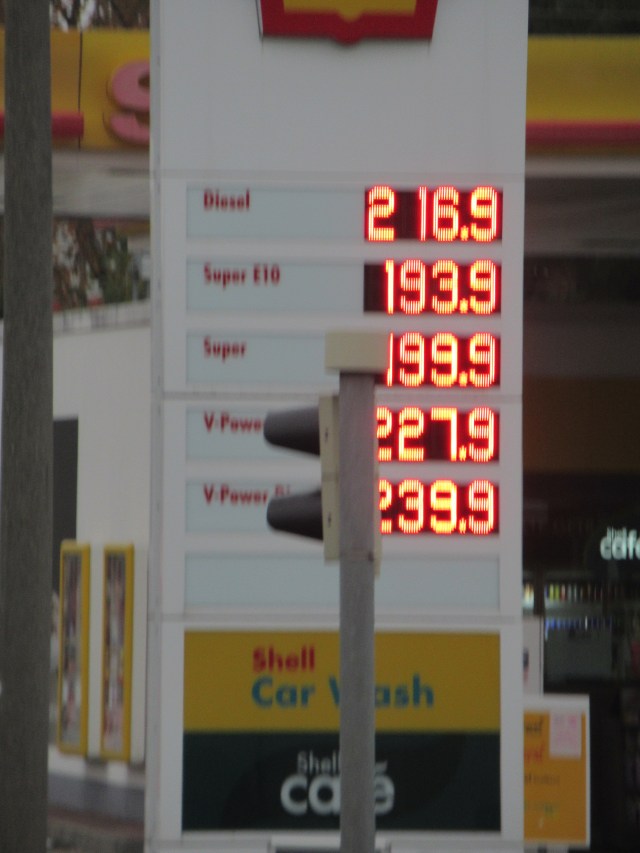
We passed by this Shell gas station and I was able to get a blurry photo of their sign. If my math is correct, I think the prices range from $7.18-$7.88 per gallon, depending upon which grade you buy.

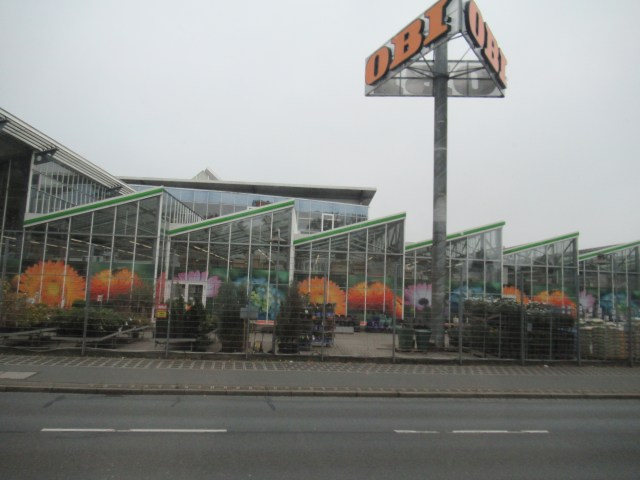
A very attractive nursery.

Posted in Uncategorized | 1 Comment

Day 7 – Bamberg

Today we visited the Bavarian town of Bamberg. Founded in 902, Bamberg remains a medieval-looking city known for its symphony and rauchbier, a specialty smoked beer. Bamberg is especially noted for its Altes Rathaus, or Old Town Hall, situated on a twin-arched bridge over the Regnitz River near its confluence with the Main. One of the loveliest of all German towns, Bamberg is scenically situated on seven hills, each crowned by a beautiful church. Bisected by rivers and canals, the town embraces an atmospheric jumble of crooked lanes, medieval buildings and a skyline punctuated by church steeples.

Bamberg’s prosperity has always been linked to the river. In the Middle Ages, it was the starting point for shipping on the Main, and it is now the northern starting point of the Main-Danube Canal, built between 1960 and 1992.

One of the few cities in Germany not destroyed by World War II bombing, Bamberg has the largest repository of original medieval structures in its remarkably preserved Old Town. Because of this, it was named a UNESCO World Heritage Site in 1993.

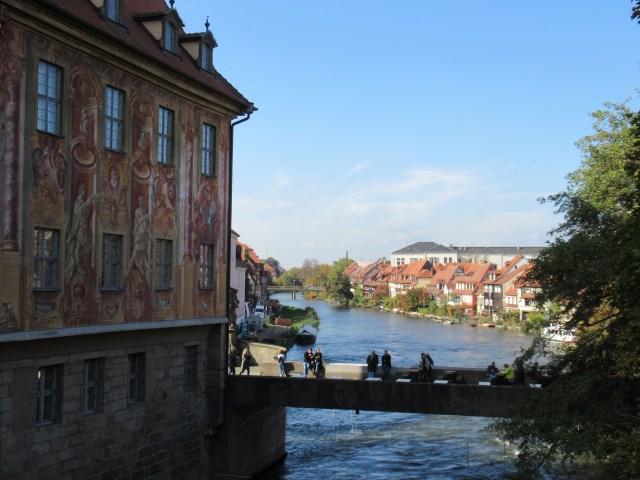
The original Town Hall built on a manmade island in the middle of the Regnitz River in the 14th century. It was replaced by a New Town Hall in another location in 1736 and today is a museum.


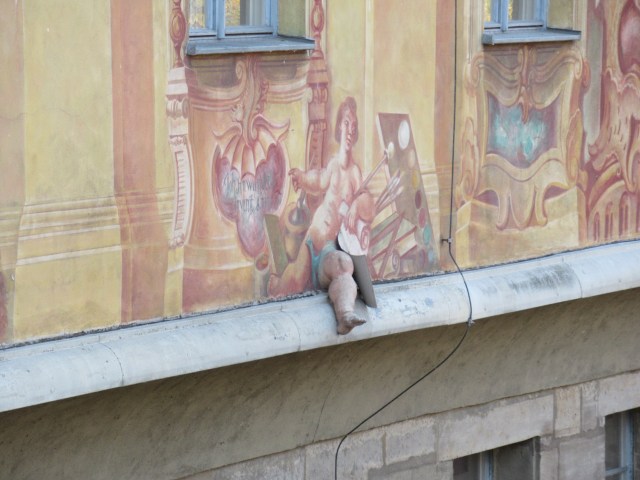
This is the architect’s own little joke. These legs belong to a baby whose body is higher up on the building.


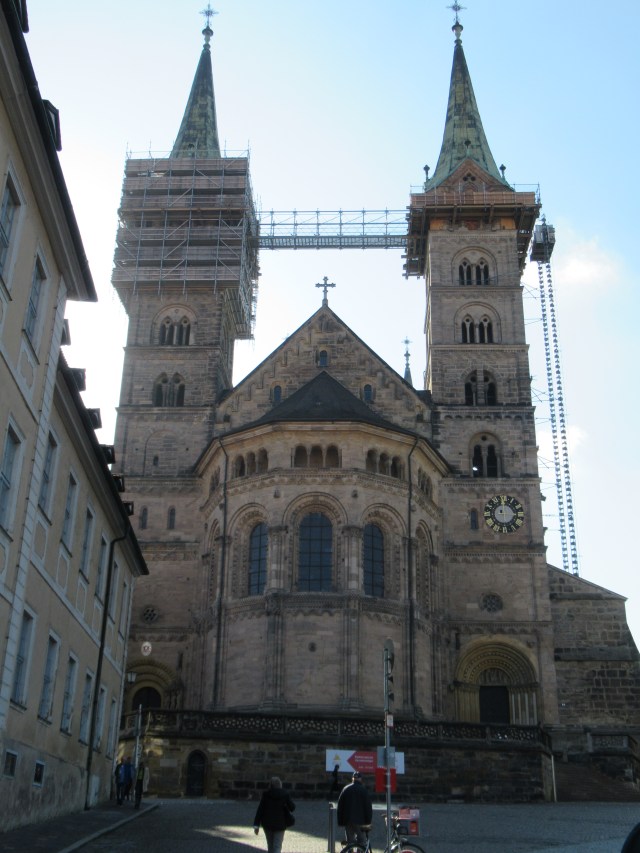
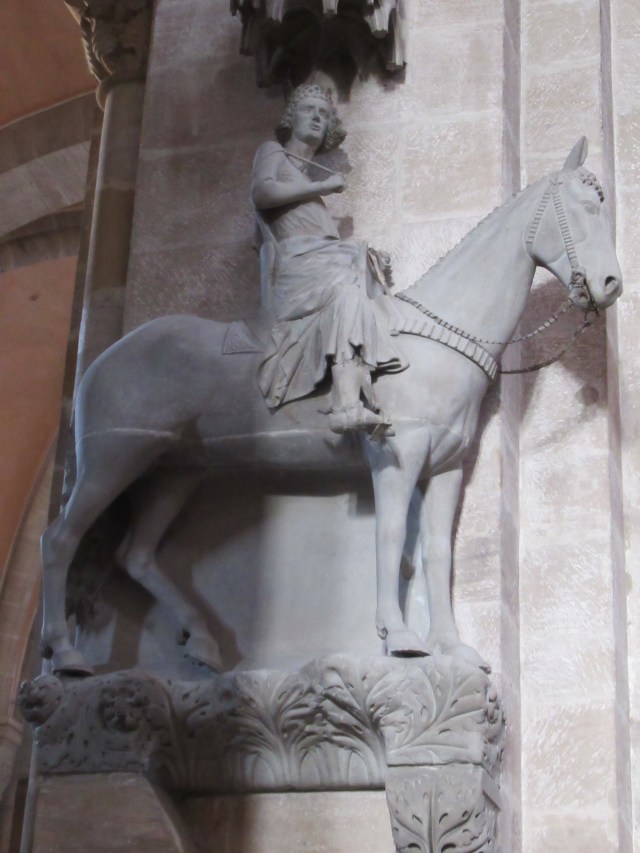
One of the major cathedrals in Bamberg. This is the only cathedral in the world to have a statue of a full-size horse in it (see below).


And nobody knows who the rider is.


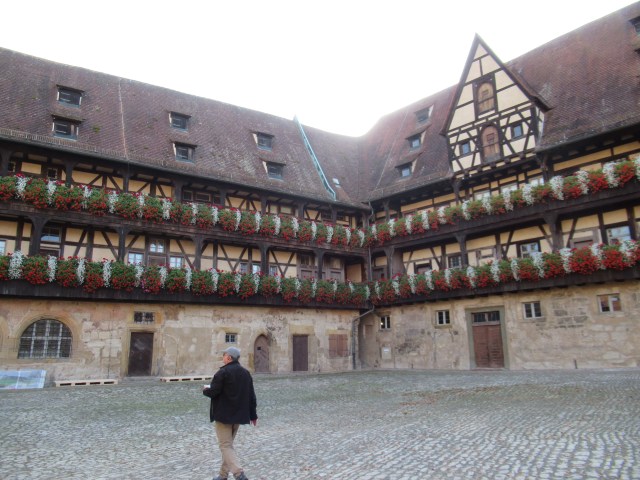
The old Bishop’s Residence which was later replaced with a new residence.  I do like the buildings and especially all of the live flowers growing along the balconies.
 

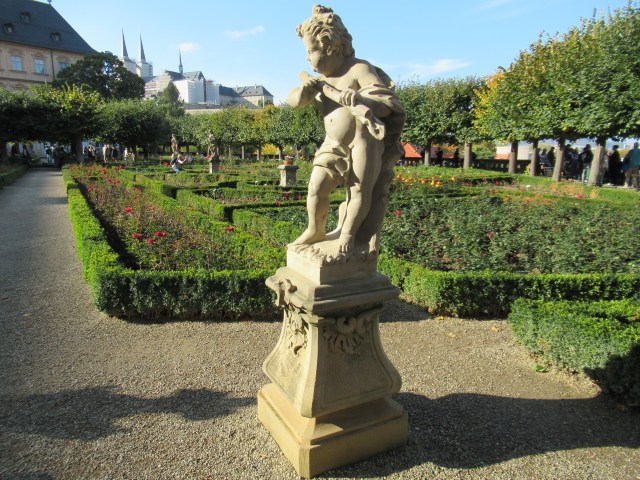
A lovely garden near the old Bishop’s Residence.  When the Bishop was still living there, they grew orange trees in this garden, not the roses we see today.
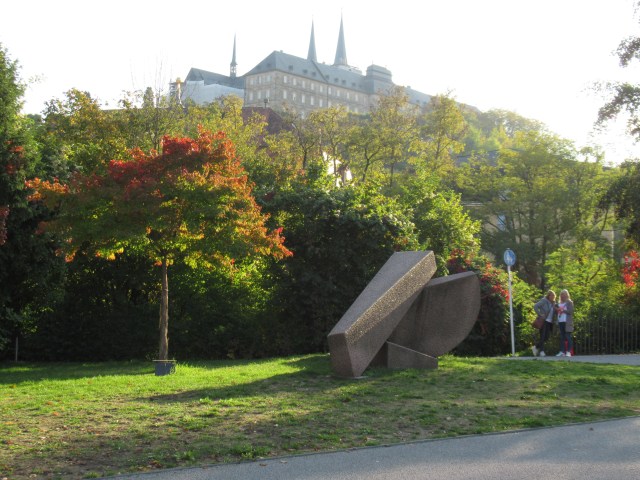
 

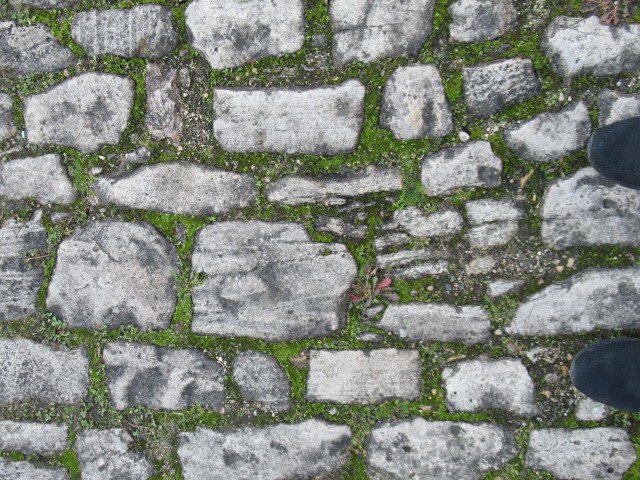
A close-up of the cobblestones we’ve been walking on for the last several days. Oh, my aching feet!


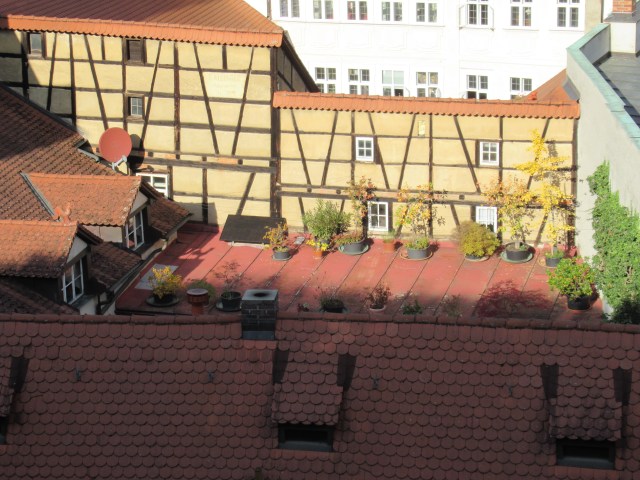
A nice and secluded rooftop patio.


Another lovely Bavarian building.


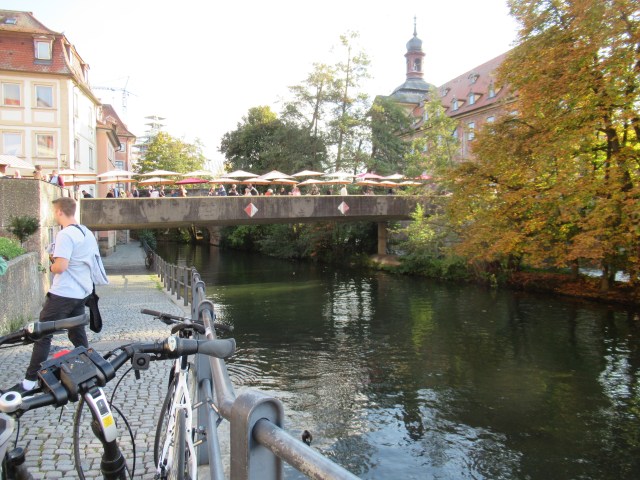
A look up the Regnitz River. It’s a very touristy area and all of that patio seating on the bridge gets put to good use.


And a look downriver from the old Town Hall.


The back side of another cathedral on top of one of the 7 hills.

Tomorrow we’re off to Nuremberg. 

Posted in Uncategorized | 1 Comment

Day 6 – Rottenburg & the Romantic Road

Today we drove the famous ”Romantic Road” to Rothenburg. Oh my! This grandfather of scenic routes took us through historic towns with striking buildings, cute little houses, historic sites and fabulous scenery all along the way.

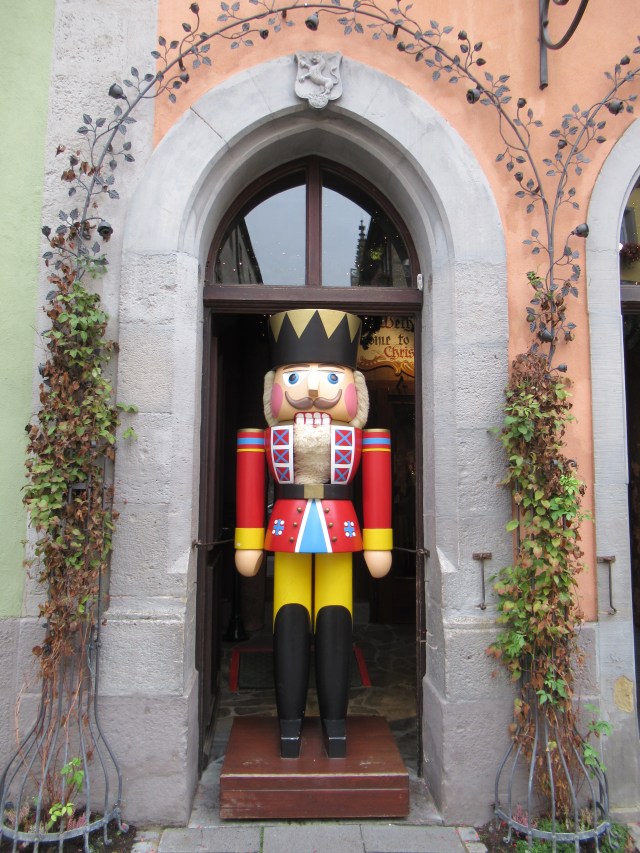
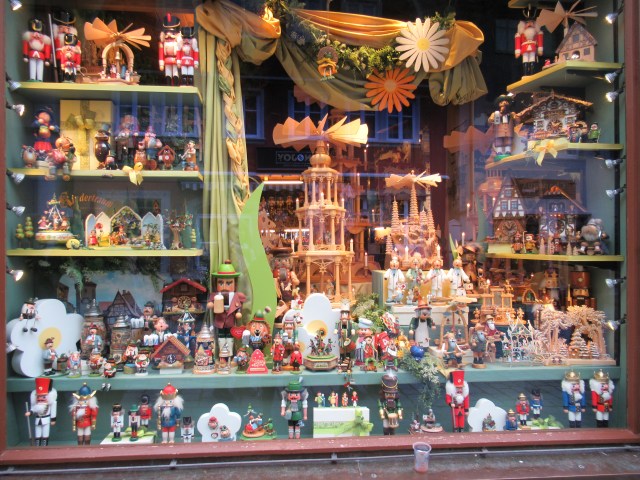
Rothenburg, our destination today, is the best-preserved medieval town in Germany, scarcely changing in appearance for hundreds of years. There’s a 1.5-mile wall that encircles Rothenburg giving brilliant perspectives of architecture in the Middle Ages. The wall connects five medieval gates, complete with guard towers dating from the 13th to 16th centuries, and there’s a walkway on top the entire way. The whole of the walled town is a museum and we strolled the narrow cobblestone streets and admired the Gothic, Renaissance and baroque houses of fountains, and of course, we shopped in a few of their many adorable shops. This place just feels like Christmas!

First, a few photos from our drive along the Romantic Road.

On our drive along the Romantic Road, we saw small villages and lots of rich farm fields like these.

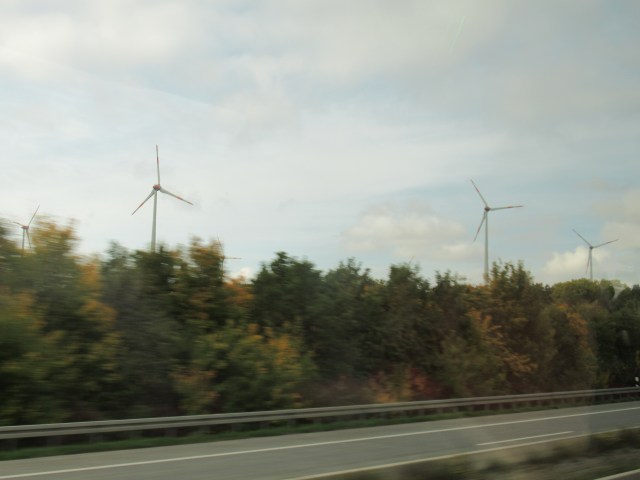
Lots of windmills. Our guide said that some farmers had switched to just ”raising” windmills because the government will pay them $10,000 to $20,000 for each windmill on their land.


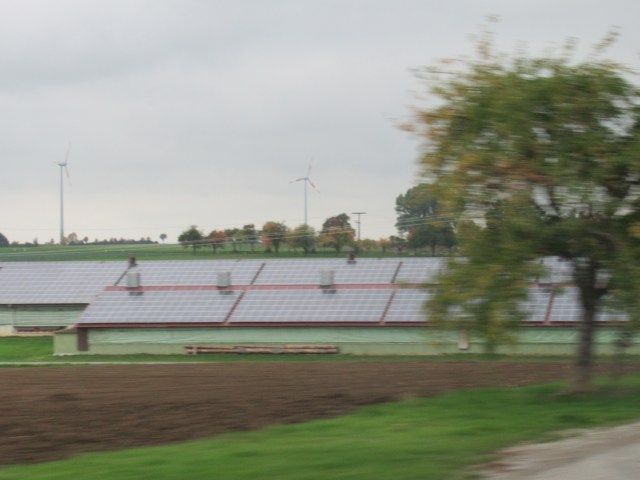
We saw lots of solar panels here, sometimes whole fields covered with them or entire farm building roofs covered with them like this one is.

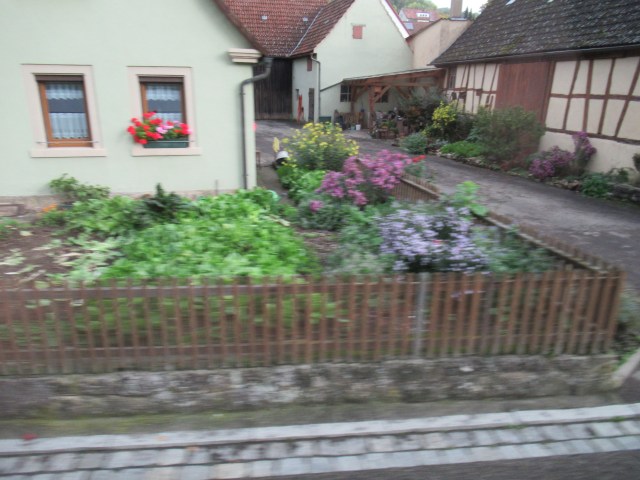
I loved the little villages we went through with houses right next to the road. But it was hard to get photos, especially in the countryside, because the bus moved so fast that mostly what I have are blurs. Lots of houses, like this one, have turned their small front or side yard into a combination of flowers plus an impressive vegetable garden.


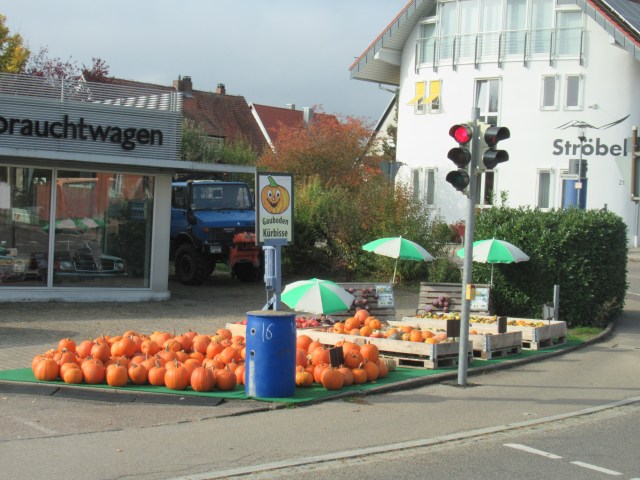
A makeshift fall market in one of the villages..


Then we arrived in Rothenburg and our guide led us off on our walking tour.

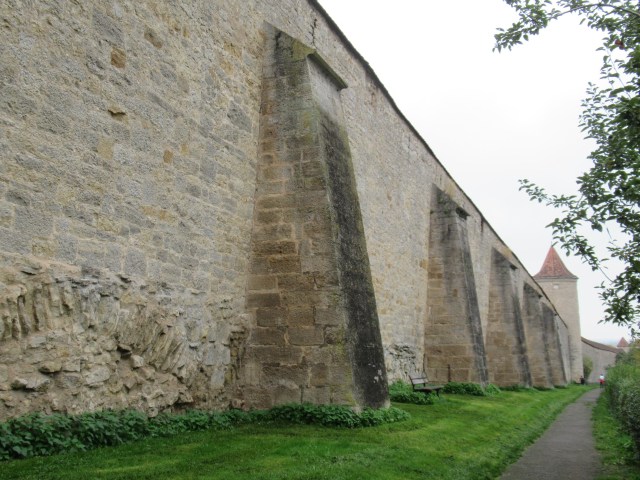
This is a part of the 1.5-mile wall that encircles Rothenburg. Wish we had had time to walk on top of the entire thing.

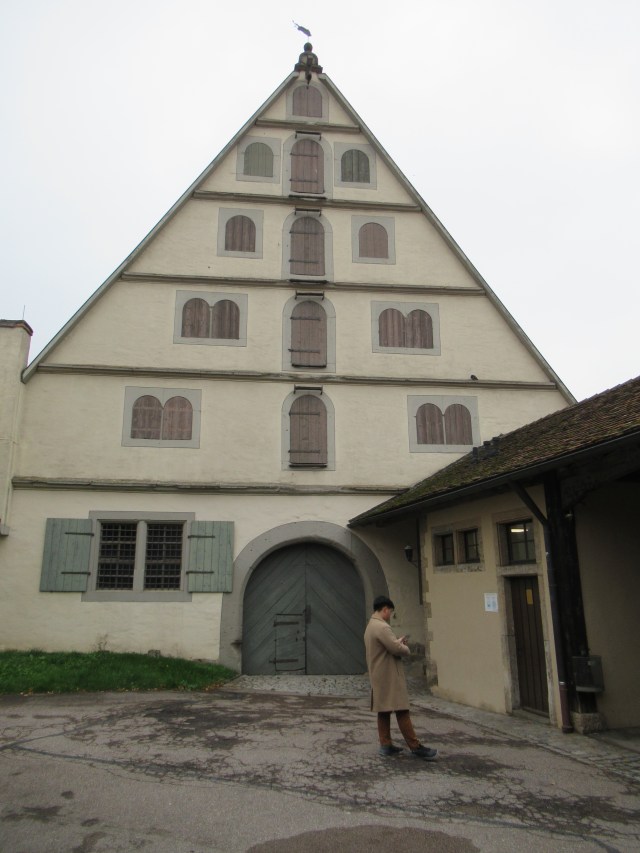
A building used for storage during the War.


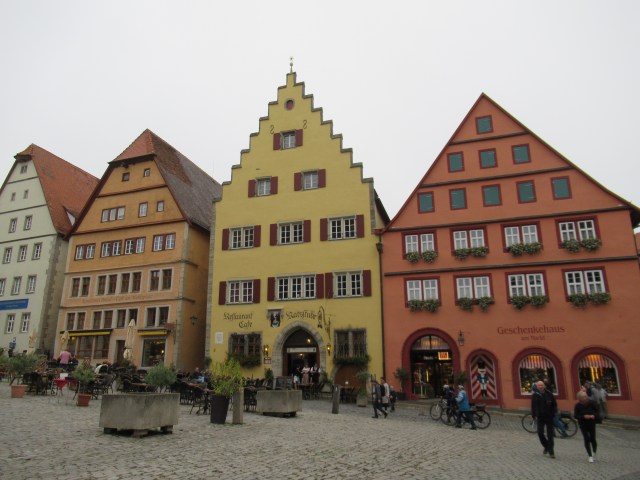
How cute are these buildings!


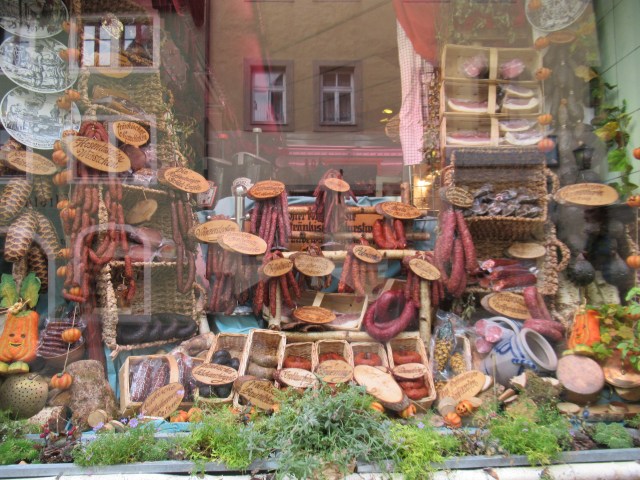
A good-looking sausage shop with many, many different varieties of sausages.


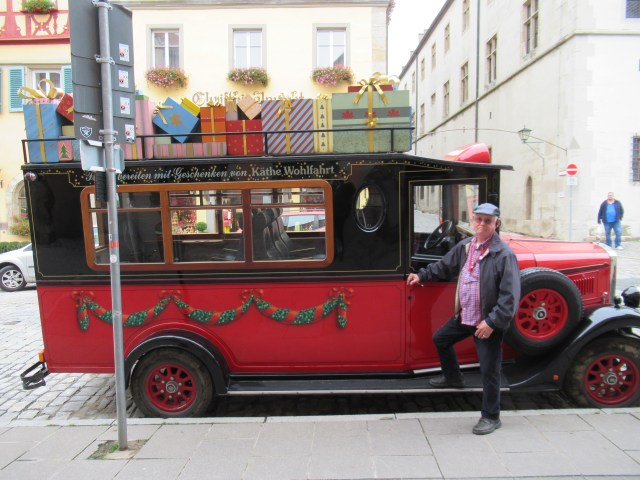
Chuck standing in front of a very large advertisement.


Isn’t he adorable! And big!


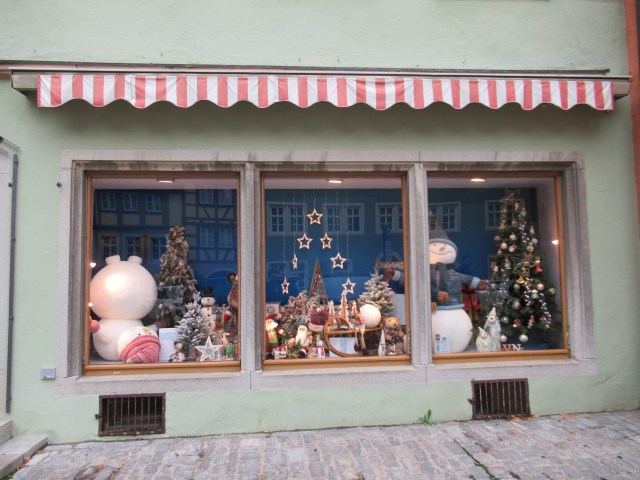
Another fun window display. Many of the shop windows, like this one, were Christmas-themed.


Another Christmas shop.


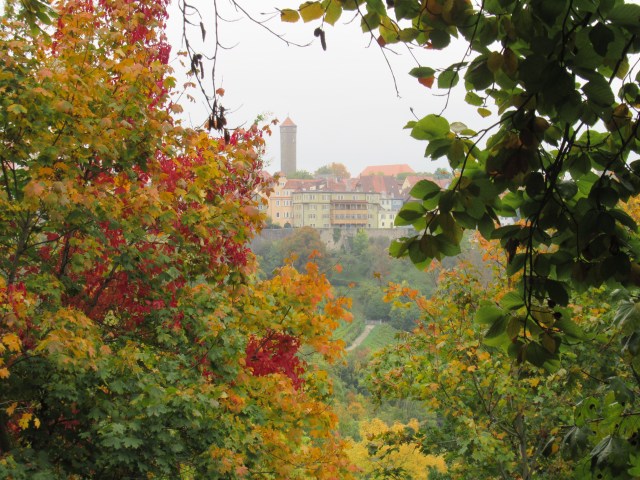
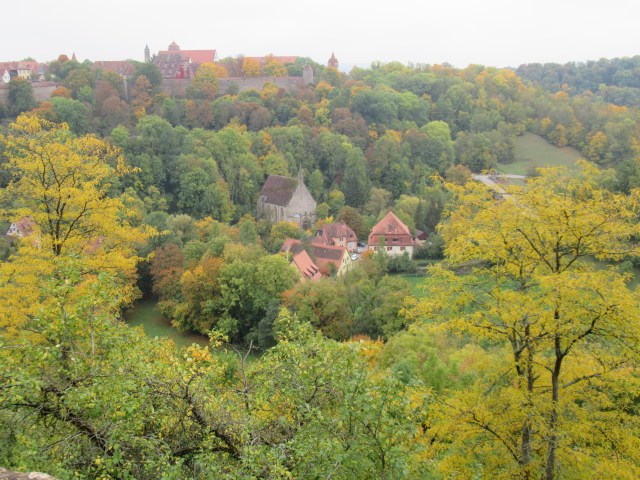
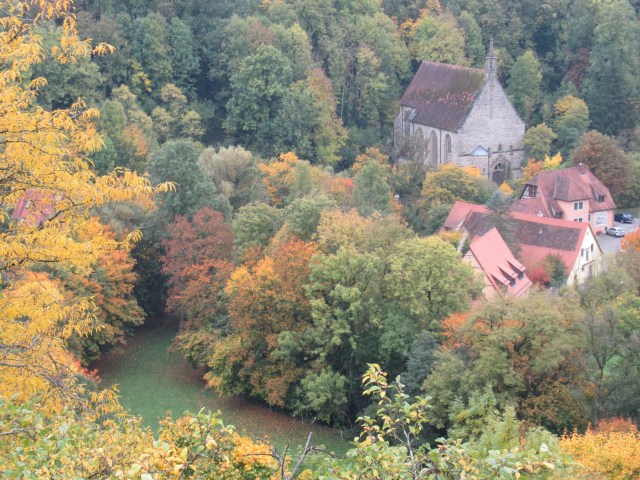
The city’s walled area is shaped like Pinocchio’s head. And there’s a long peninsula on one side (his nose) with a short tunnel that opens up into a park-like area with a small monastery or chapel next to a lovely little garden and a breathtaking view of the greater city area.  With all of the trees turning color, it’s gorgeous in this little secret area.


Another view from the peninsula that is Pinacchio’s nose.


Another view from ”Pinocchio’s nose.”


Another view from Pinocchio’s nose.

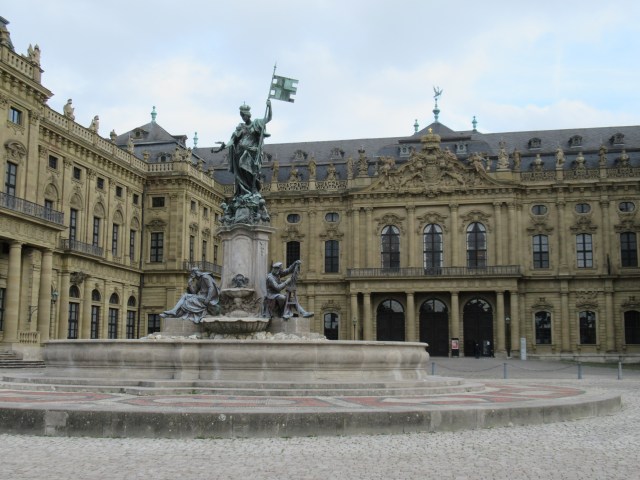
Wurzburg Bishops’ Residence

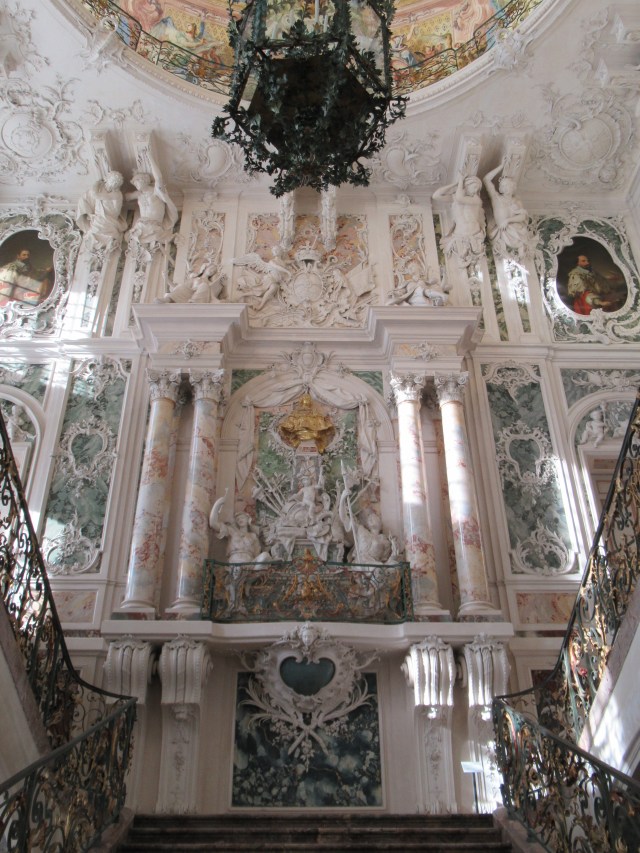
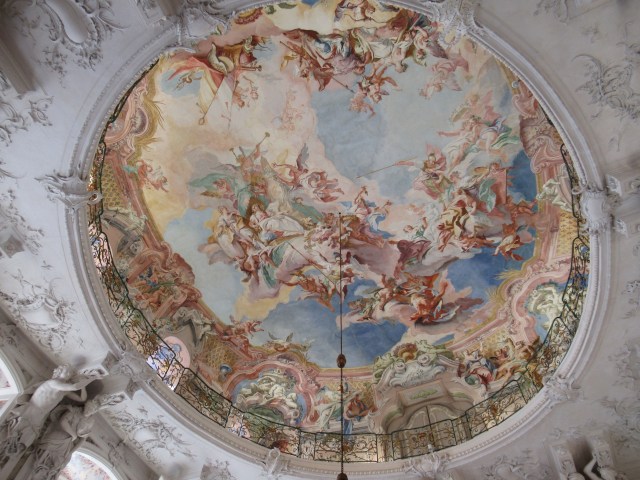
After Rothenburg, we got back on the bus and drove to Wurzburg where we visited the residence of the Wurzburg prince-bishops.  Built in 1720-1744, with the interior completed in 1780, it is now on UNESCO’s World Cultural Heritage List. 

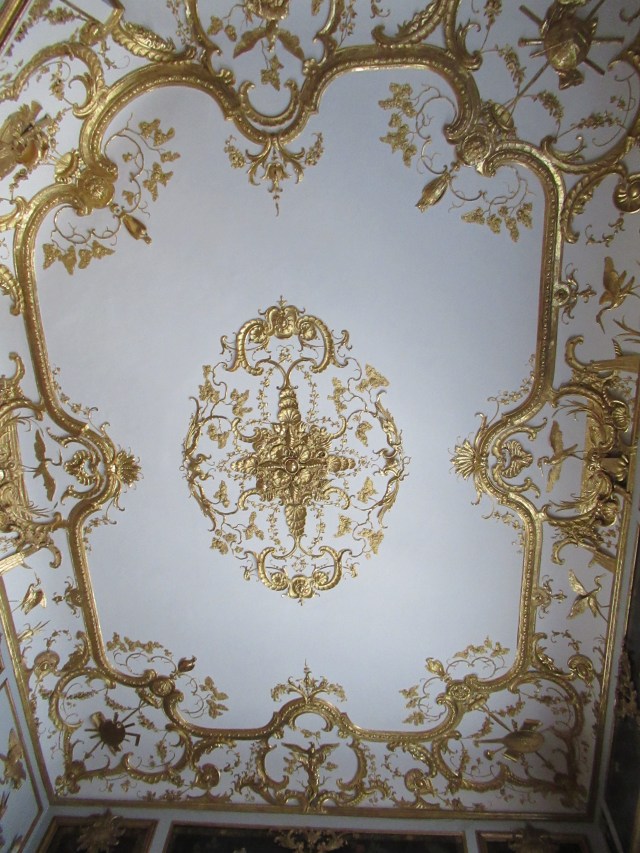
The Wurzburg Bishops’ Residence is humongous!  It has a world-famous staircase with a ceiling fresco representing the 4 continents.  The ceiling is one of the largest frescos ever created.  The residence contains almost 400 rooms but besides the amazing staircase and fresco, only about a half dozen are open to the public, 3 of which were absolutely amazing.  Unfortunately no photos were allowed anywhere in the residence!  Bummer!

The Wurzburg Bishops’ Residence is so big that I couldn’t get back far enough to take a picture of the whole thing. So here’s what I got.

So now it’s back on the bus and return to the boat.  Tomorrow we’re going to Bamberg.

Posted in Uncategorized | 1 Comment

Day 5 – A Walk in Miltenberg

We’re now on the Main (pronounced like ”mine”) River, a tributary of the Rhine.  We’ve been going through locks off and on and the scenery has changed a bit – more lush green and a few more turning trees and fewer towns and castles.  Today we took a walking tour of Miltenberg with their medieval town center dating back to the 12th century.  Miltenberg is home to Germany’s oldest inn, the Gasthaus zum Riesen, built in 1411.  As we strolled along the cobblestone street, among timber-framed houses and down crooked lanes, we just felt like we had stepped back in time.

First a few odds and ends of photos from yesterday and then I’ll talk about our visit to Miltenberg.

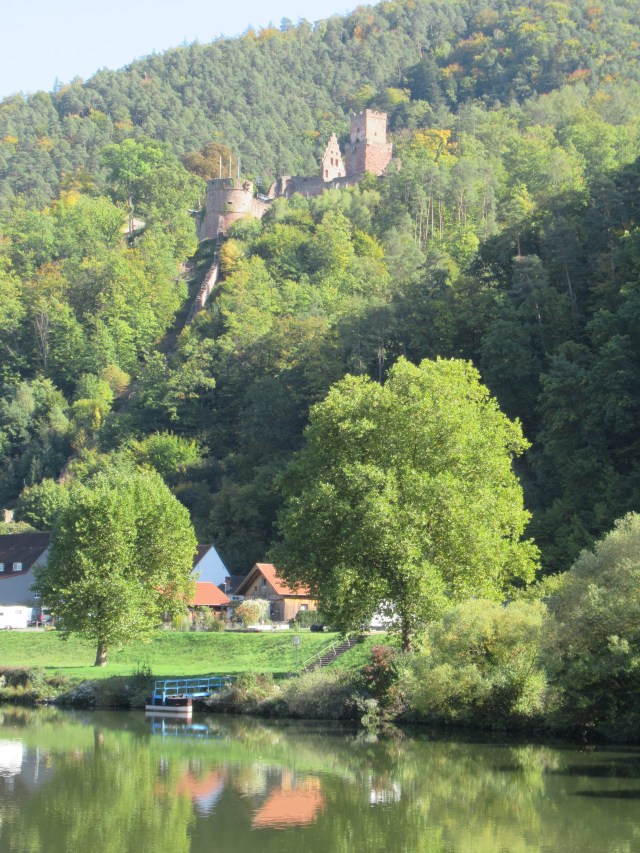
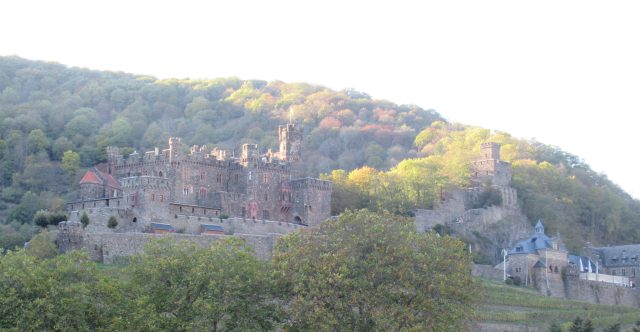
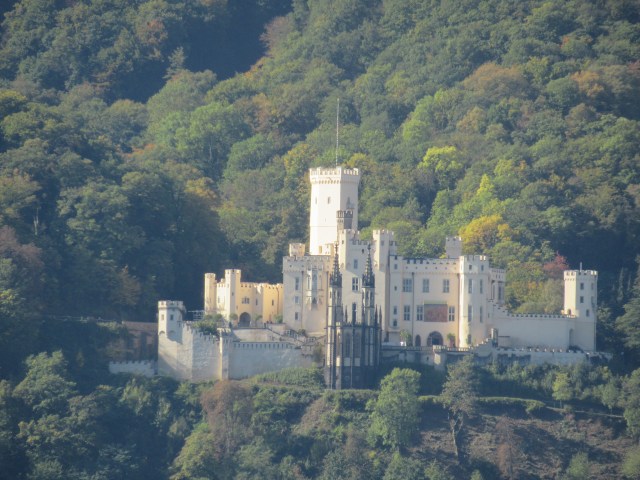
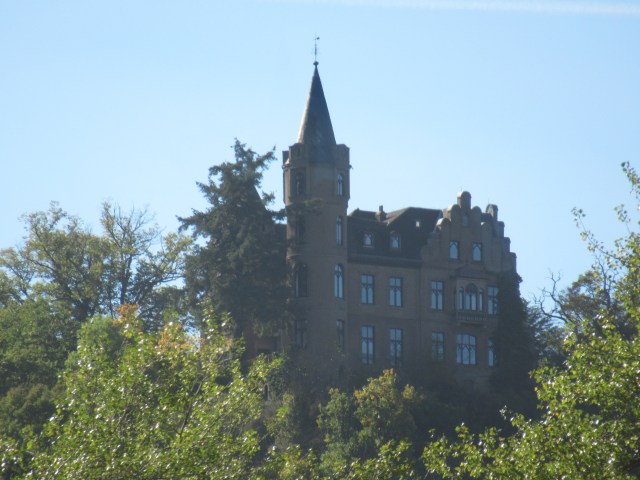
One more castle.

And here’s one last castle. For now anyway.


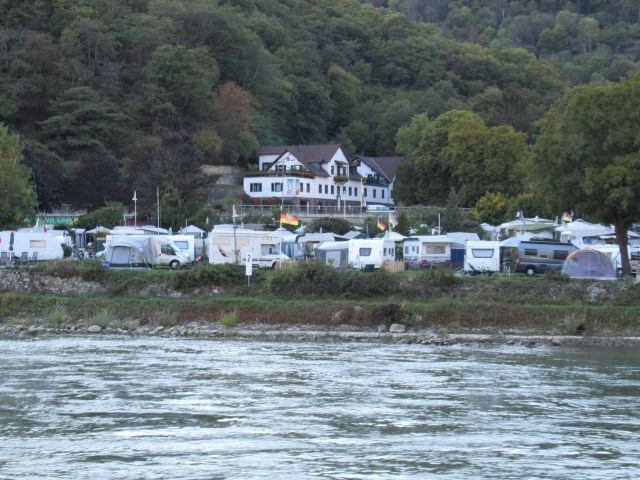
One of our guides told us that campgrounds along the river are frequent and popular and he certainly was right about that. We see them often along the river and they’re always very crowded.

Nice little fall scene.

A bike route runs for miles along the river. It’s very flat and gets lots of use.  Doesn’t this look like fun!

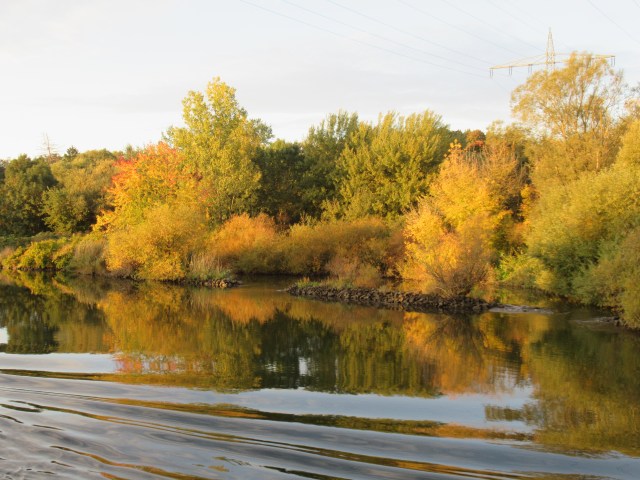
The colors have been slow to change but I’m sure it will get better as we go along. This is one of the prettiest groups of trees I’ve seen so far. The location of the sun really helps too, of course.

Okay, enough of the odds and ends (but really, can we get too much of castles?!) On to Miltenberg.

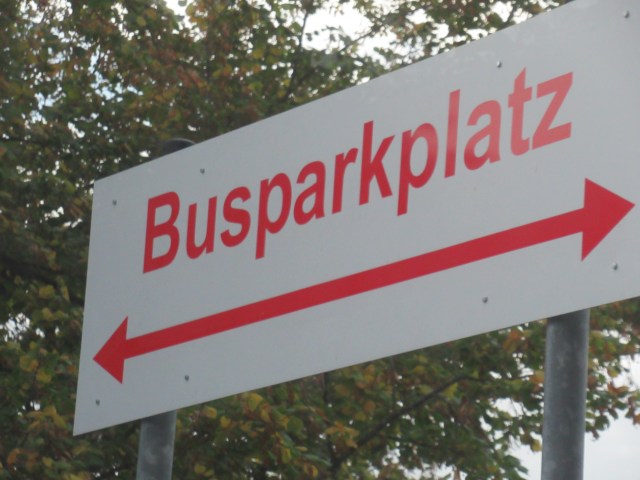
A bus took us from our boat to the downtown area of Miltenberg for our walking tour, and when we parked we spotted this sign in the parking lot telling us where our bus needed to park. Really? Wouldn’t just ”buses”’ be sufficient? Why do Germans always have to be so verbose? Just saying.

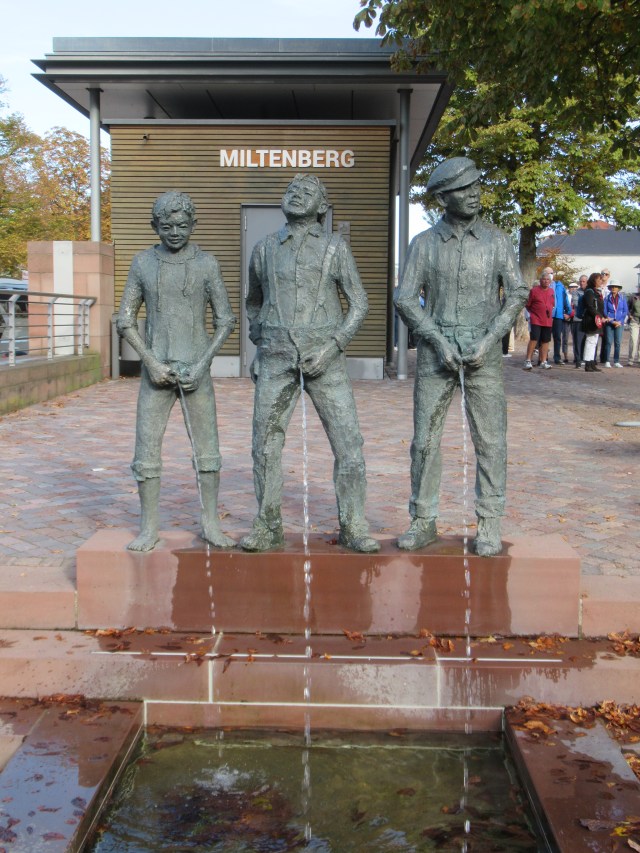
This statue next to a public toilet lot celebrates 3 smug little pissers. (There’s a little plaque on the side telling us the water is not suitable for drinking.  Hmmm…..)

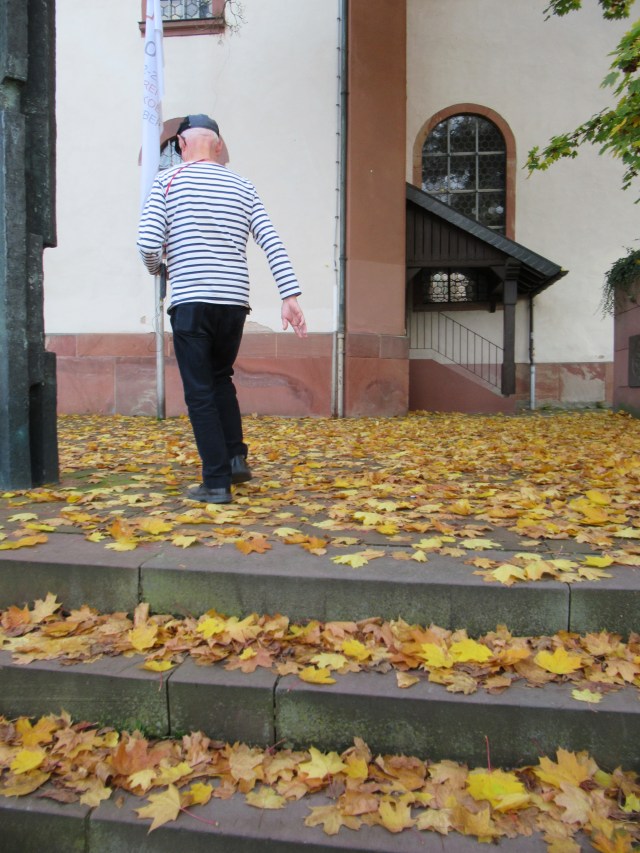
Chuck is enjoying some eagerly anticipated fall leaves.

The x-like figures on the 2 upper floors of this building mean this is a butcher’s shop.

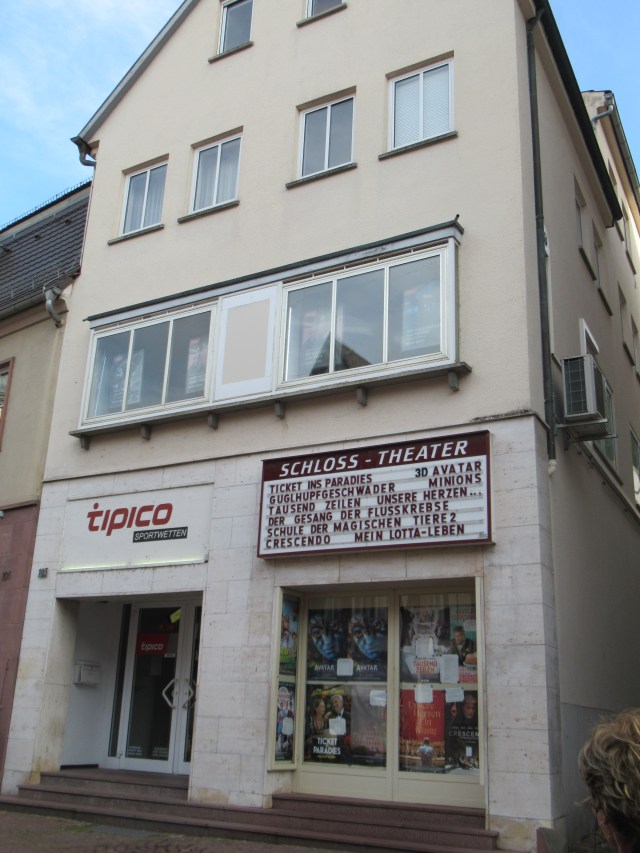
The town’s little movie theater. Serves only sweet popcorn.

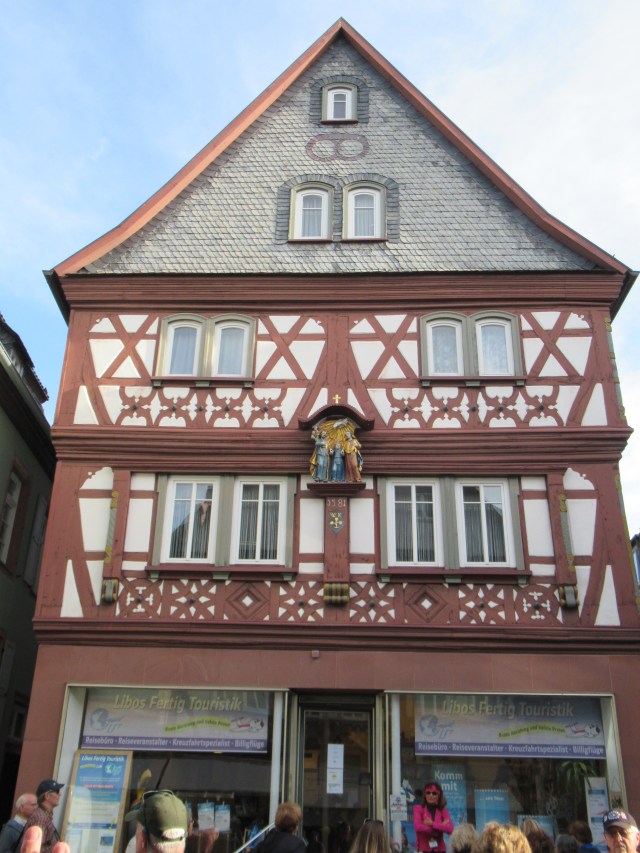
Every shop has a Madonna somewhere on the front. This one had the whole family.

Love those healthy geraniums in the window boxes.

The Gasthaus zum Riesen, built in 1411, is Germany’s oldest inn.

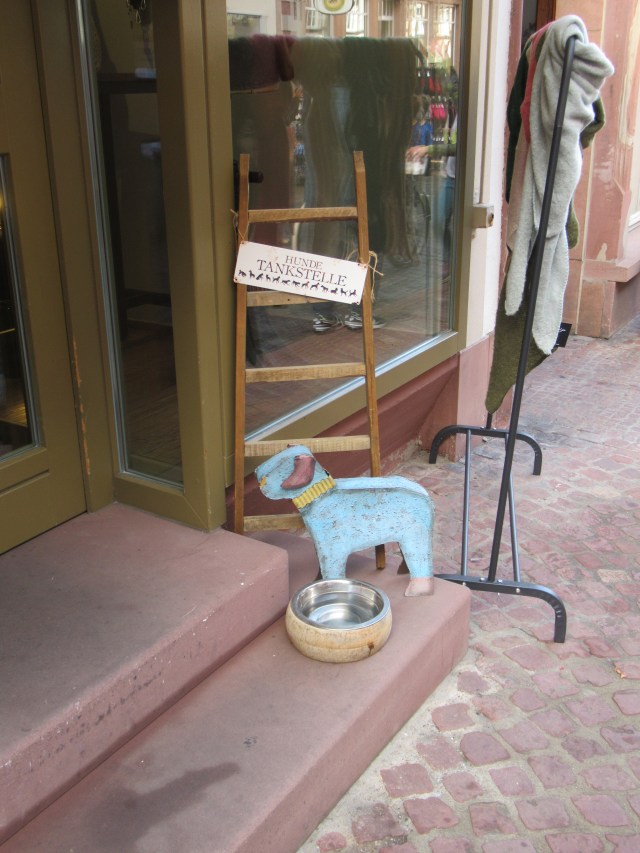
For the dogs.

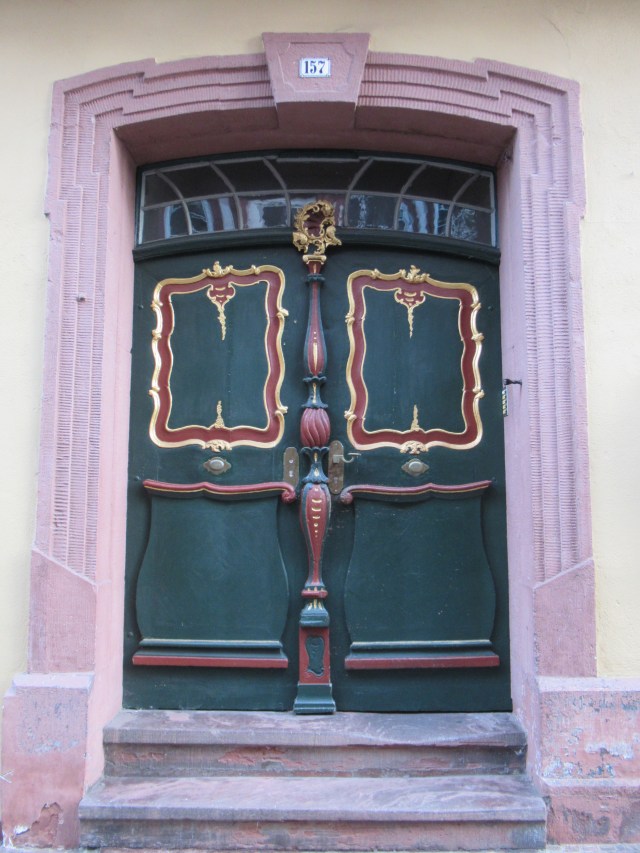
Nice door.  Like the color combination.

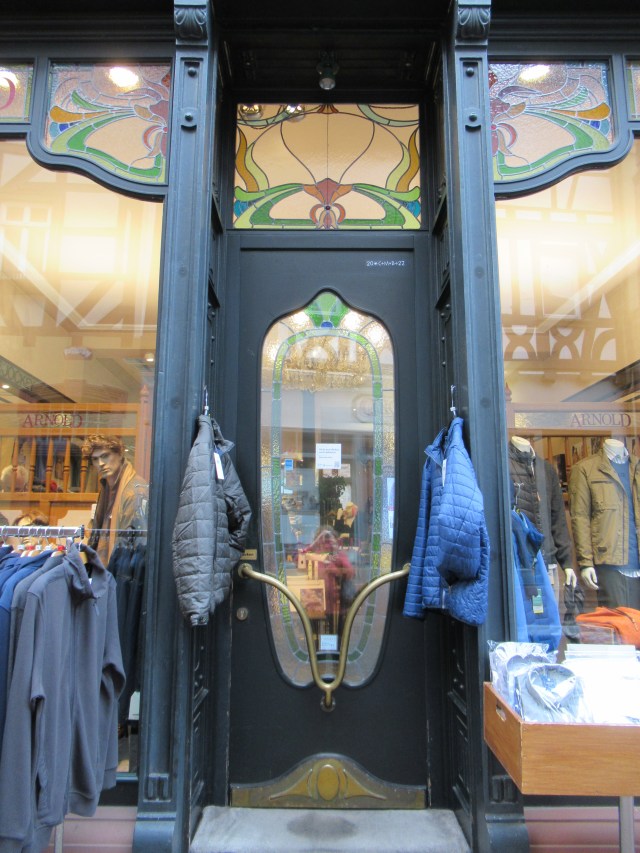
Unique door.  Very art deco.  But do we really need those coats in the doorway?

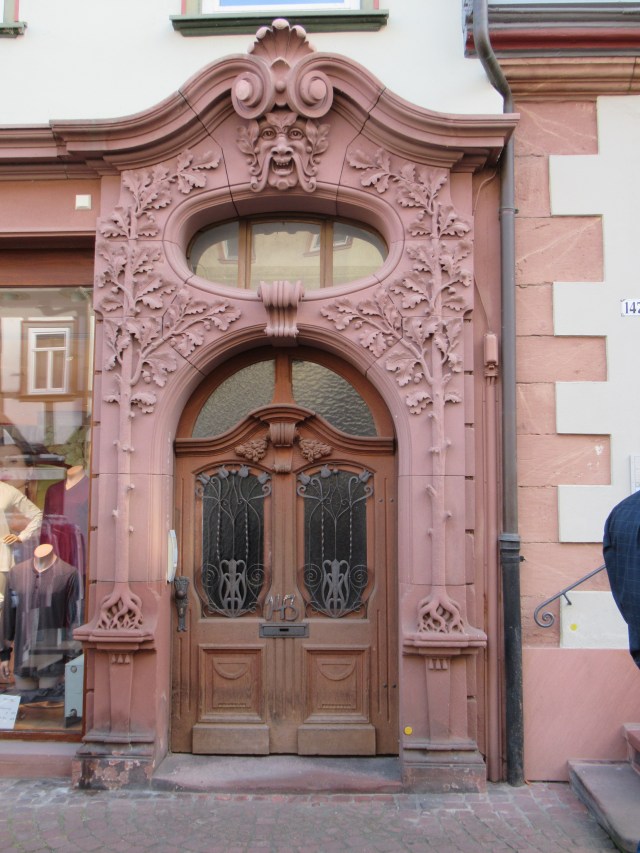
Another elaborate door.

Yet another pretty door.

Posted in Uncategorized | 1 Comment

Day 4.2 – Cruising on the Rhine

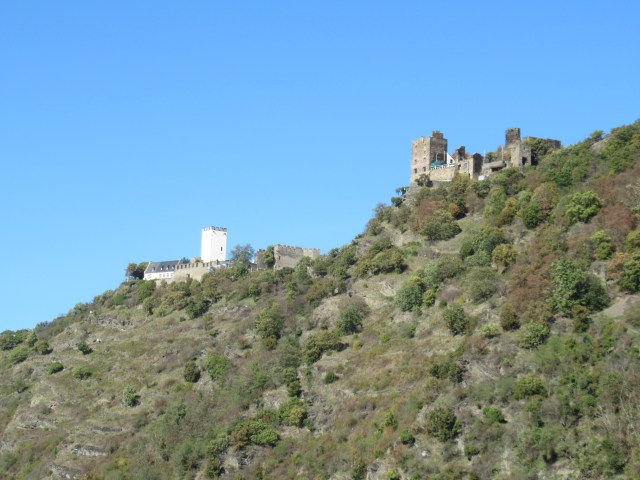
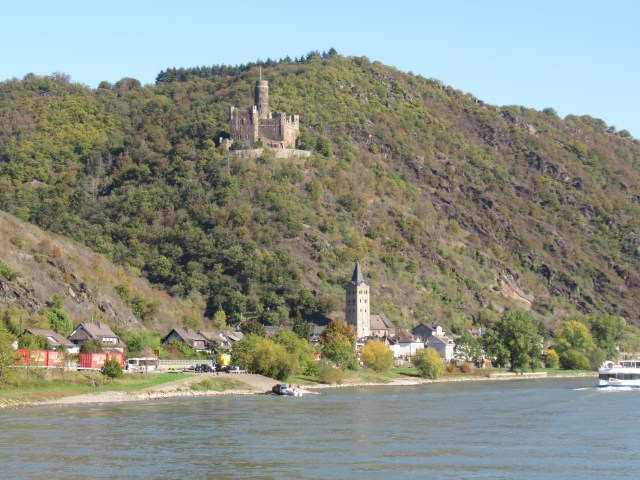
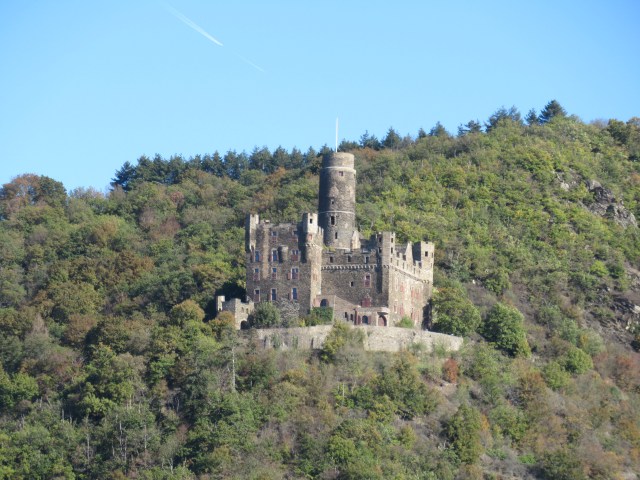
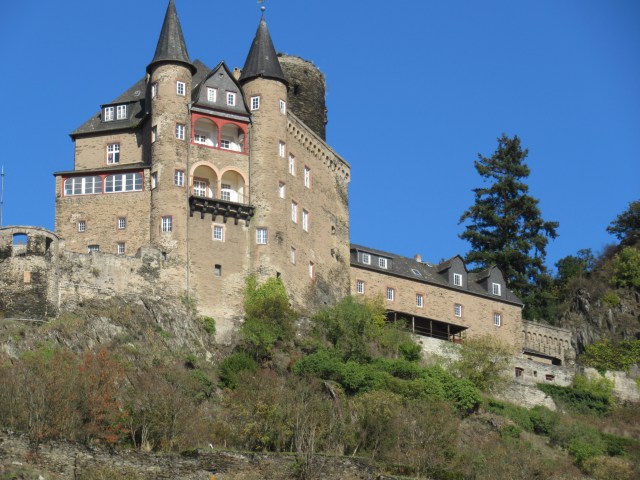
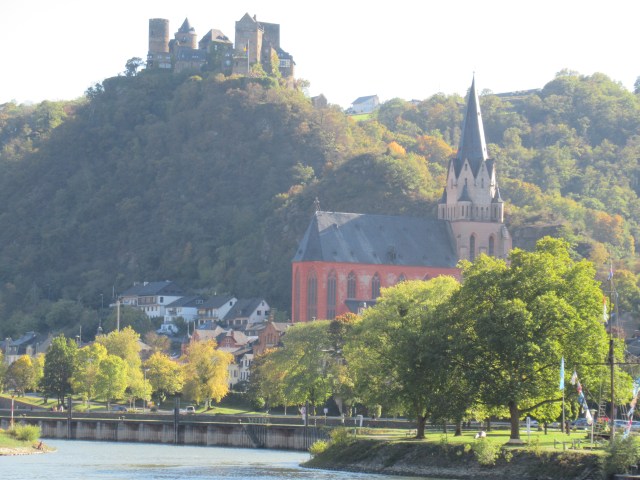
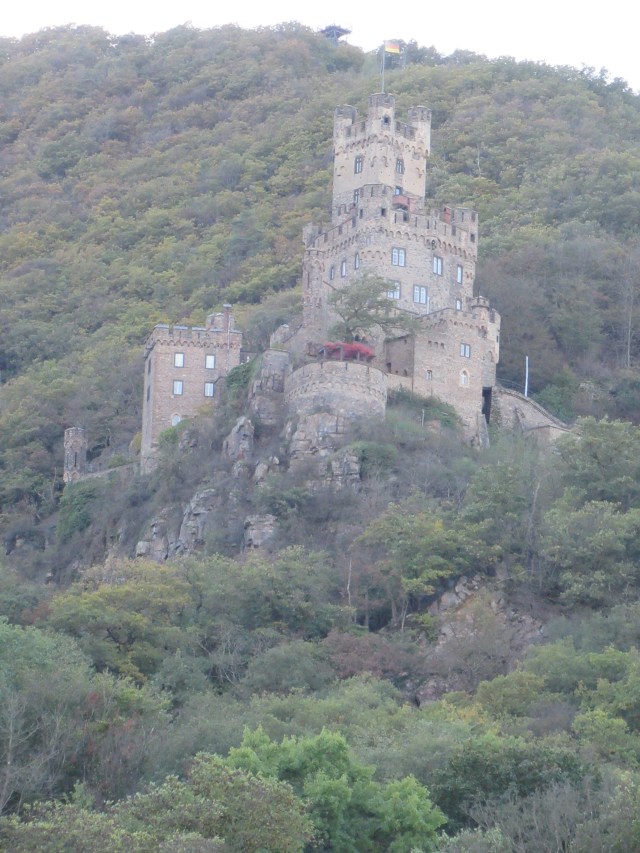
We left from Kobenz for Bingen and sailed down the Middle Rhine. This 40-mile stretch of the river has spectacular scenery, including picturesque forests, vineyards and no fewer than 28 castles along the way. It’s definitely one of the highlights of our trip. We sat up on top of the boat and braved the 80 mph winds – we are Vikings! This post shows every castle I could spot and was able to get a photo of before we passed it by. Like the wind, they came fast and furious.

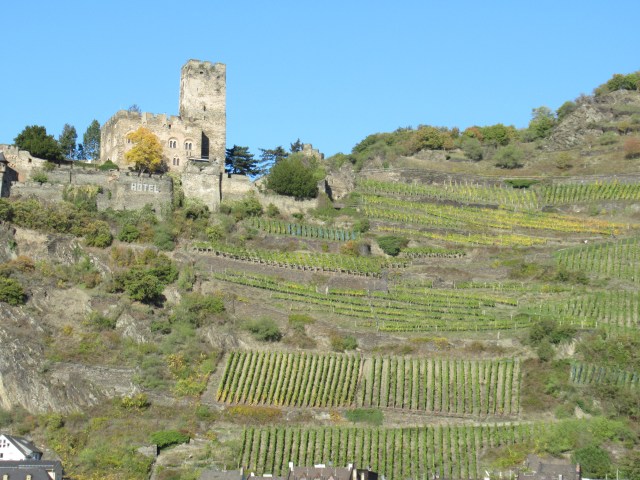
A typical example of the many, many vinyards on the hillsides above the river.
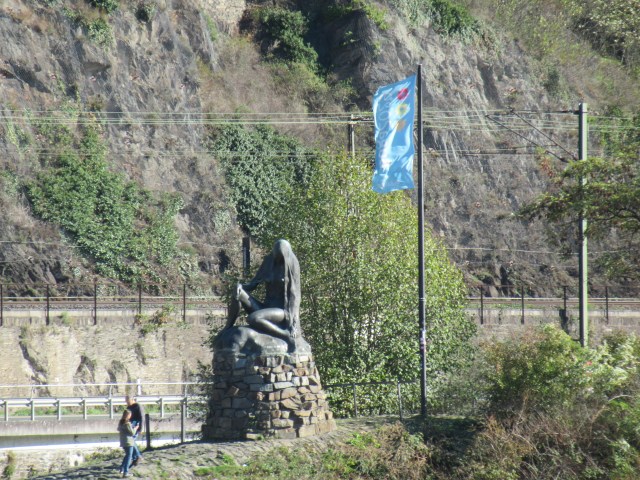
Above Koblenz, at a point where the Rhine narrows and is at its deepest, the steep Lorelei Rock rises from the water. According to legend, it was here that the beautiful Lorelei maiden used to sit and sing sweetly. Woe to the sailor who passed the rock at nightfall and was lured to his doom, transfixed by her beauty and song as the rapid water lashed his vessel against the rocks.
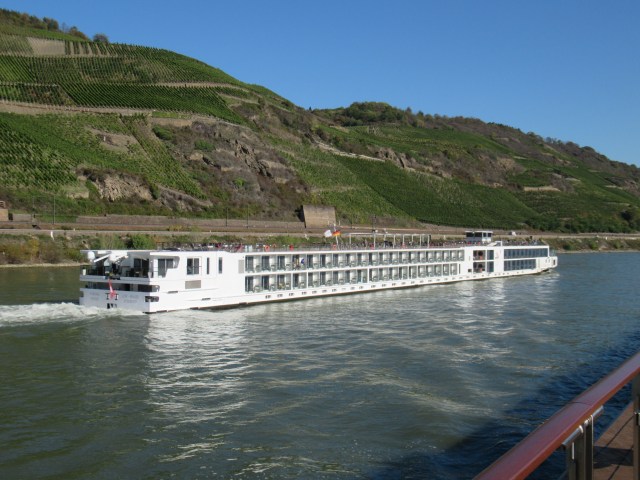
This Viking ship that went by us is identical to ours.
Posted in Uncategorized | 3 Comments

Day 4.1 – A Walking Tour in Koblenz

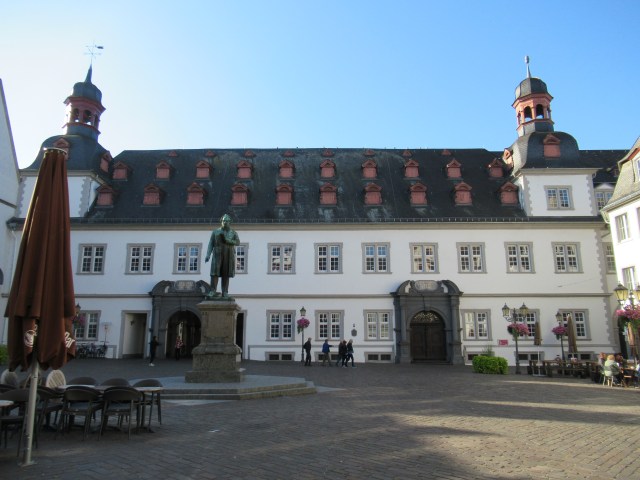
Koblenz is a traditional German country town at the confluence of the Rhine and Moselle Rivers. Founded more than 2,000 years ago it’s the typical fairy-tale German town with its cobblestone streets, wood-beamed houses adorned with flowers, ancient market square and medieval churches. What a delightful little town to take a walk through on a bright but brisk Sunday morning. But button up, it’s 44 degrees!

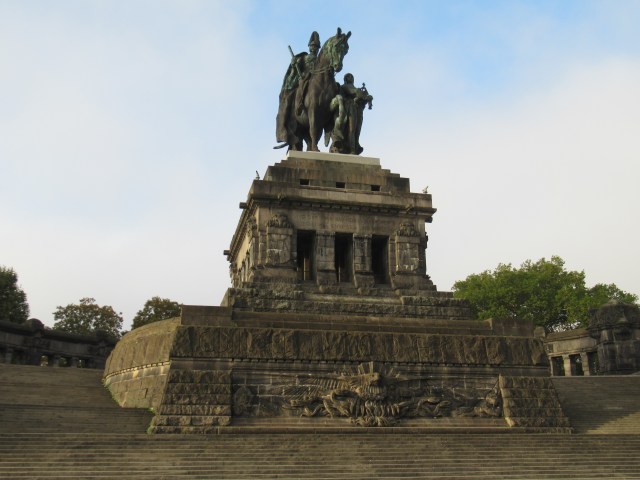
High on a hill where the Rhine and Moselle Rivers converge stands a massive equestrian statue of Prince William I observing the lovely riverside scene. Our boat was docked next to this park and we could see this statue from our window.
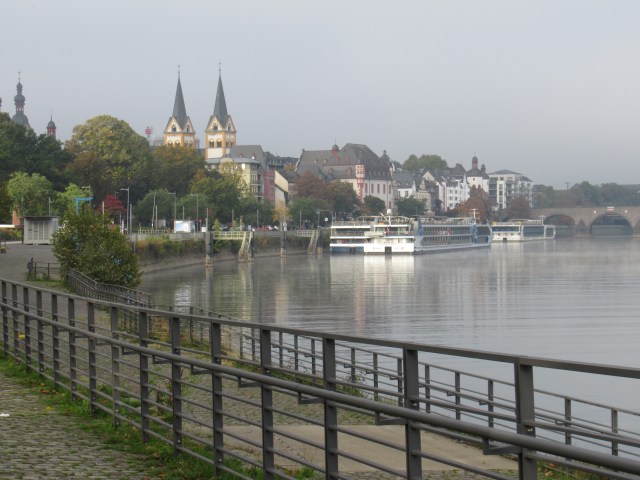
A lovely downtown view from across the river.
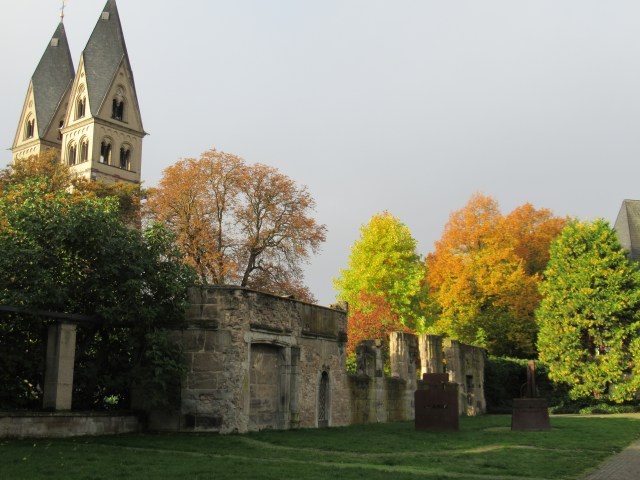
The trees are beginning to turn and they’re so pretty. They should continue to get better and better.
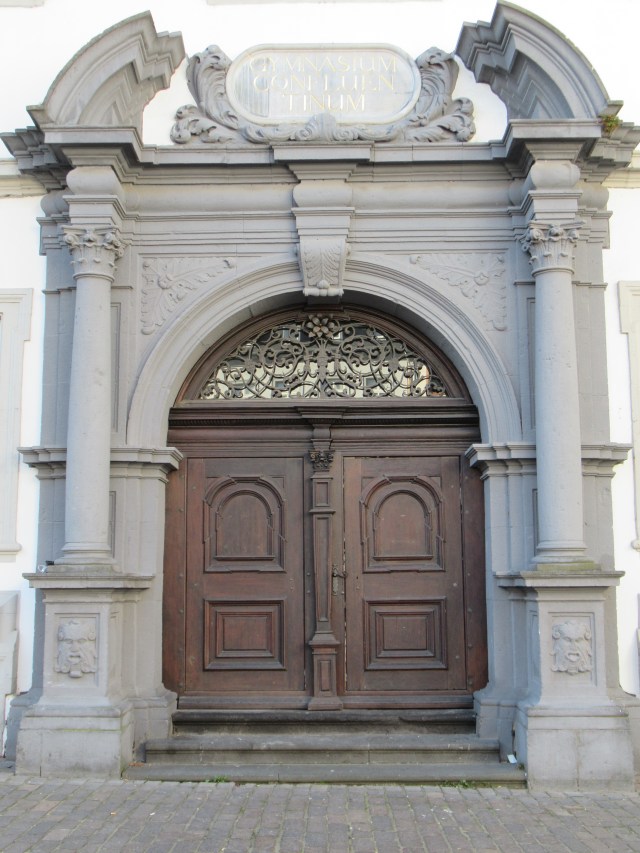
Another nice door. Gymnasium is German for advanced school.
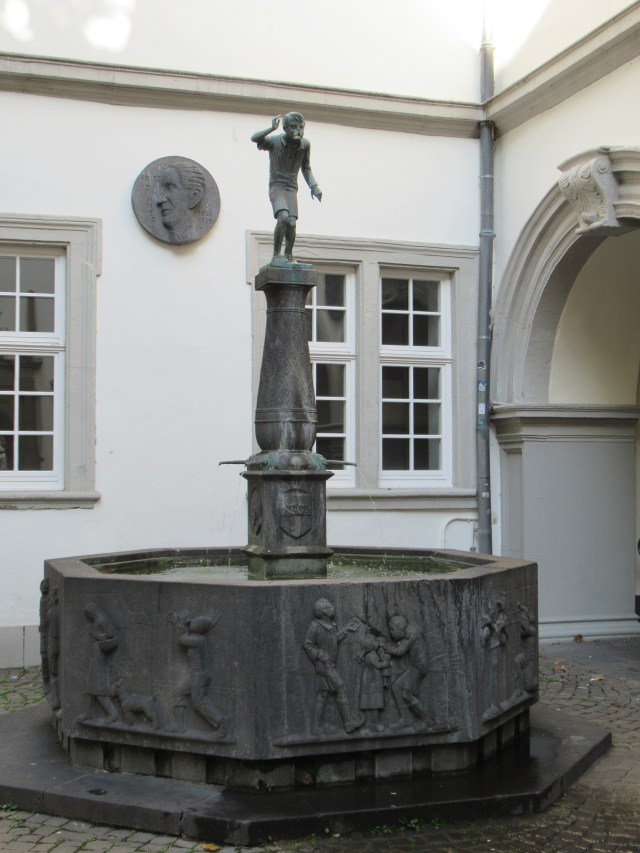
The Schangelbrunnen fountain is a famous statue of a rascally boy who spits water at unsuspecting passersby every 100 seconds. Although designed in 1940, the significance of the statue goes back to the French occupation in 1794-1814 when there was a profusion of boys known for their pranks (see also the rascally boys around the bottom of the fountain) who were born to French soldiers and German women.
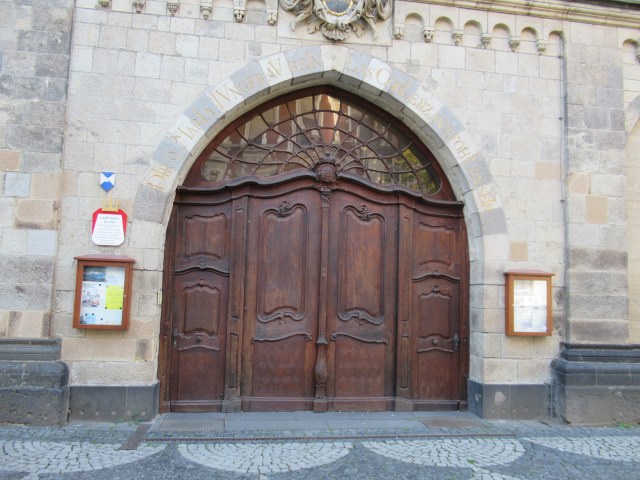
An impressive church door.
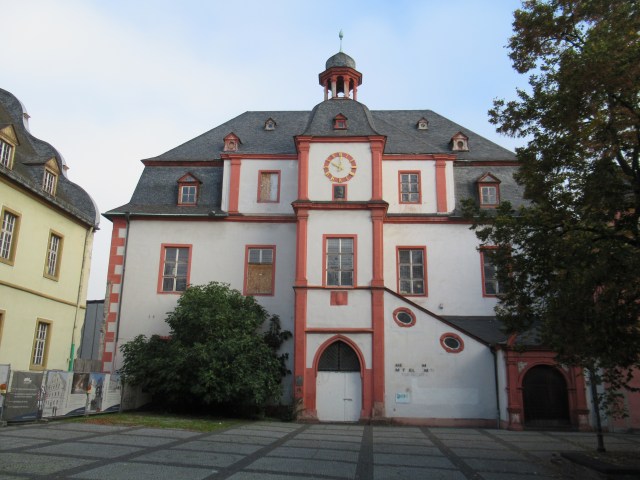
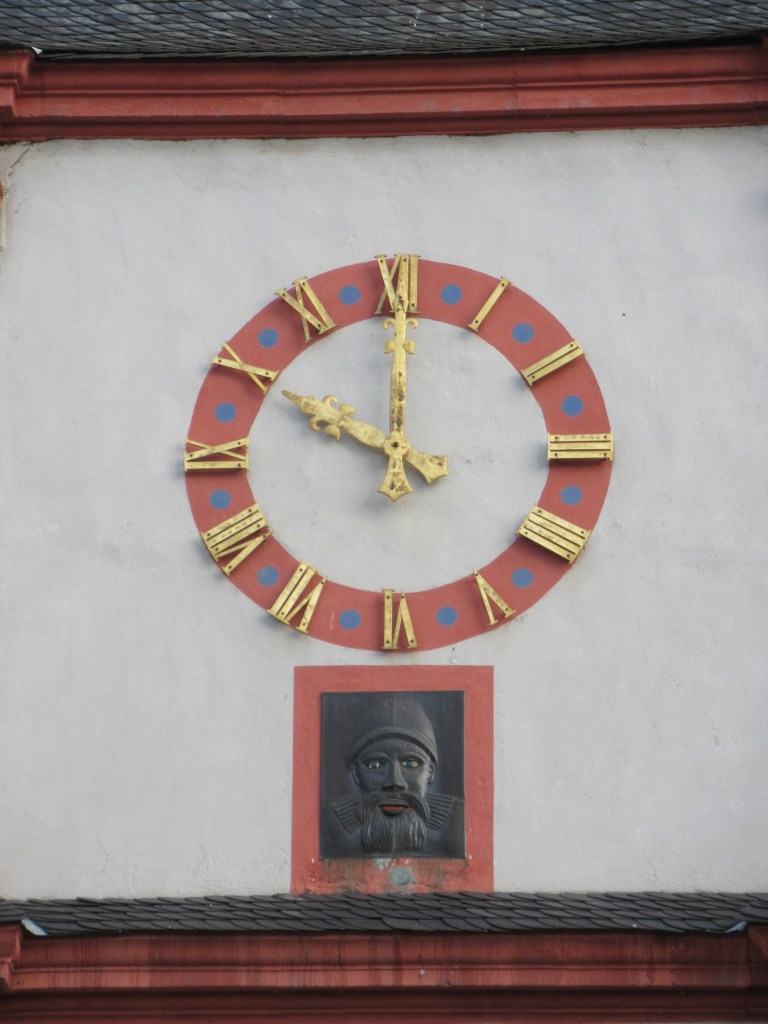
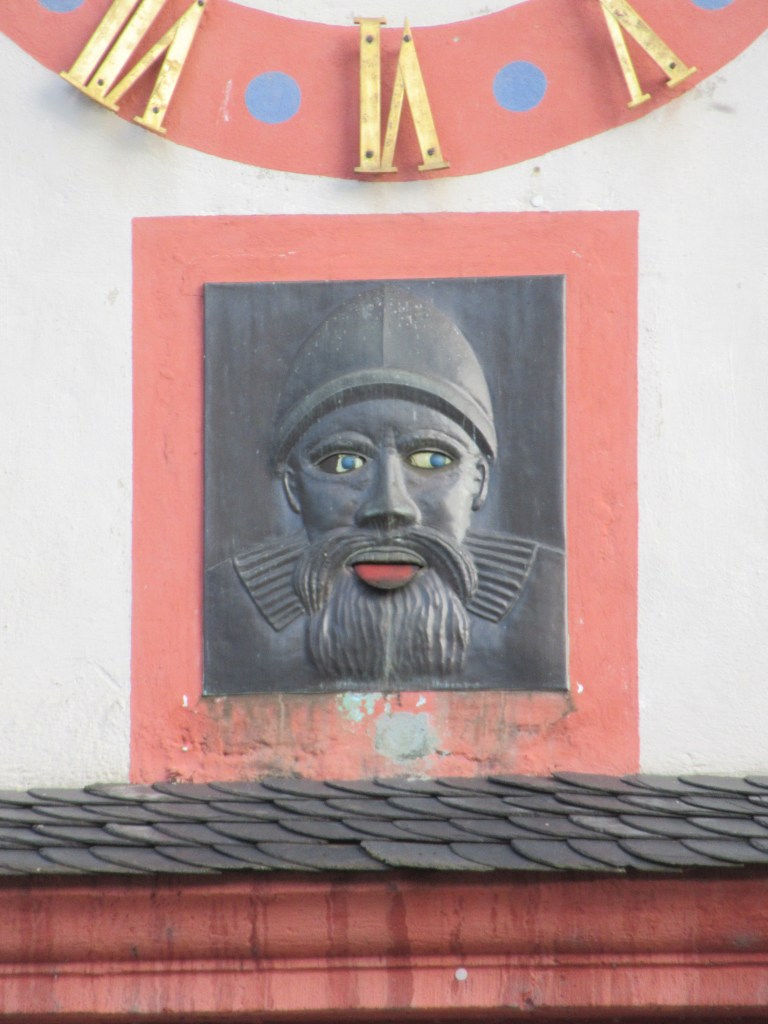
This building has a clock near the top with a with a man’s head with rolling eyes below it. (See photos below)
This is a school and according to our guide the shutters on the little windows on the roof are open only once a year. At Christmas time they’re used as an advent calendar and each day a new one opens. And this square has a big Christmas market in it. Cool!
The trees were just starting to turn colors in this lovely little park.
Posted in Uncategorized | 1 Comment

Day 3.2: Cologne City Walk

We took a guided walk through Cologne city center, mostly to see the famous Cologne Cathedral. There were two main disappointments here: 1) the Cathedral is almost black with dirt and 2) after the war destroyed much of the city, they opted to replace the destroyed historical buildings with ”modern” buildings from the 50’s and 60’s. Eeew! For the most part, from what we saw it is not an attractive city. But we still enjoyed the tour and learned and saw some new things so all is not lost.

COLOGNE CATHEDRAL

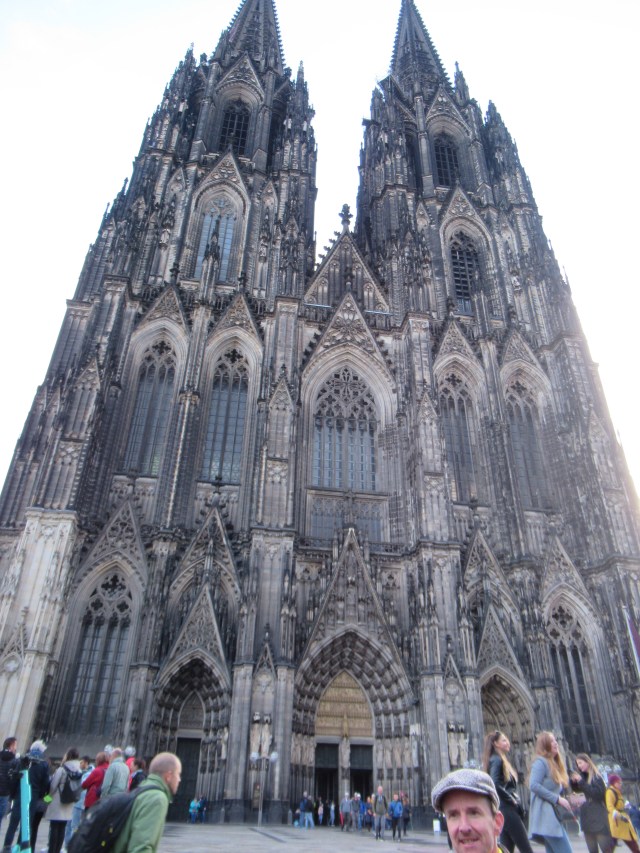
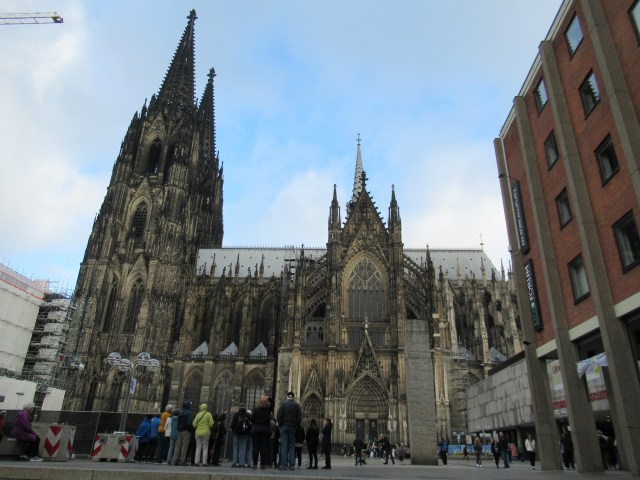
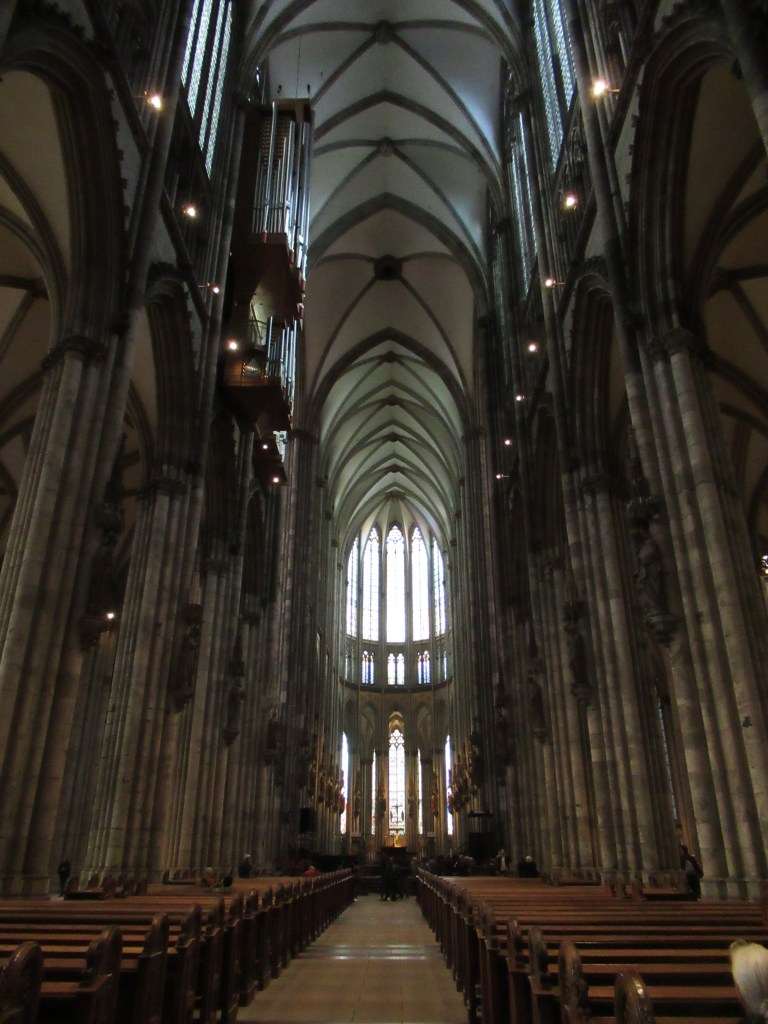
Cologne Cathedral was begun around 1248 and completed in 1880, including about a 400-year period when no work at all took place. It’s an incredibly dirty building that could look amazing if it were cleaned. But given the size of the task as well as concern over how the 8 kinds of sandstone will clean differently means that it’s unlikely to ever happen. The Cathedral’s claim to fame besides its size is that it possesses the bones of the Magi.
The entrance to the Cologne Cathedral. It looks blacker than this in person. (That’s our fun guide looking this direction.)
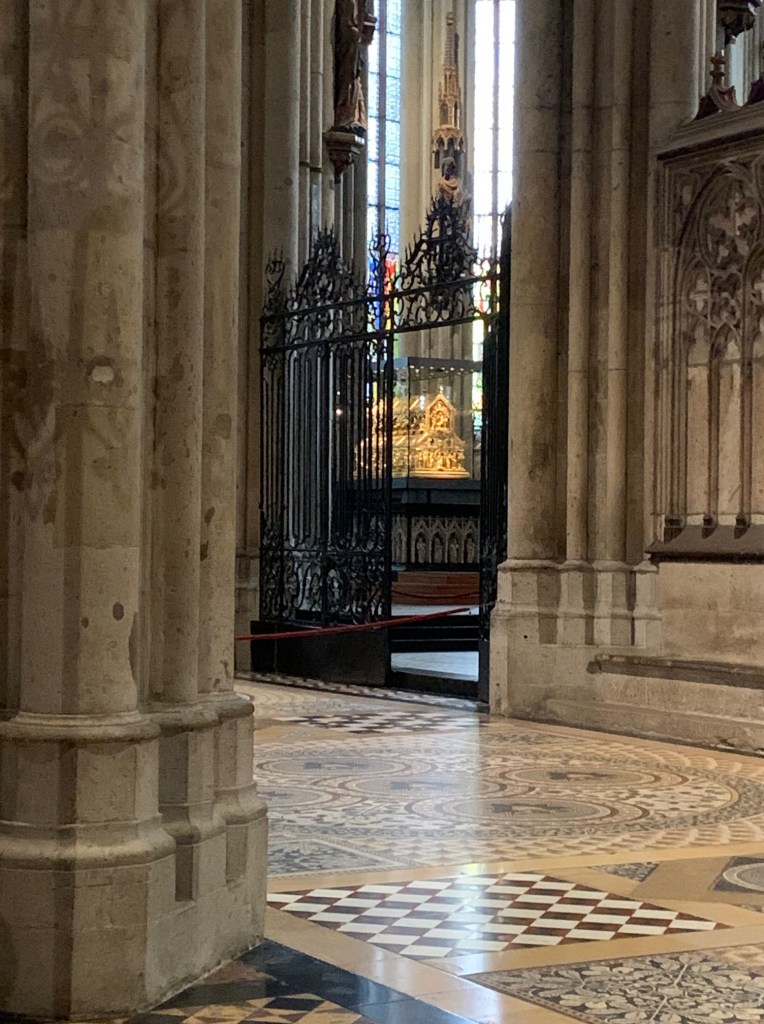
The golden sarcophagus containing the bones of the Magi and 3 golden crowns.

And below are a few other odds and ends of things we saw while walking around downtown.

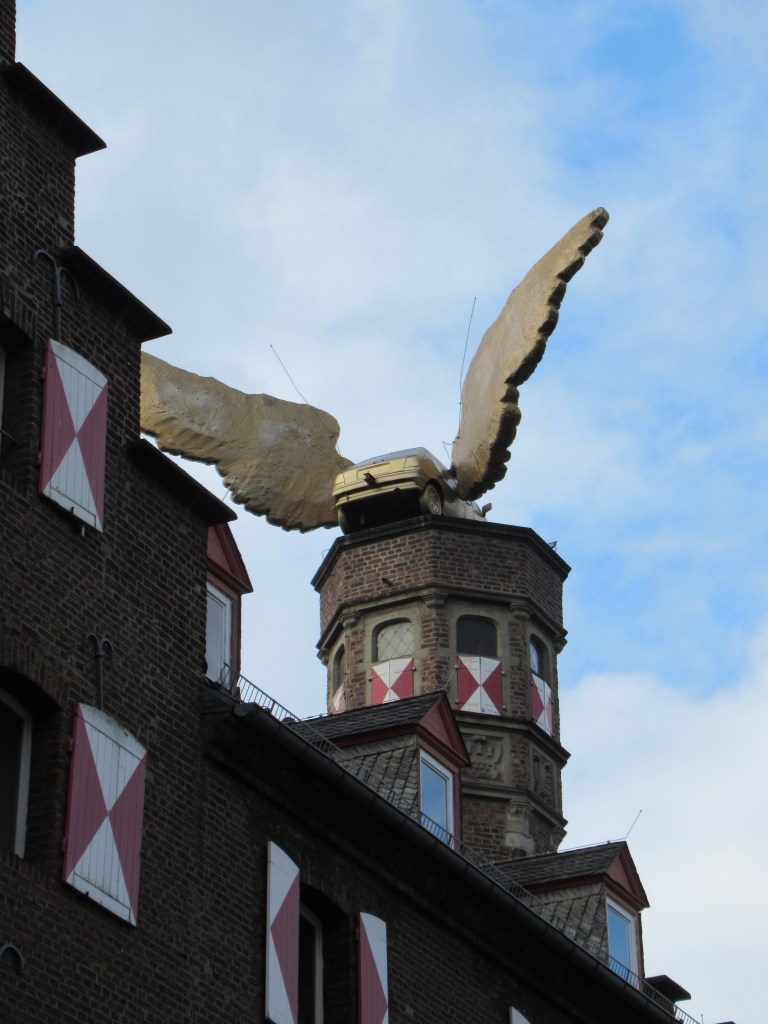
This is an art display. It’s a Ford Fiesta with wings, covered in gold, sitting on top of a tower on top of a building. Hmmm….
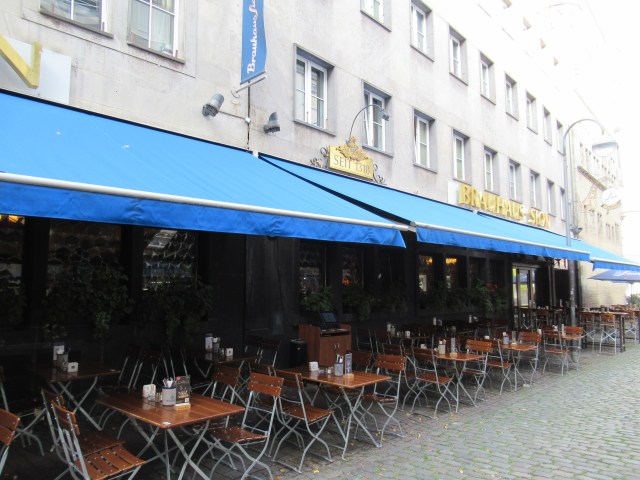
According to our guide, there are 25 brands of beer available in Cologne and hence 25 beer gardens. Each beer garden only sells their brand of beer. That sounds strange to me and perhaps I misunderstood him. (Maybe we’d been in there too long!) Beer is sold in small 7 oz. glasses so it stays cold. I like that part. When your glass is empty, they come by and give you a new one, necessitating putting your coaster on top of your glass if you don’t want a fresh one. (I’m pretty sure I understood that part correctly.)
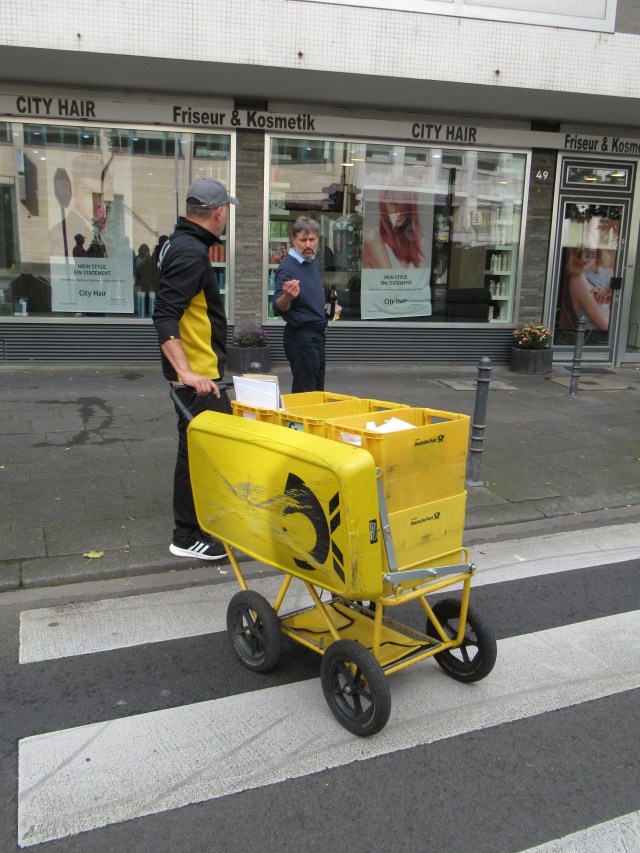
A local mailman with mail cart.
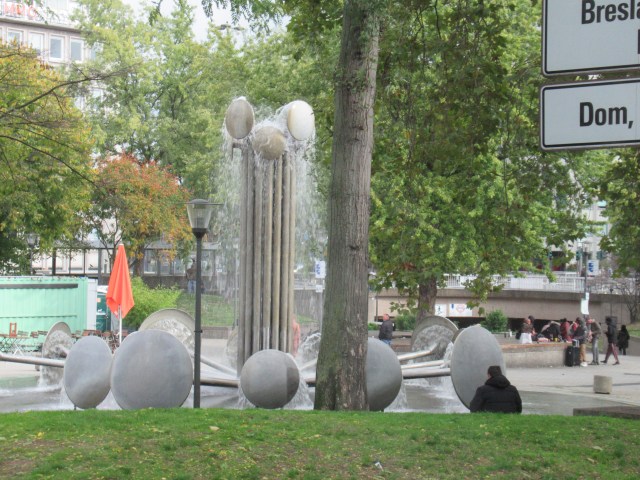
I loved this fountain. It looked like mushrooms with water coming out of the bottom of the caps.
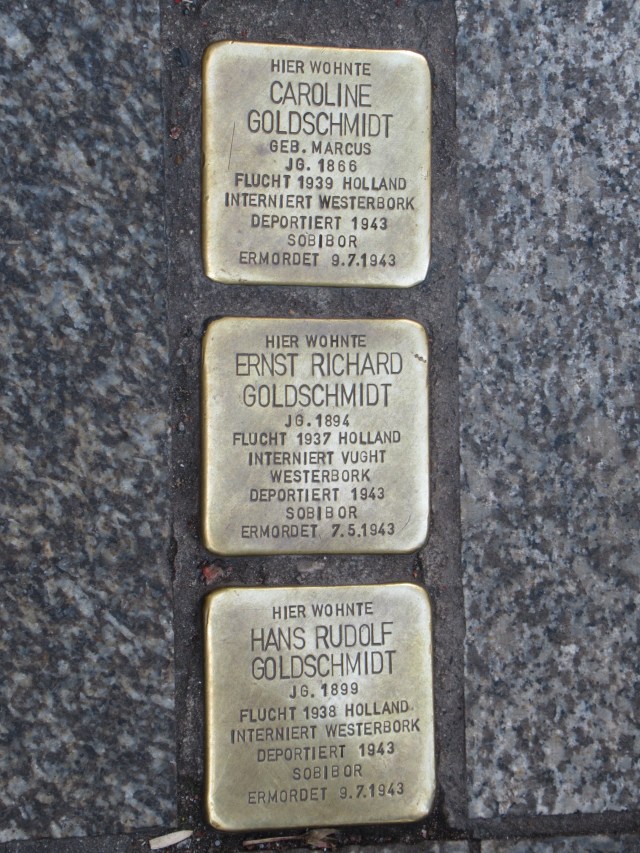
These Stolpersteine or ”stumbling stones” are brass-colored cobblestones embedded in the pavement in front of house entrances. They commemorate Jewish citizens and other persecuted individuals of the Nazi oppression who once lived in the respective buildings and were deported to one of the Nazis’ extermination camps during World War II. The art project was started by a Cologne-based artist in 1995 and has developed into the world’s largest de-centralized memorial with more than 50,000 stumbling stones in 18 European countries.

Posted in Uncategorized | 1 Comment

Day 3.1: Cologne, Germany

We toured 2 beautiful ”houses” today, both built by Clemens August, the Cologne Elector and Archbishop. One was his 120-room main residence and gardens in Bruhle which he called Augustusburg Palace, and the other his nearby hunting lodge which was called Falkenlust.  Both of the houses are on the World Heritage List.

Both of the houses are masterpieces of German Rococo.  Both houses are decorated in Rococo ornamentation called Rocaille, an 18th century French style featuring carved wood or plasterwork of elaborately stylized shell-like, rocklike, and scroll motifs as well as flower, fern, and coral forms.

Augustusburg Palace

Augusturburg Palace was built from 1728-1768.  There’s very little furniture in the palace and only 3 pieces of furniture there are original. During the war, France came in and removed all but 2 of the pieces of furniture from the house and a 3rd piece was purchased back from France by the palace later on.  Fortunately the house was not destroyed. 

We were concerned when we were told we were allowed to take photos in only 3 rooms, but fortunately they turned out to be the 3 prettiest rooms. Below are a few photos.

The front of the palace which the owner described as a smaller version of the Palace at Versailles. If you look closely, you can see 2 bridal parties.  Actually, since it was a Saturday, we saw no less than 8 bridal groups taking photos at the palace.  Weddings are not allowed at the palace but apparently it’s a very popular location for taking professional wedding photos.

The lower part of the staircase. This stairway was absolutely gorgeous.

Here’s the top part of the staircase with an interesting black chandelier.

This ceiling above the staircase was amazing. It looked like a dome ceiling but actually wasn’t. It had flat sides and a flat ceiling like an ordinary room but was creatively painted to give the illusion of being rounded.

A huge dining room. Notice the tall fountain built into the wall on the right where dinner guests could get cold drinks.

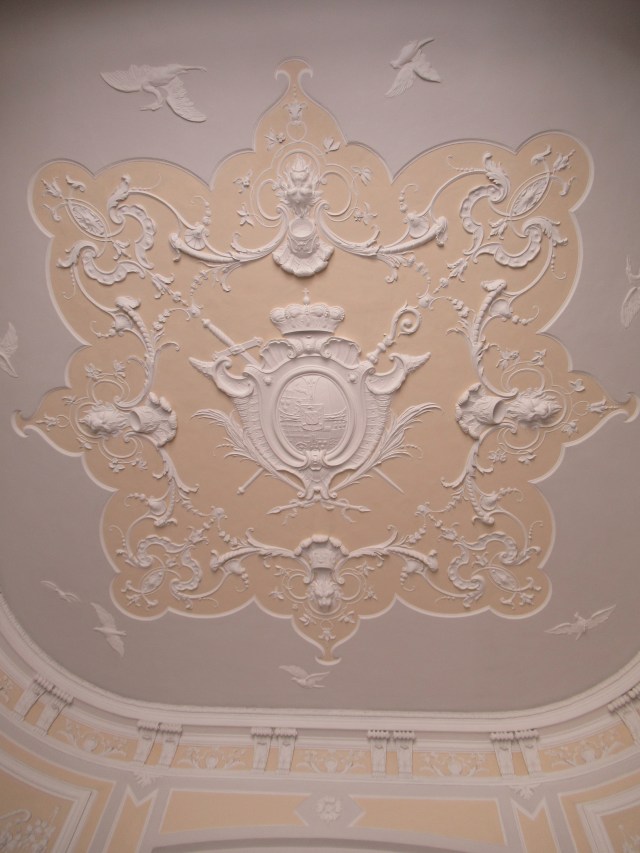
One of the beautiful ceilings.

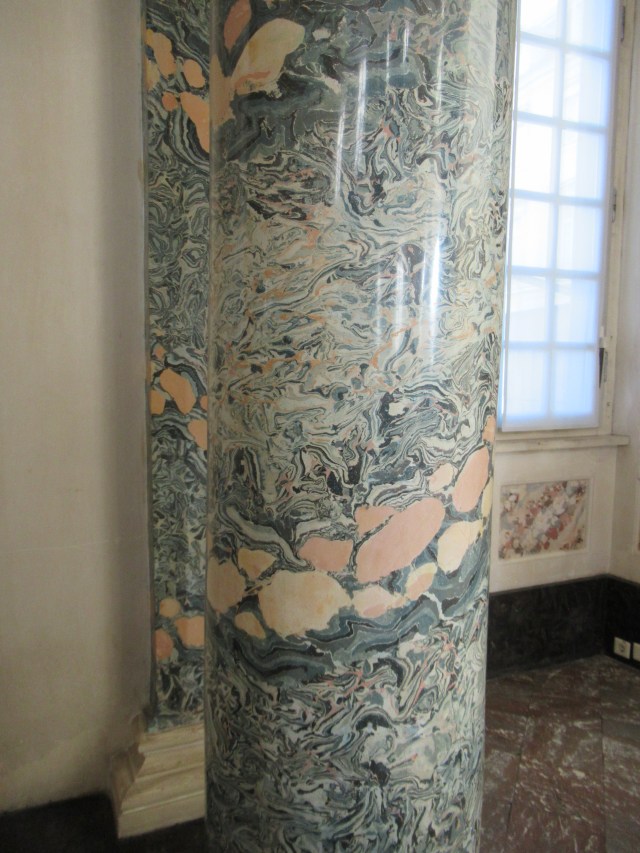
Simply amazing marble columns.

French-style gardens that were beautiful but more natural than the usual more manicured palace gardens.

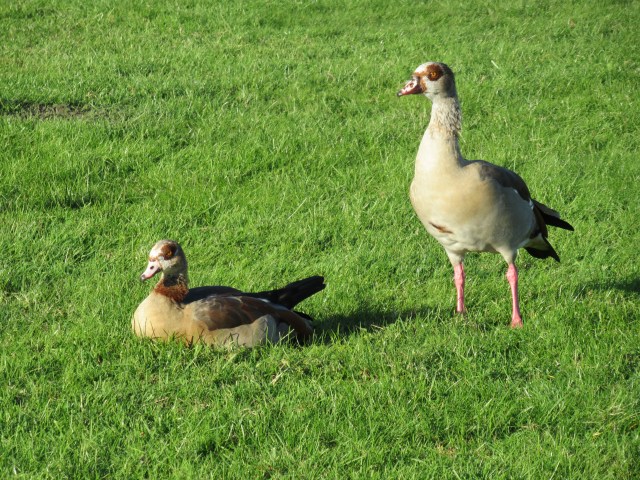
Lots of Canada Geese were strolling the lawns looking for food. But we also saw these other 2 geese that our guide identified as Egyptian Geese which are new to us. They were quiet when we saw them but apparently they can get very vocal.


Hunting Lodge Falkenlust

The Hunting Lodge was built in 1729-1737.  August selected this site because it was in the flight path of herons, the favorite prey of falconry, from their breeding grounds at the palace gardens to their fishing grounds on the Rhine. August was an avid falconer and he and his hunting parties used their falcons to catch the herons, then tagging and releasing them.

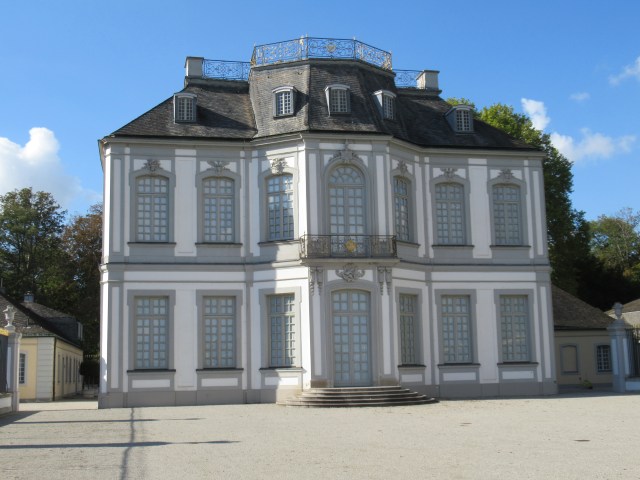
This is the front of the house which looks a little strange because the current entrance is in the back.

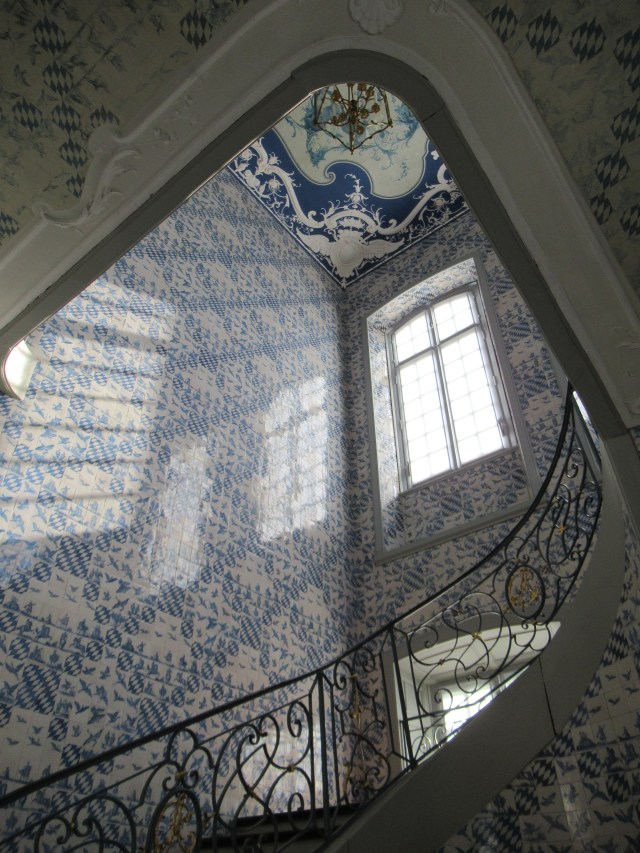
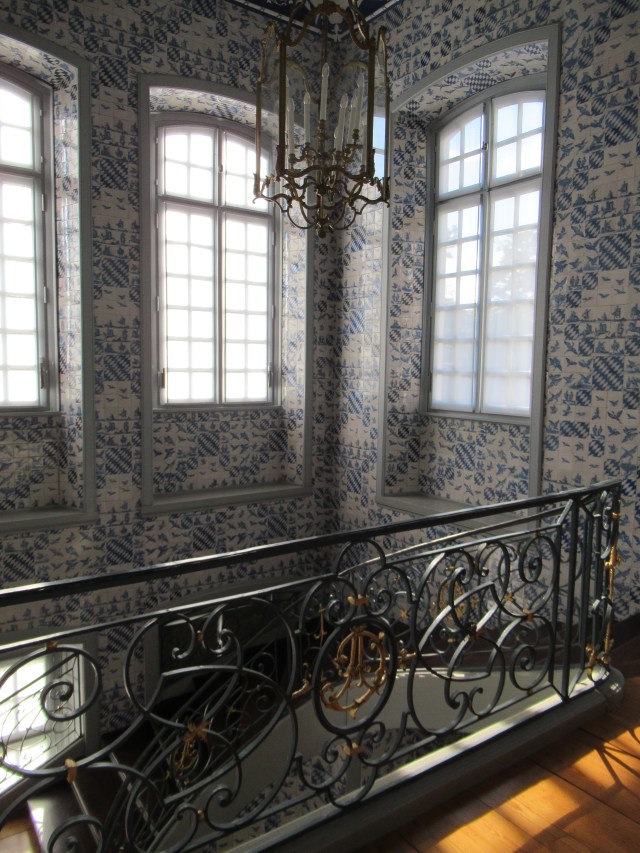
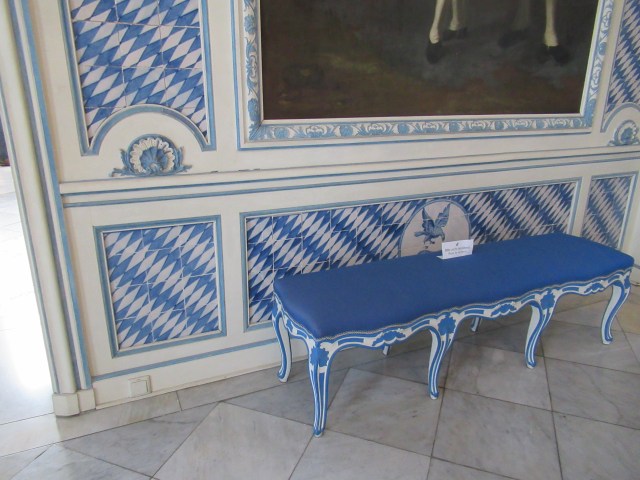
The staircase to the second floor. There are more than 10,000 Dutch tiles in this area. It’s amazing.

At the top of the stairs.

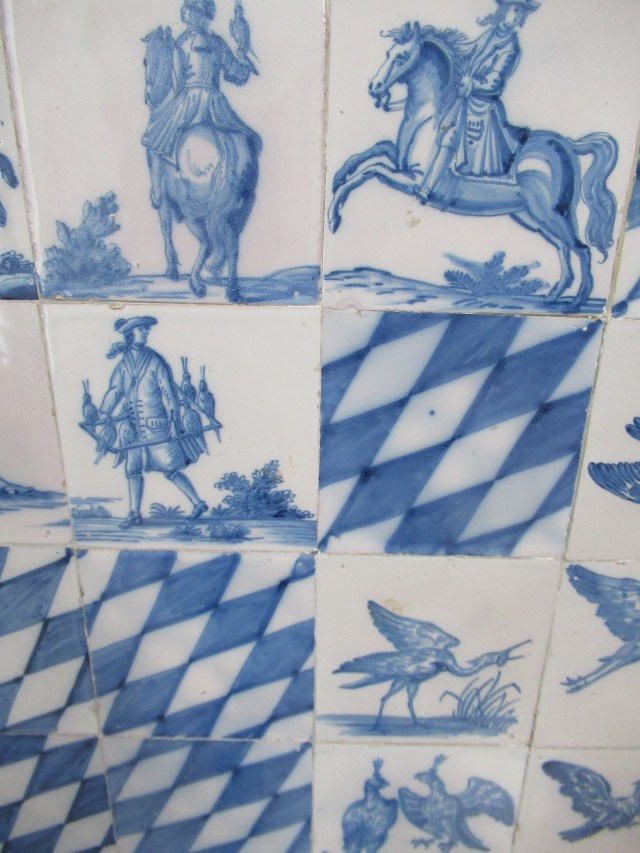
A close-up of some of the tiles in the walls in the staircase.

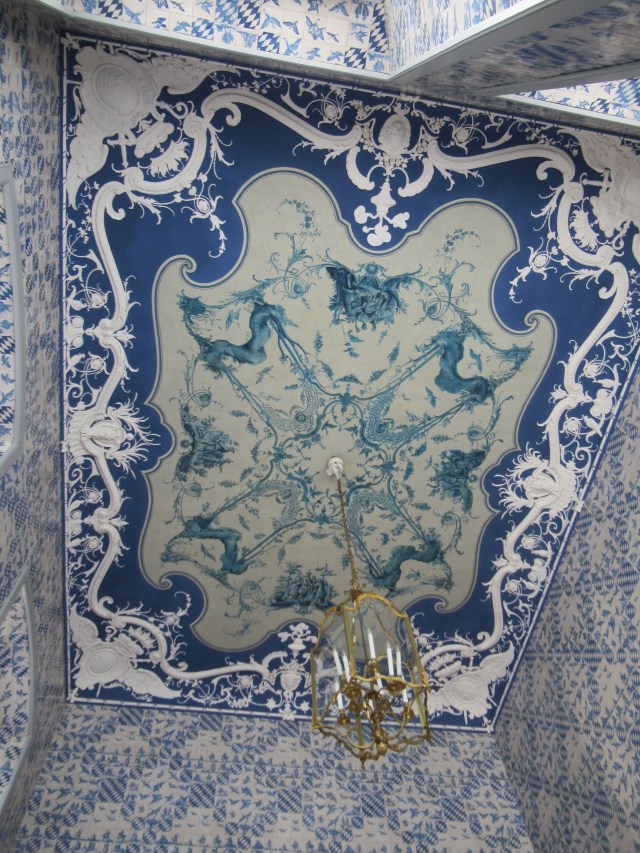
The ceiling over the staircase.

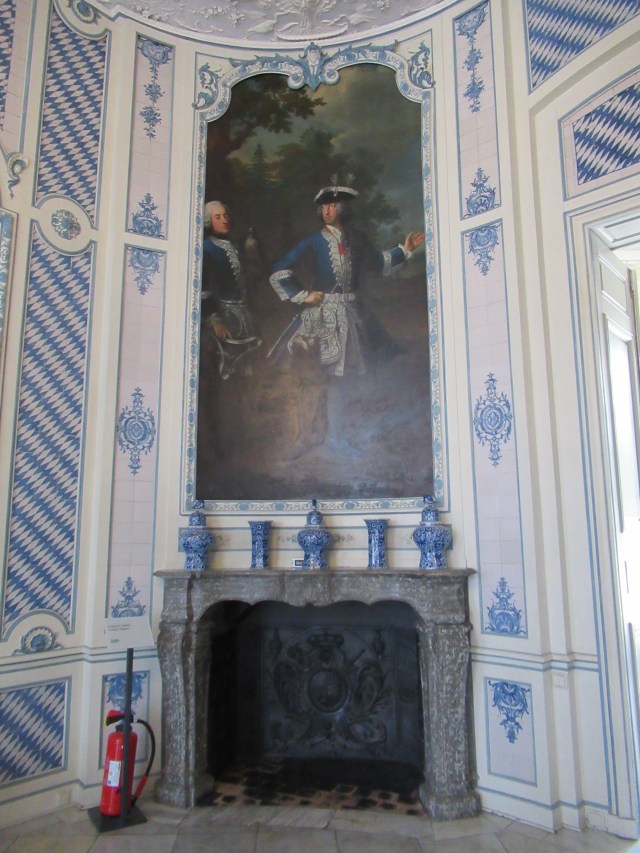
Walls in one of the bedrooms.

More walls of tiles.

One of the beautiful ceilings.

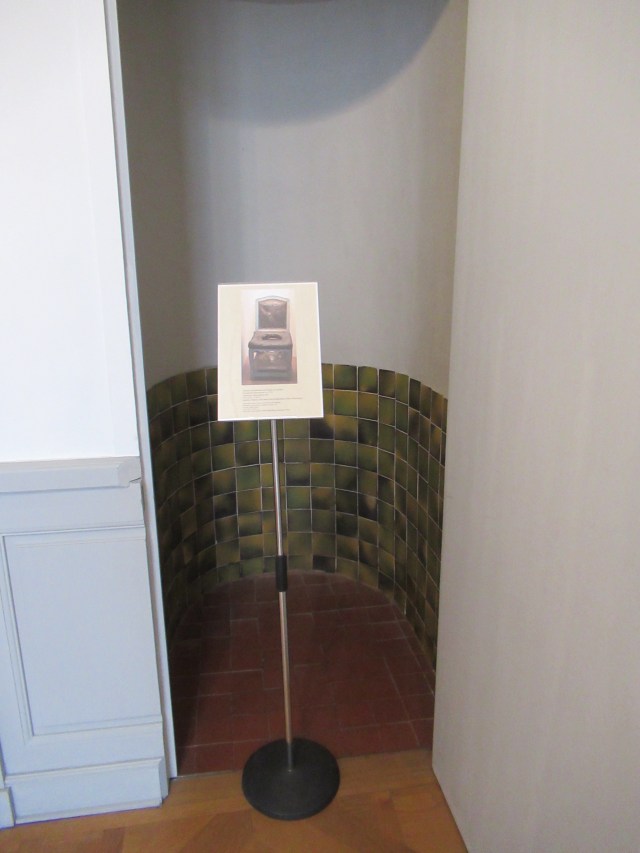
The bathroom!

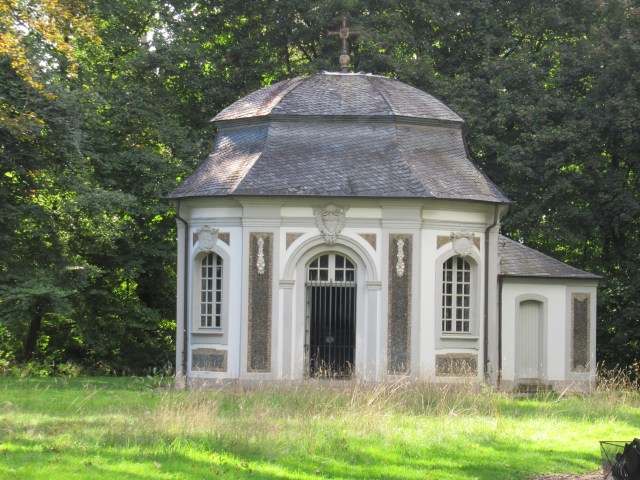
In 1730 a chapel was added on the grounds of the hunting lodge.

Posted in Uncategorized | 3 Comments

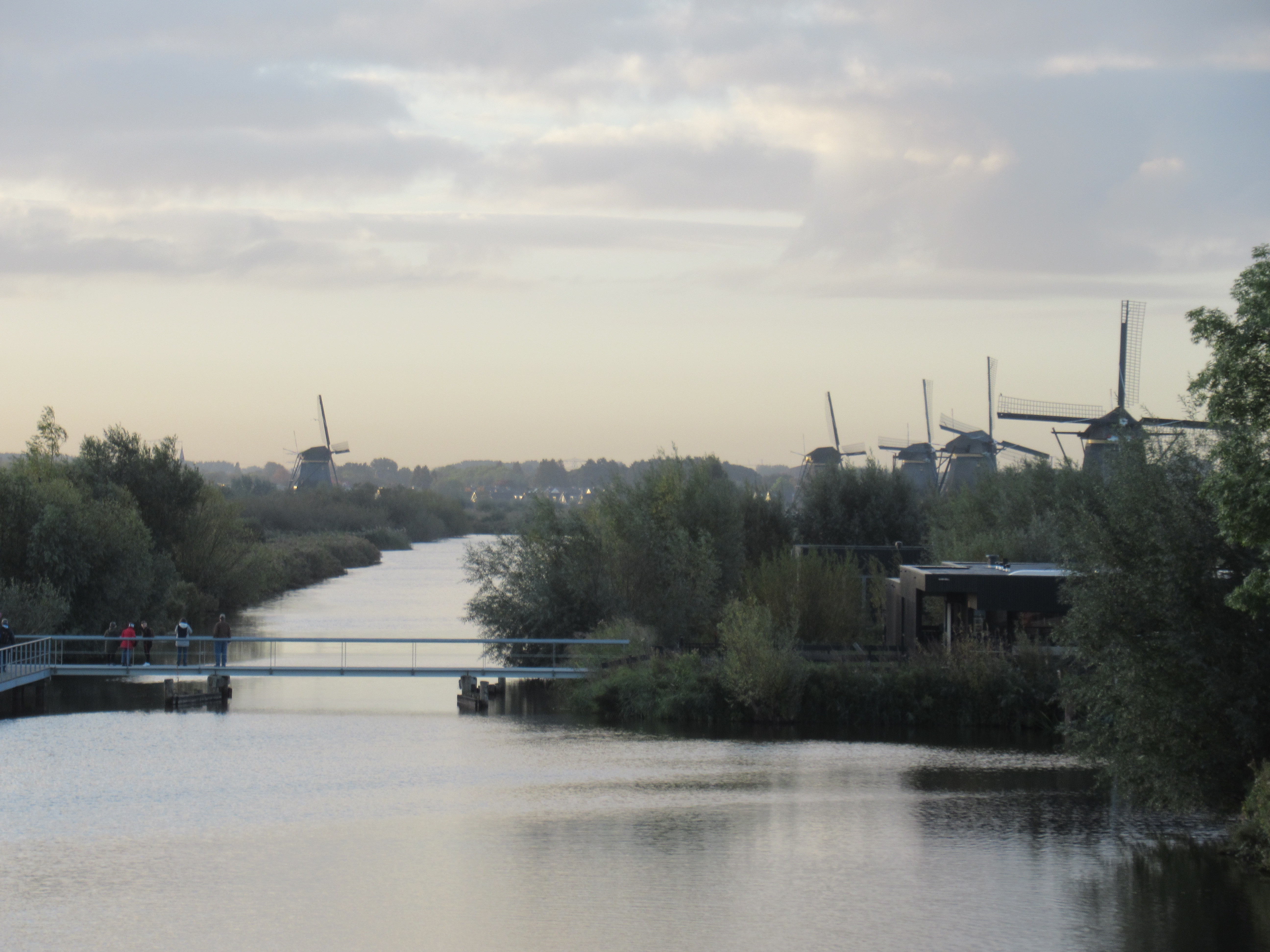
Day 2: The Windmills at Kinderdijk

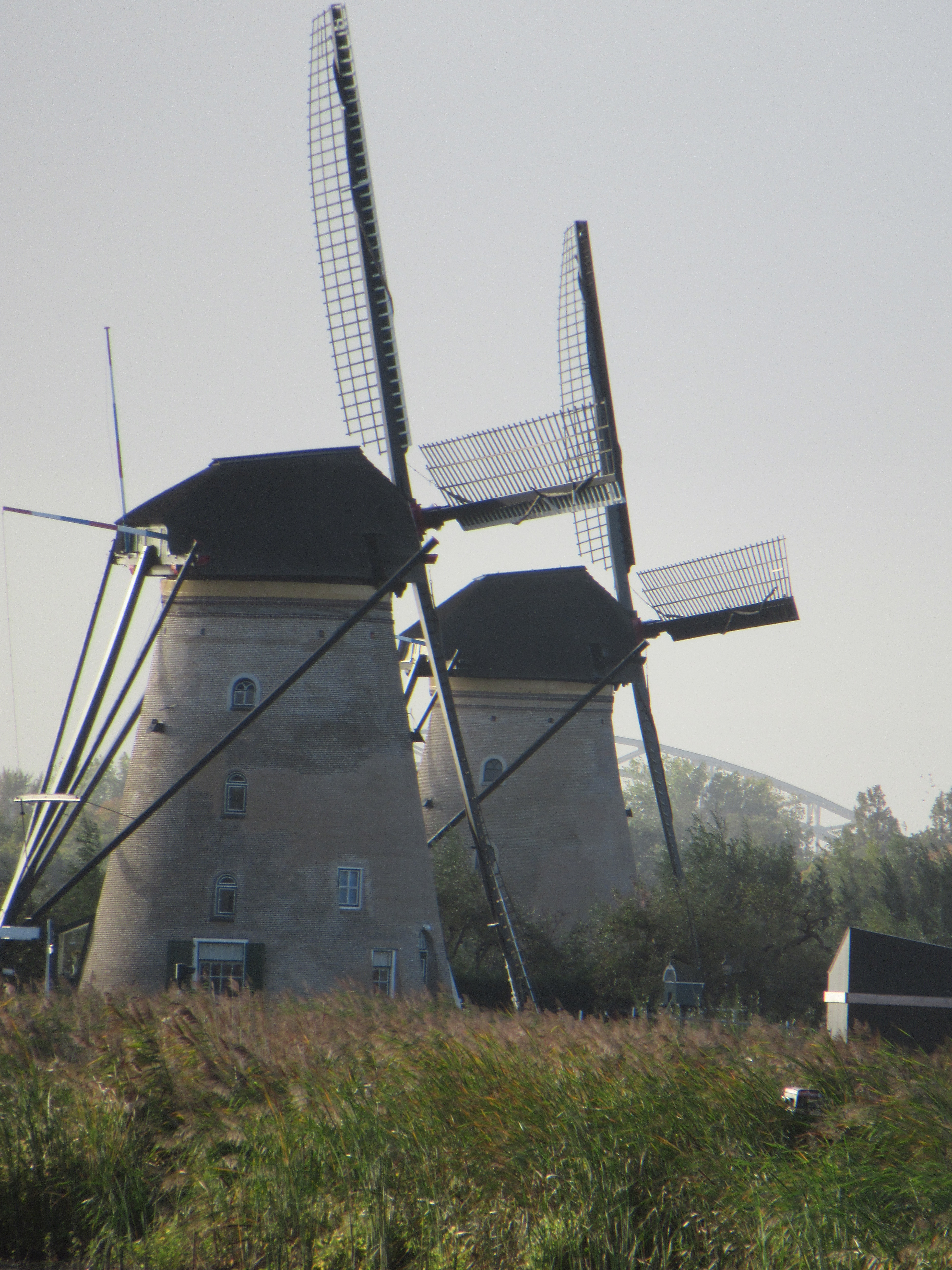
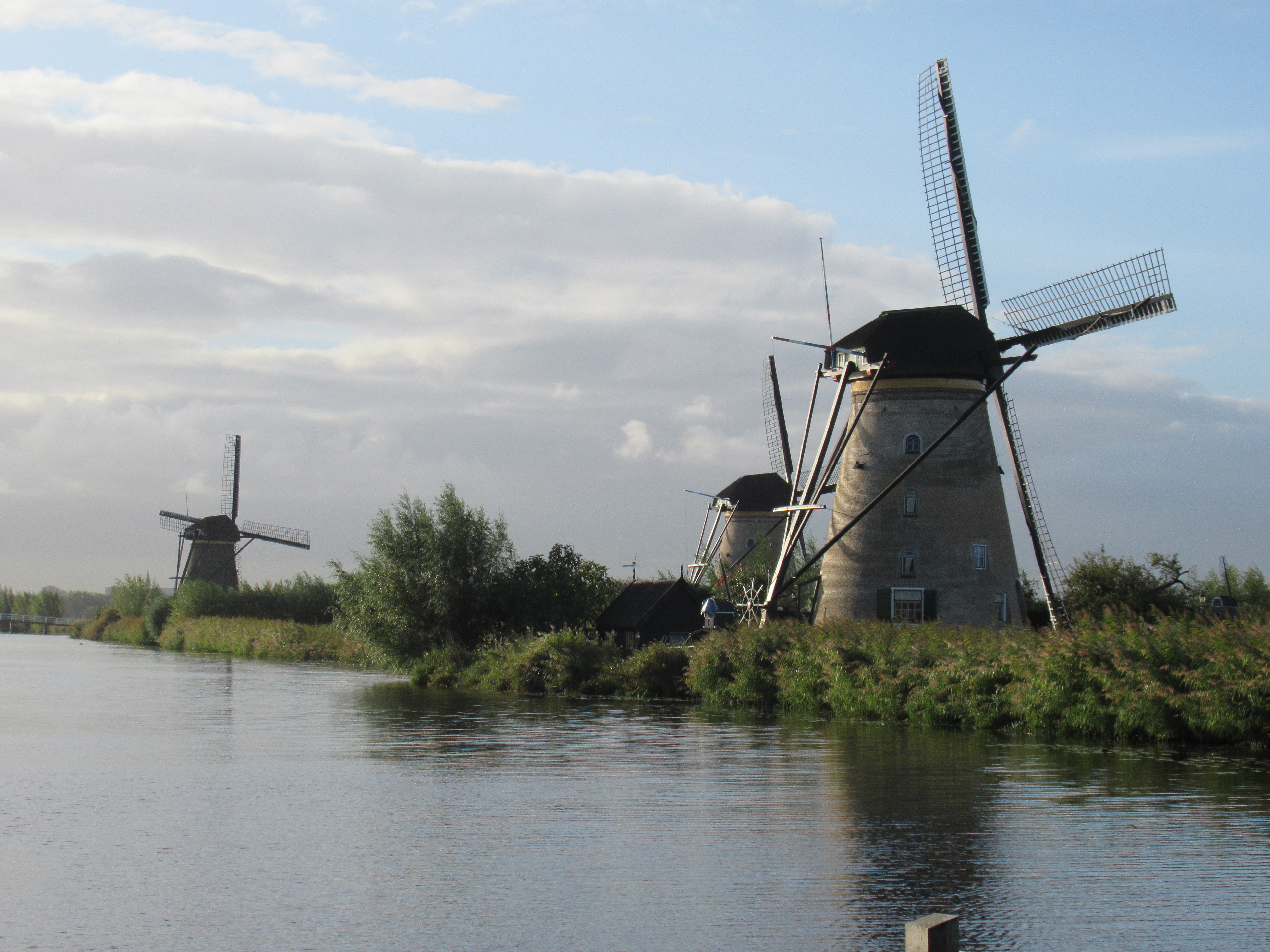
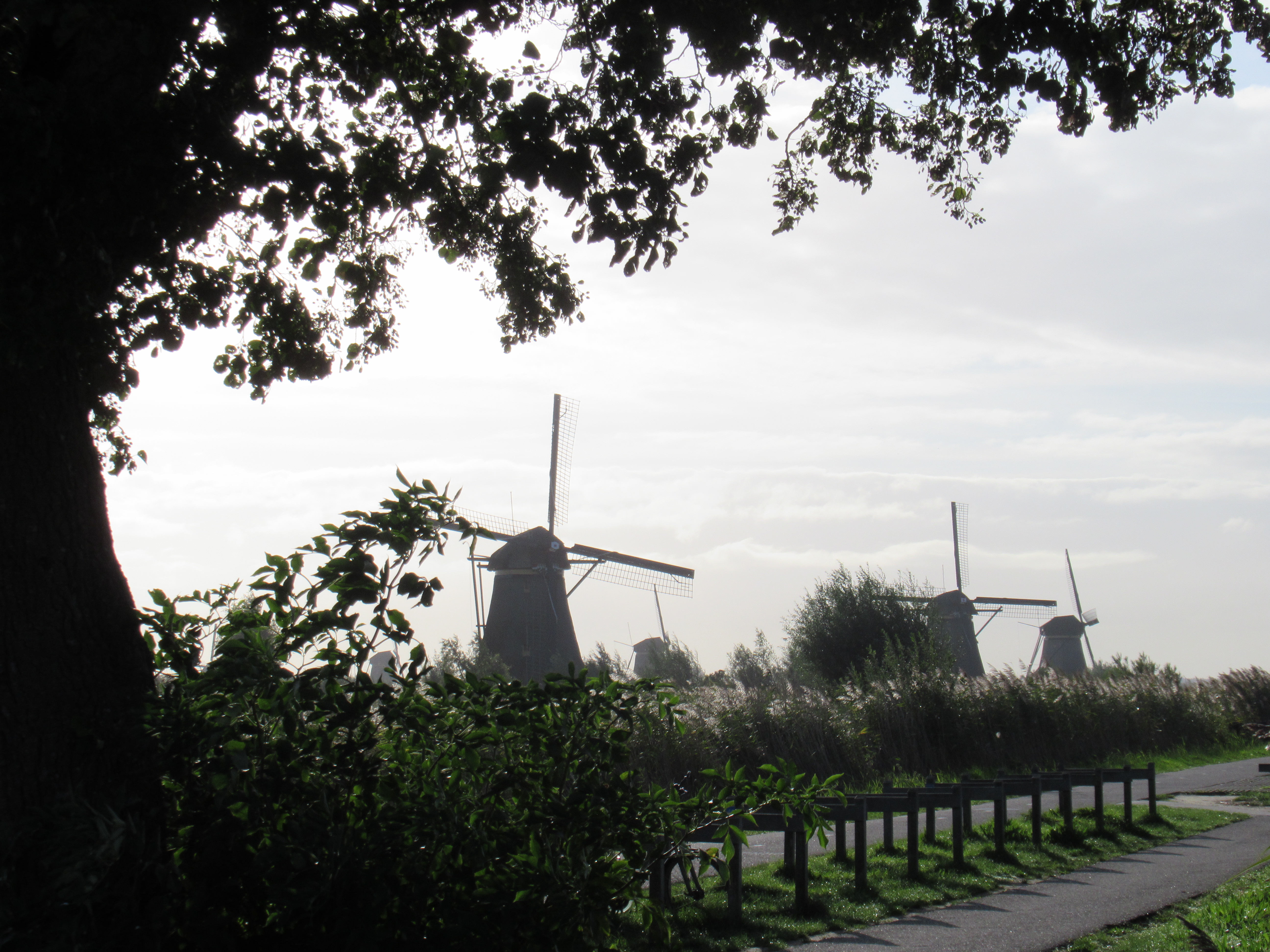
The windmills at Kinderdijk are a group of 19 monumental windmills in the Netherlands. The windmills were built in 1738 and 1740 to keep water out of the polder, a low-lying tract of land enclosed by dikes. It is the largest concentration of old windmills in the Netherlands. The windmills have been a UNESCO World Heritage Site since 1997. Three of the 19 windmills have been preserved as historical museums while the Foundation has modernized the interiors of the remaining 16 as housing units for rent.

We took a 2-hour walking tour of the area led by a local guide. The days are shorter here and we started out at 8:30 a.m. when the sun was just coming up, giving the area a golden glow.  The windmills are so photogenic – what a great place!

Here are a few photos which for the most part need no explanation.


We were able to go inside this museum windmill. On the bottom floor, in addition to all of the large equipment needed to operate the mill, there was one small room (see the big window) with a fireplace, inset bedroom with curtain, table, and sewing machine. Winding stairs led to the upper floors where there were many more bedrooms since most families who lived in the windmills had many children.


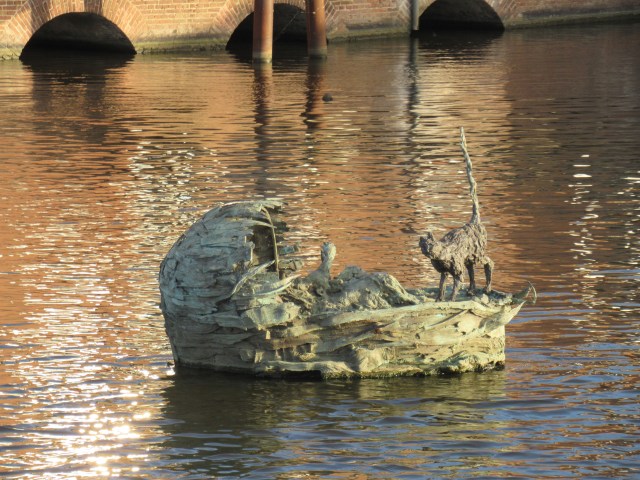
The Cat’s Cradle is a sculpture based on a legend about a cat named Dubbeltje that saved a baby in St. Elizabeth’s Flood of 1421. As the floodwaters rose, Dubbeltje jumped back and forth, rocking the baby’s wooden cradle in the waves to keep it from tipping over until the baby was able to be rescued.

This afternoon we start our journey to Cologne.


Posted in Uncategorized | Leave a comment