
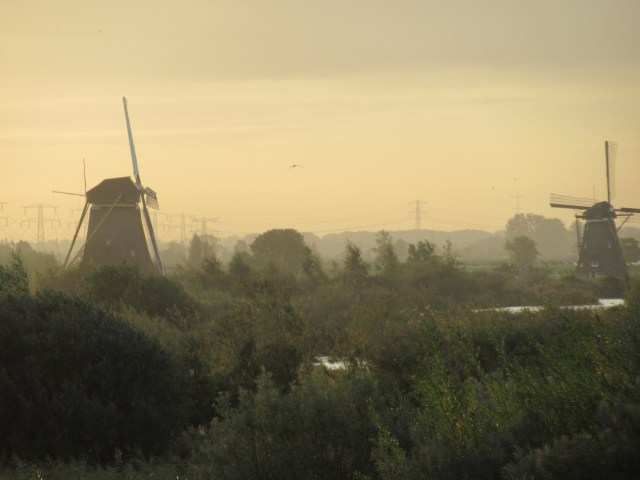
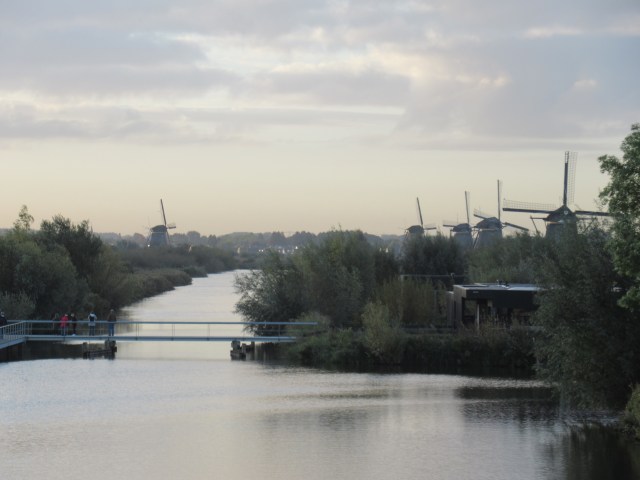
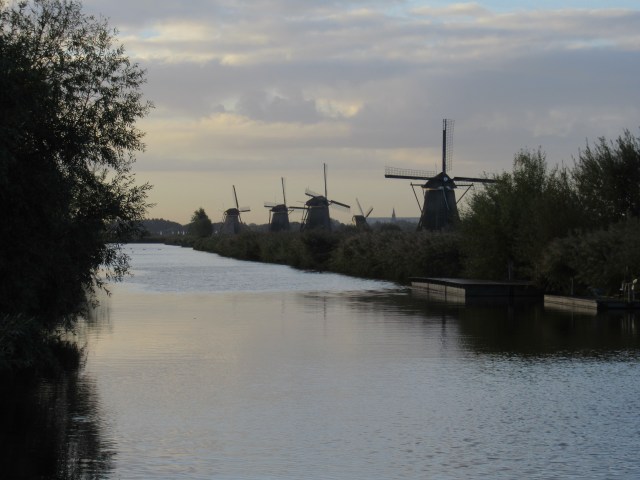
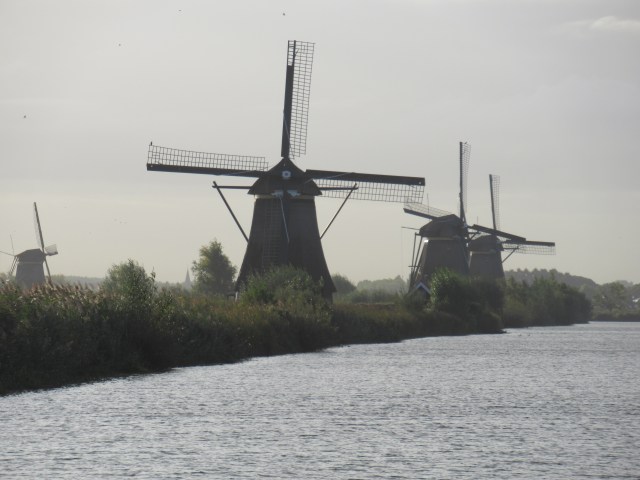
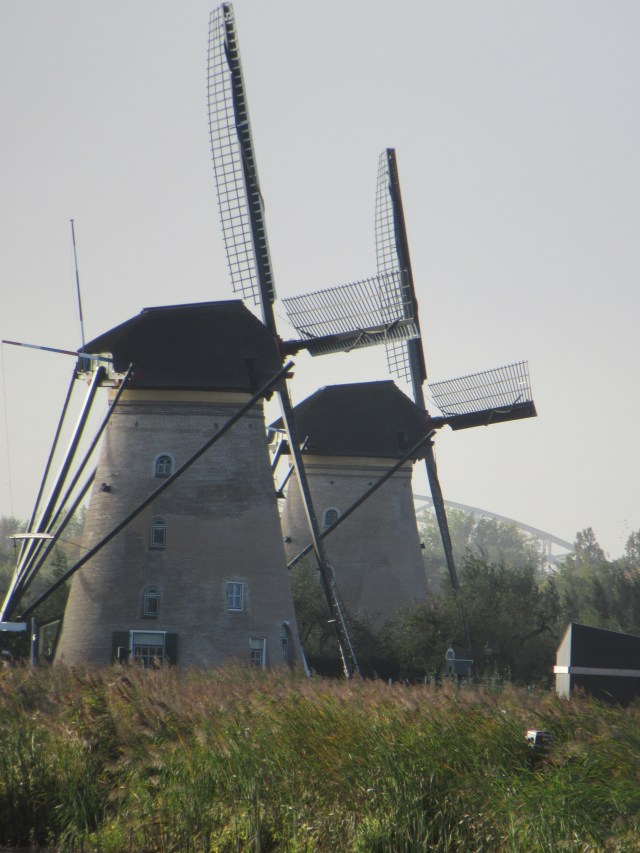
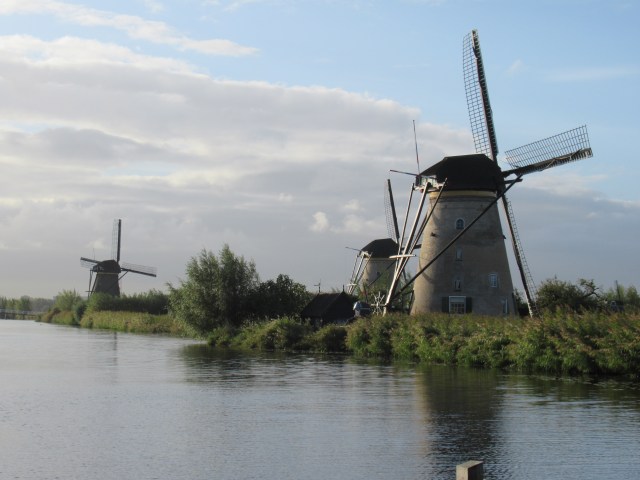
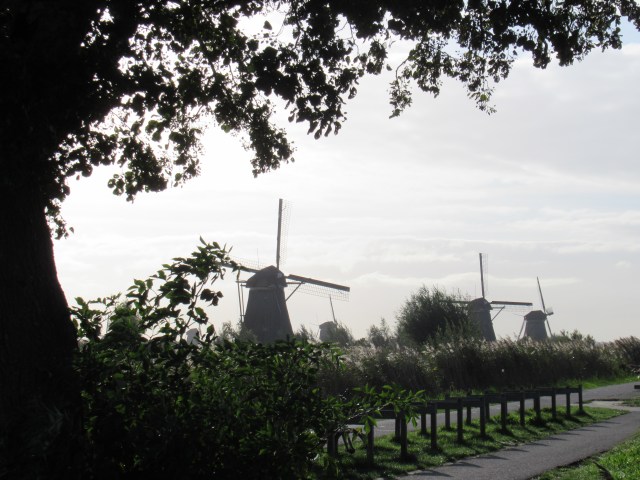
The windmills at Kinderdijk are a group of 19 monumental windmills in the Netherlands. The windmills were built in 1738 and 1740 to keep water out of the polder, a low-lying tract of land enclosed by dikes. It is the largest concentration of old windmills in the Netherlands. The windmills have been a UNESCO World Heritage Site since 1997. Three of the 19 windmills have been preserved as historical museums while the Foundation has modernized the interiors of the remaining 16 as housing units for rent.
We took a 2-hour walking tour of the area led by a local guide. The days are shorter here and we started out at 8:30 a.m. when the sun was just coming up, giving the area a golden glow. The windmills are so photogenic – what a great place!
Here are a few photos which for the most part need no explanation.
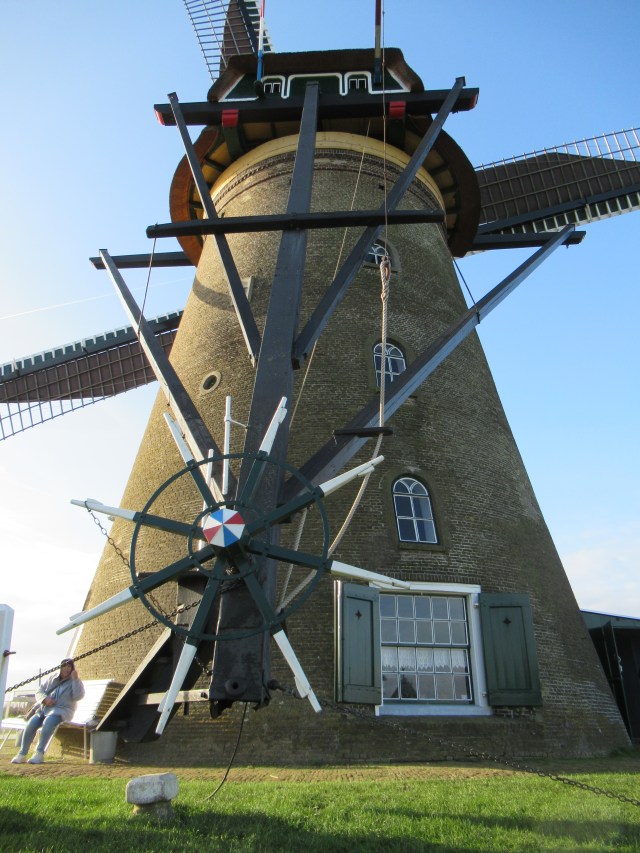
We were able to go inside this museum windmill. On the bottom floor, in addition to all of the large equipment needed to operate the mill, there was one small room (see the big window) with a fireplace, inset bedroom with curtain, table, and sewing machine. Winding stairs led to the upper floors where there were many more bedrooms since most families who lived in the windmills had many children.
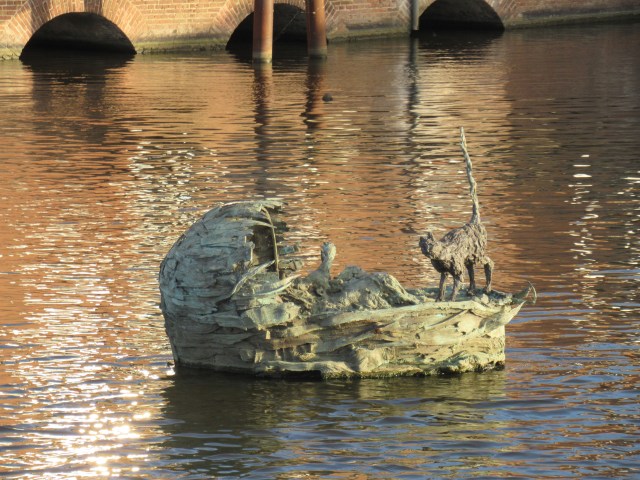
The Cat’s Cradle is a sculpture based on a legend about a cat named Dubbeltje that saved a baby in St. Elizabeth’s Flood of 1421. As the floodwaters rose, Dubbeltje jumped back and forth, rocking the baby’s wooden cradle in the waves to keep it from tipping over until the baby was able to be rescued.
This afternoon we start our journey to Cologne.


 Our Viking River Cruise